

Tested Applications
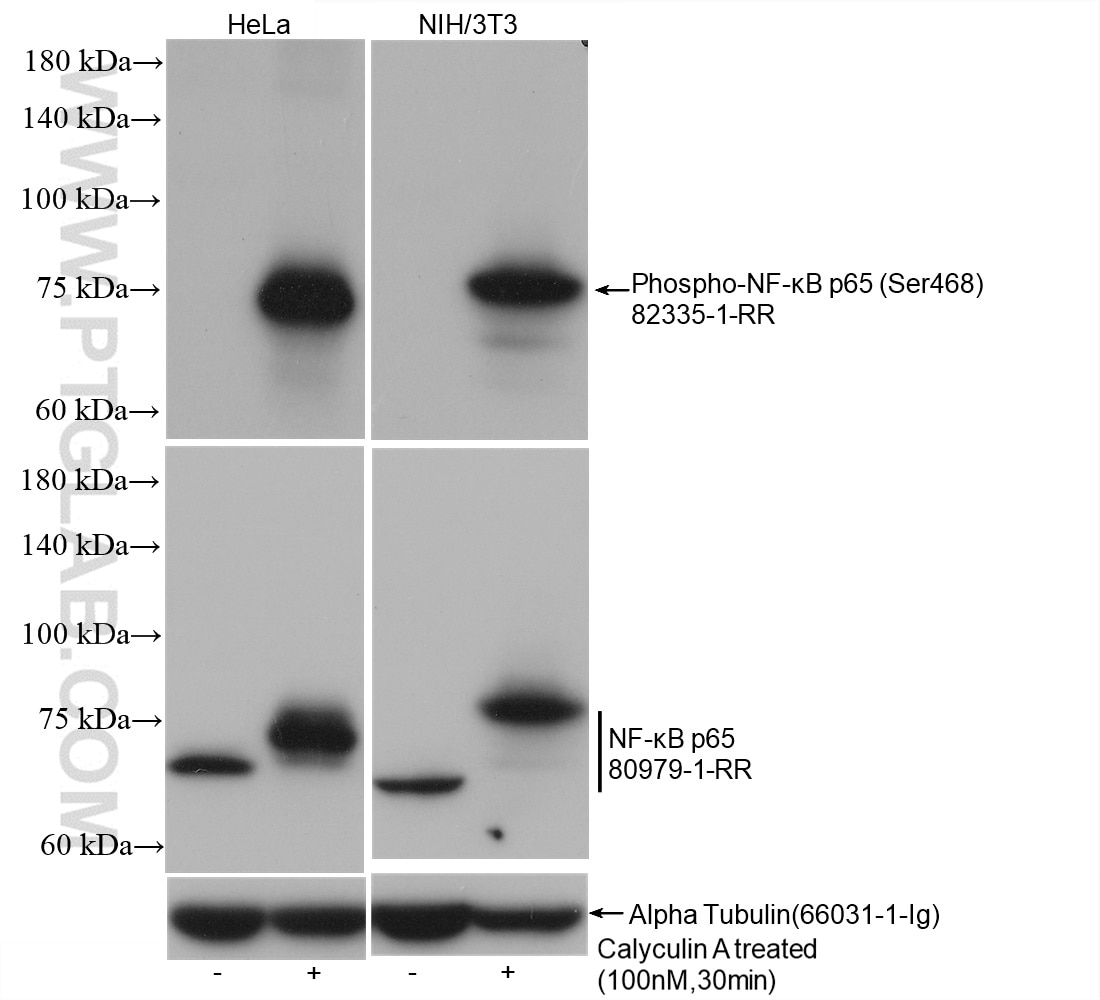
| Positive WB detected in | Calyculin A treated HeLa cells, Calyculin A treated NIH/3T3 cells |
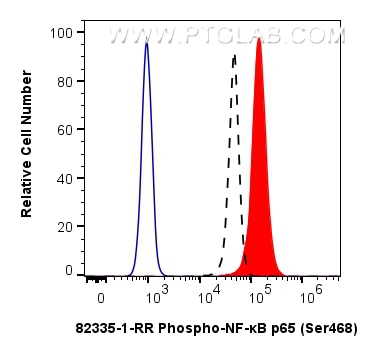
| Positive FC (Intra) detected in | Calyculin A treated NIH/3T3 cells |
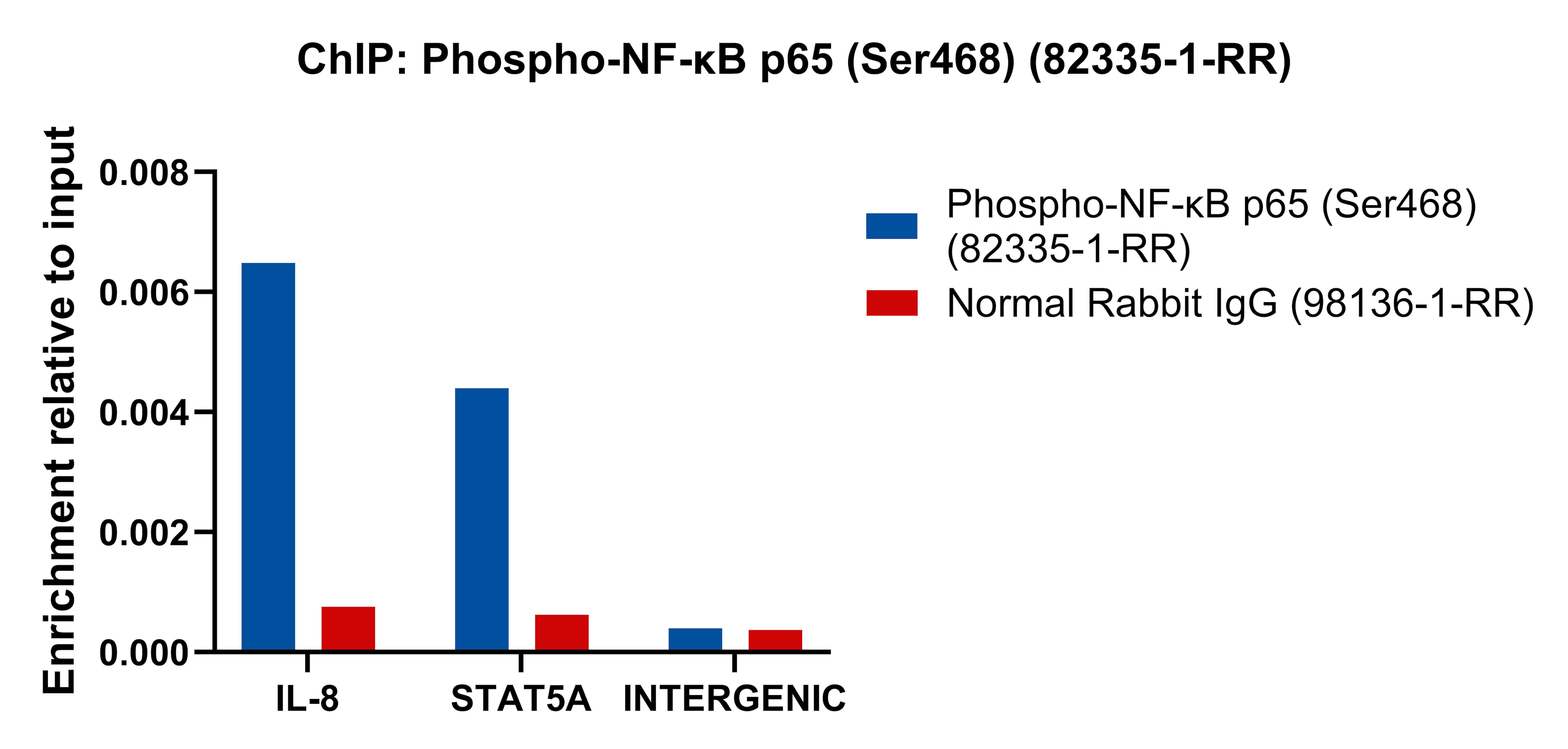
| Positive ChIP-qPCR detected in | hTNF-α (30 ng/ml, 1 h) HeLa cells |
Recommended dilution
| Application | Dilution |
|---|---|
| Western Blot (WB) | WB : 1:2000-1:10000 |
| Flow Cytometry (FC) (INTRA) | FC (INTRA) : 0.13 ug per 10^6 cells in a 100 µl suspension |
| CHIP-QPCR | CHIP-QPCR : 1:10-1:100 |
| It is recommended that this reagent should be titrated in each testing system to obtain optimal results. | |
| Sample-dependent, Check data in validation data gallery. | |
Product Information
82335-1-RR targets Phospho-NF-κB p65 (Ser468) in WB, IHC, IF, FC (Intra), ELISA, ChIP-qPCR applications and shows reactivity with human, mouse samples.
| Tested Reactivity | human, mouse |
| Cited Reactivity | human, mouse, rat, pig, chicken, bovine, sheep, goat |
| Host / Isotype | Rabbit / IgG |
| Class | Recombinant |
| Type | Antibody |
| Immunogen |
Peptide Predict reactive species |
| Full Name | v-rel reticuloendotheliosis viral oncogene homolog A (avian) |
| Calculated Molecular Weight | 65 kDa |
| Observed Molecular Weight | 75 kDa |
| GenBank Accession Number | BC011603 |
| Gene Symbol | NF-κB p65 |
| Gene ID (NCBI) | 5970 |
| RRID | AB_3083091 |
| Conjugate | Unconjugated |
| Form | Liquid |
| Purification Method | Protein A purification |
| UNIPROT ID | Q04206 |
| Storage Buffer | PBS with 0.02% sodium azide and 50% glycerol, pH 7.3. |
| Storage Conditions | Store at -20°C. Stable for one year after shipment. Aliquoting is unnecessary for -20oC storage. 20ul sizes contain 0.1% BSA. |
Background Information
Nuclear factor kB (NF-kB) is a collective term for a small family of dimeric transcription factors [comprising p65 (RelA) and RelB, c-Rel, p50/p105 (NF-κB1), and p52/p100 (NF-κB2)]. All NF-κB proteins share a Rel homology domain (RHD), which is responsible for DNA binding and dimerization. Only p65, RelB, and c-Rel contain potent transactivation domains within sequences from the C-terminal to the RHD. Exterior signals lead to the phosphorylation and degradation of the inhibitory complex IκB, which is modulated by the IκB kinase (IKK), and its degradation allows for the release of the typical NF-κB heterodimer, p65/p50, to translocate into the nucleus. NF-κB binds to its cognate DNA elements and can transcriptionally activate different target genes among which 200-500 genes have been implicated in cell survival/apoptosis, cell growth, immune response, and inflammation.
Protocols
| Product Specific Protocols | |
|---|---|
| WB protocol for Phospho-NF-κB p65 (Ser468) antibody 82335-1-RR | Download protocol |
| Standard Protocols | |
|---|---|
| Click here to view our Standard Protocols |
Publications
What published studies show
The antibody is Phospho-NF-κB p65 (Ser468) Recombinant monoclonal antibody (6N1), catalog number 82335-1-RR, with a total of 631 citations. Citations span high-impact journals including Nature Immunology, Nature Communications, Nature Microbiology, Cancer Research, Journal of Clinical Investigation, Advanced Science, Biomaterials, Cell Death & Differentiation, Science Advances, Theranostics, Phytomedicine, and others. Associated research fields include inflammation/NF-κB signaling, oncology, immunology, neuroscience, nanomedicine/drug delivery, gut microbiota, cardiovascular disease, liver/kidney injury, bone/joint disorders, sepsis, pulmonary disease, diabetes, and phytochemistry.
| Species | Application | Title |
|---|---|---|
Signal Transduct Target Ther Chimeric antigen receptor with novel intracellular modules improves antitumor performance of T cells | ||
Signal Transduct Target Ther Innovative peptide-loaded hybrid membrane nanovaccine enables precise personalized immunotherapy for HPV-related cervical diseases. | ||
Exploration (Beijing) Caffeic Acid Acts as a Potent Senomorphic and Alleviates Inflammation and Lung Fibrosis by Covalently Targeting Annexin A5 Protein in Mice. | ||
Nat Immunol Sparcl1 mitigates abdominal aortic aneurysm through inhibiting lymphangiogenesis-mediated TLS formation | ||
Bioact Mater Integrated apoptotic extracellular vesicle-recruitment peptide coating reprograms the diabetic bone microenvironment and orchestrates enhanced implant osseointegration. | ||
Cancer Res The Glycosyltransferase XYLT1 Activates NF-κB Signaling to Promote Metastasis of Early-Stage Lung Adenocarcinoma |


