

Tested Applications
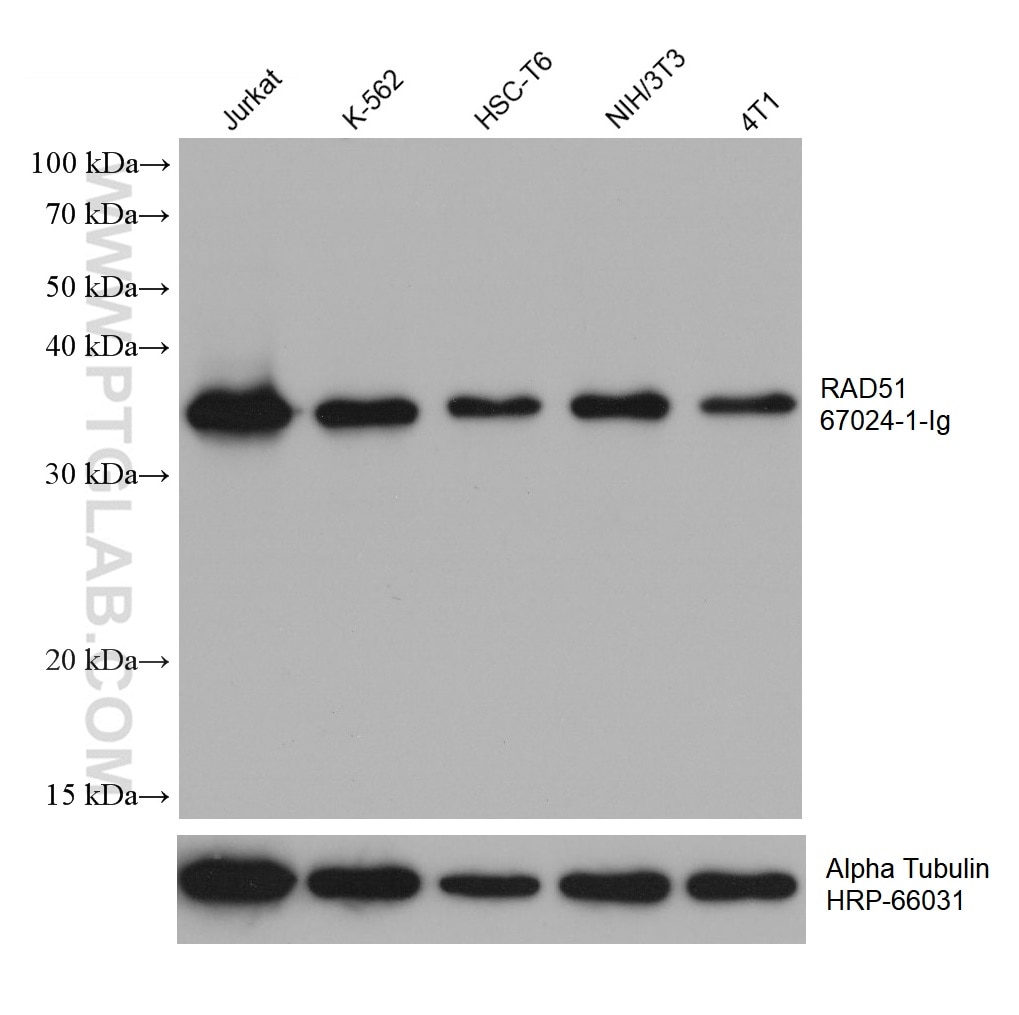
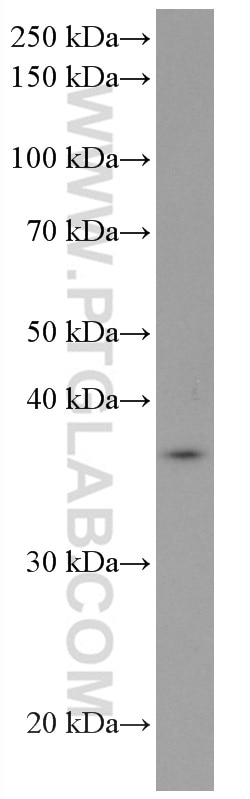
| Positive WB detected in | Jurkat cells, 4T1 cells, NIH/3T3 cells, K-562 cells, HSC-T6 cells |
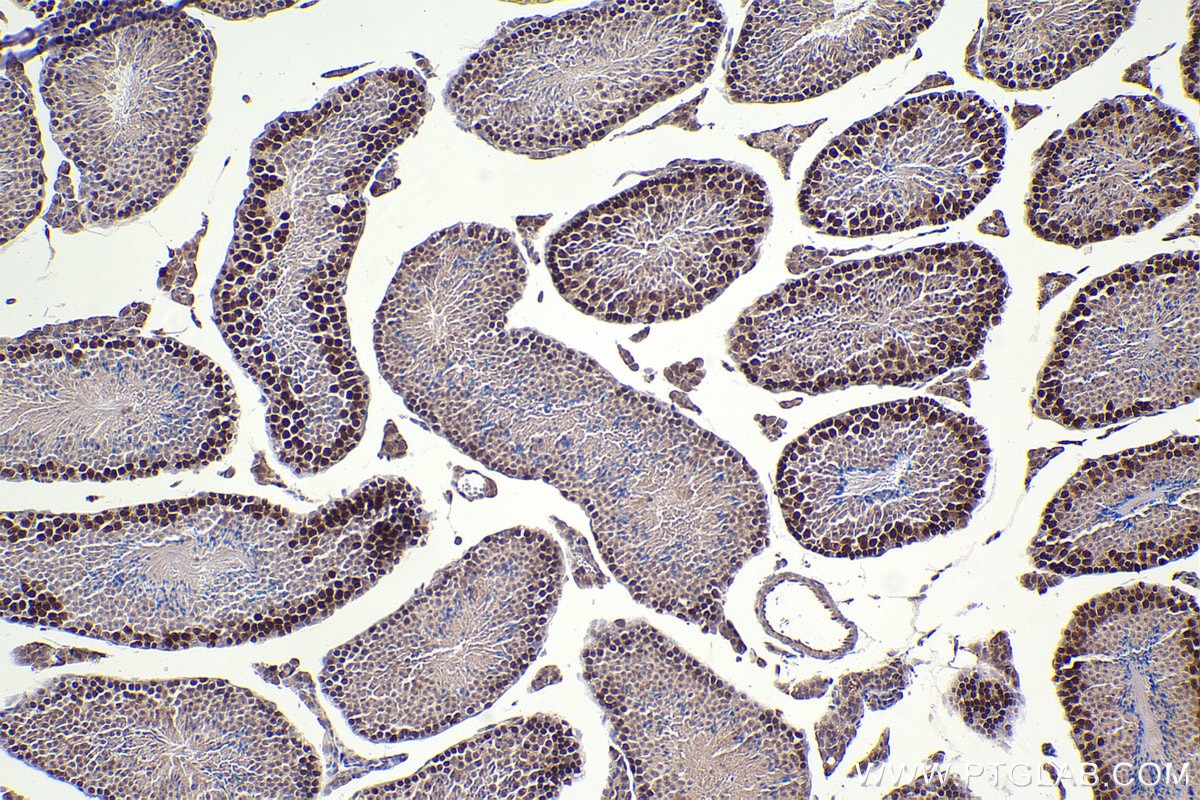
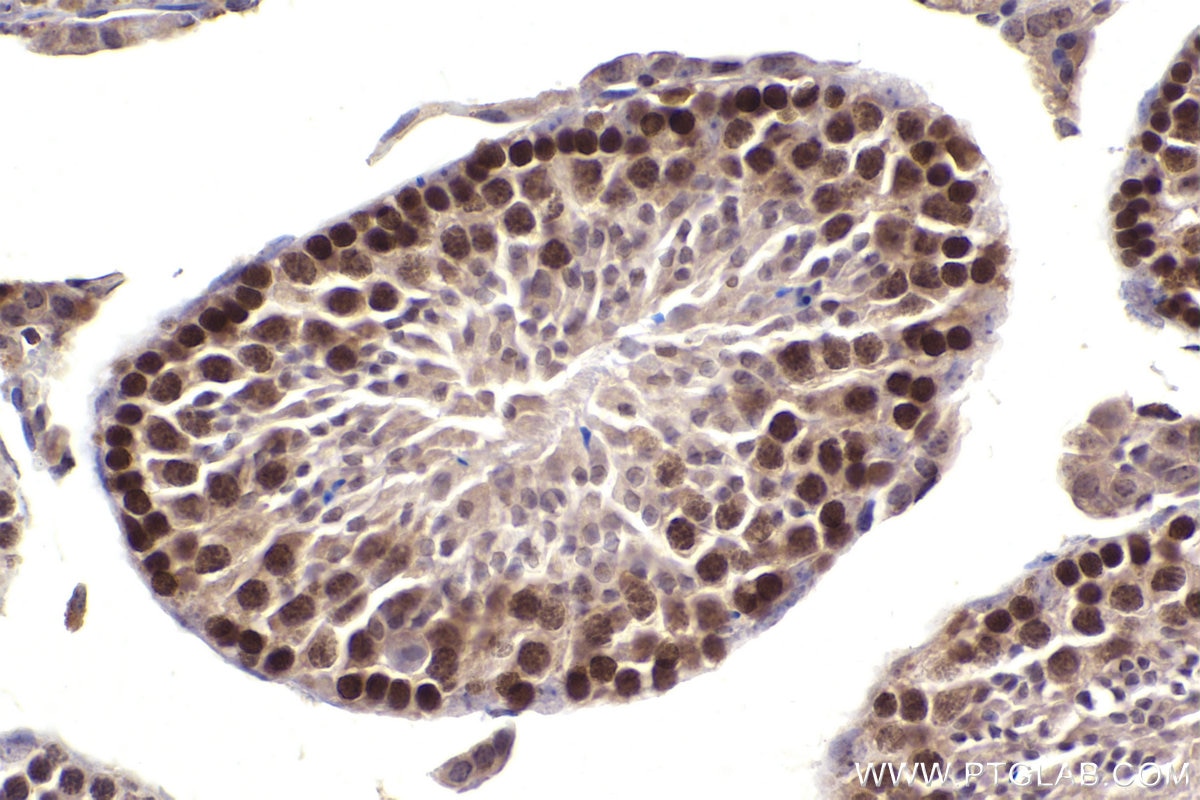
| Positive IHC detected in | mouse testis tissue Note: suggested antigen retrieval with TE buffer pH 9.0; (*) Alternatively, antigen retrieval may be performed with citrate buffer pH 6.0 |
Recommended dilution
| Application | Dilution |
|---|---|
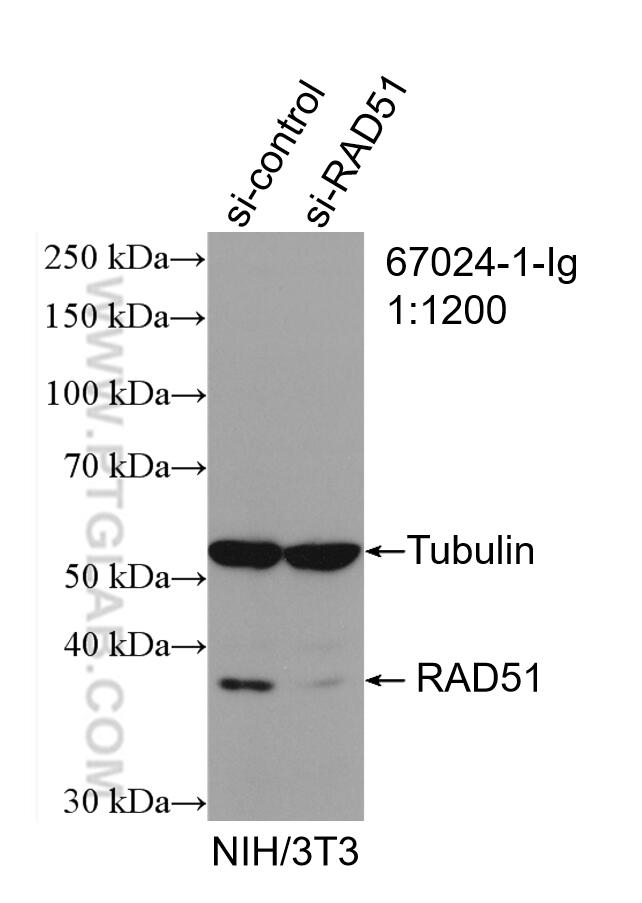
| Western Blot (WB) | WB : 1:5000-1:50000 |
| Immunohistochemistry (IHC) | IHC : 1:1000-1:4000 |
| It is recommended that this reagent should be titrated in each testing system to obtain optimal results. | |
| Sample-dependent, Check data in validation data gallery. | |
Product Information
67024-1-Ig targets RAD51 in WB, IHC, IF, ELISA applications and shows reactivity with human, mouse, rat samples.
| Tested Reactivity | human, mouse, rat |
| Cited Reactivity | human, mouse, rat |
| Host / Isotype | Mouse / IgG2a |
| Class | Monoclonal |
| Type | Antibody |
| Immunogen |
CatNo: Ag7410 Product name: Recombinant human RAD51 protein Source: e coli.-derived, PET28a Tag: 6*His Domain: 1-242 aa of BC001459 Sequence: MAMQMQLEANADTSVEEESFGPQPISRLEQCGINANDVKKLEEAGFHTVEAVAYAPKKELINIKGISEAKADKILAVAERYGLSGSDVLDNVAYARAFNTDHQTQLLYQASAMMVESRYALLIVDSATALYRTDYSGRGELSARQMHLARFLRMLLRLADEFGVAVVITNQVVAQVDGAAMFAADPKKPIGGNIIAHASTTRLYLRKGRGETRICKIYDSPCLPEAEAMFAINADGVGDAKD Predict reactive species |
| Full Name | RAD51 homolog (RecA homolog, E. coli) (S. cerevisiae) |
| Calculated Molecular Weight | 37 kDa |
| Observed Molecular Weight | 37 kDa |
| GenBank Accession Number | BC001459 |
| Gene Symbol | RAD51 |
| Gene ID (NCBI) | 5888 |
| RRID | AB_2882339 |
| Conjugate | Unconjugated |
| Form | Liquid |
| Purification Method | Protein A purification |
| UNIPROT ID | Q06609 |
| Storage Buffer | PBS with 0.02% sodium azide and 50% glycerol, pH 7.3. |
| Storage Conditions | Store at -20°C. Stable for one year after shipment. Aliquoting is unnecessary for -20oC storage. 20ul sizes contain 0.1% BSA. |
Background Information
RAD51 plays a critical role in the maintenance of genomic integrity by functioning in the repair of DNA double-strand breaks. It mediates homologous pairing and strand exchange in recombinatory structures known as RAD51foci in the nucleus. It also can bind to single and double stranded DNA and exhibits DNA-dependent ATPase activity. In addition, it has a role in regulating mitochondrial DNA copy number under conditions of oxidative stress in the presence of RAD51C and XRCC3.
Protocols
| Product Specific Protocols | |
|---|---|
| IHC protocol for RAD51 antibody 67024-1-Ig | Download protocol |
| WB protocol for RAD51 antibody 67024-1-Ig | Download protocol |
| Standard Protocols | |
|---|---|
| Click here to view our Standard Protocols |
Publications
What published studies show
The RAD51 antibody (Cat# 67024-1-Ig) has 26 citations. Journals include Nature Cell Biology, Molecular Cancer, Signal Transduction and Targeted Therapy, Cell Reports, Oncogene, Cell Death & Disease, Advanced Science, Journal of Nanobiotechnology, Cancer Letters, Journal of Translational Medicine, International Journal of Molecular Sciences, European Journal of Medicinal Chemistry, Journal of Medicinal Chemistry, and others. Research fields span homologous recombination/DNA repair, cancer therapy resistance (radioresistance, chemoresistance, PARP inhibitor resistance), ferroptosis, nanomedicine, and drug discovery.
| Species | Application | Title |
|---|---|---|
Signal Transduct Target Ther Irinotecan alleviates chemoresistance to anthracyclines through the inhibition of AARS1-mediated BLM lactylation and homologous recombination repair | ||
Mol Cancer NSUN6-mediated 5-methylcytosine modification of NDRG1 mRNA promotes radioresistance in cervical cancer | ||
J Nanobiotechnology Low-dose X-ray-activated radiodynamic therapy via a lutetium-coordinated nanoplatform synergizing PARP inhibition and ferroptosis. | ||
J Nanobiotechnology Minimizing adverse effects of Cerenkov radiation induced photodynamic therapy with transformable photosensitizer-loaded nanovesicles. | ||
Adv Sci (Weinh) Nuclear-Localized BCKDK Facilitates Homologous Recombination Repair to Support Breast Cancer Progression and Therapy Resistance |
Reviews
What customers say
Two reviews were found for this anti-RAD51 antibody. One user (5/5) used it at 1:1000 for Western Blot on MDA-MB-231 cells and reported very convincing results when examining homologous recombination DNA repair pathway activation in response to chemotherapy. Another user (1/5) tried it at 1:200 for immunofluorescence but found it did not work; however, Proteintech offered a replacement. Overall, the antibody performs well for Western Blot, while its performance in IF may vary by application conditions.
The reviews below have been submitted by verified Proteintech customers who received an incentive for providing their feedback.
Md Asad (Verified Customer) (02-24-2026) | Very convincing result! I used this antibody (anti RAD51) to examine the activation homologous recombination DNA repair pathway in response to chemotherapy treatment.
|
Juri (Verified Customer) (01-02-2024) | We have tested in immunocytochemistry, but did not work. Kindly, proteintech offered a replacement.
|


