

Tested Applications
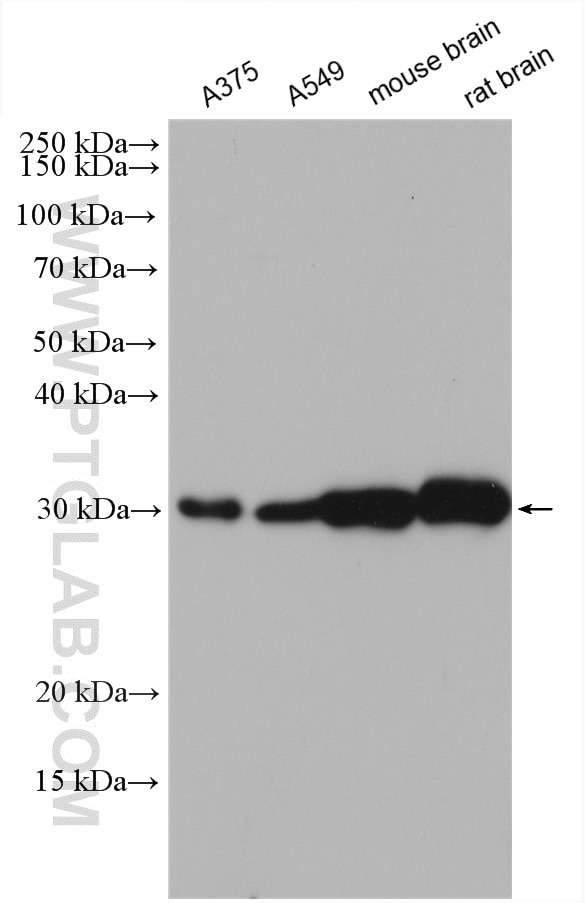
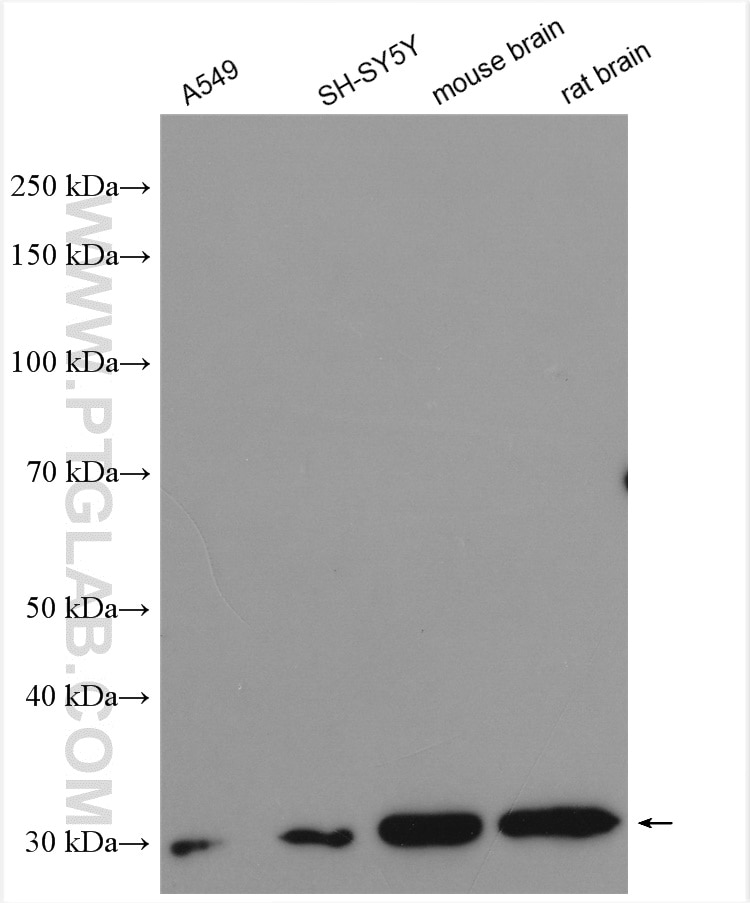
| Positive WB detected in | A375 cells, A549 cells, SH-SY5Y cells, mouse brain tissue, rat brain tissue |
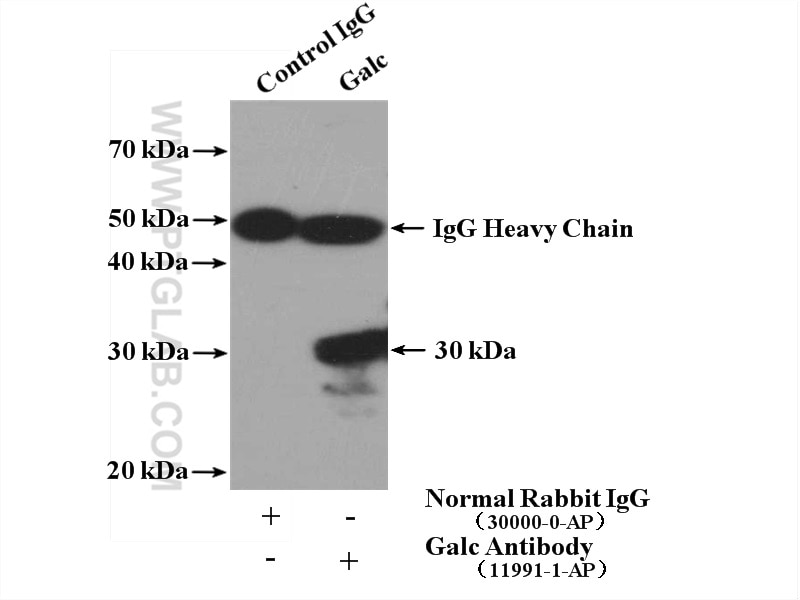
| Positive IP detected in | NIH/3T3 cells |
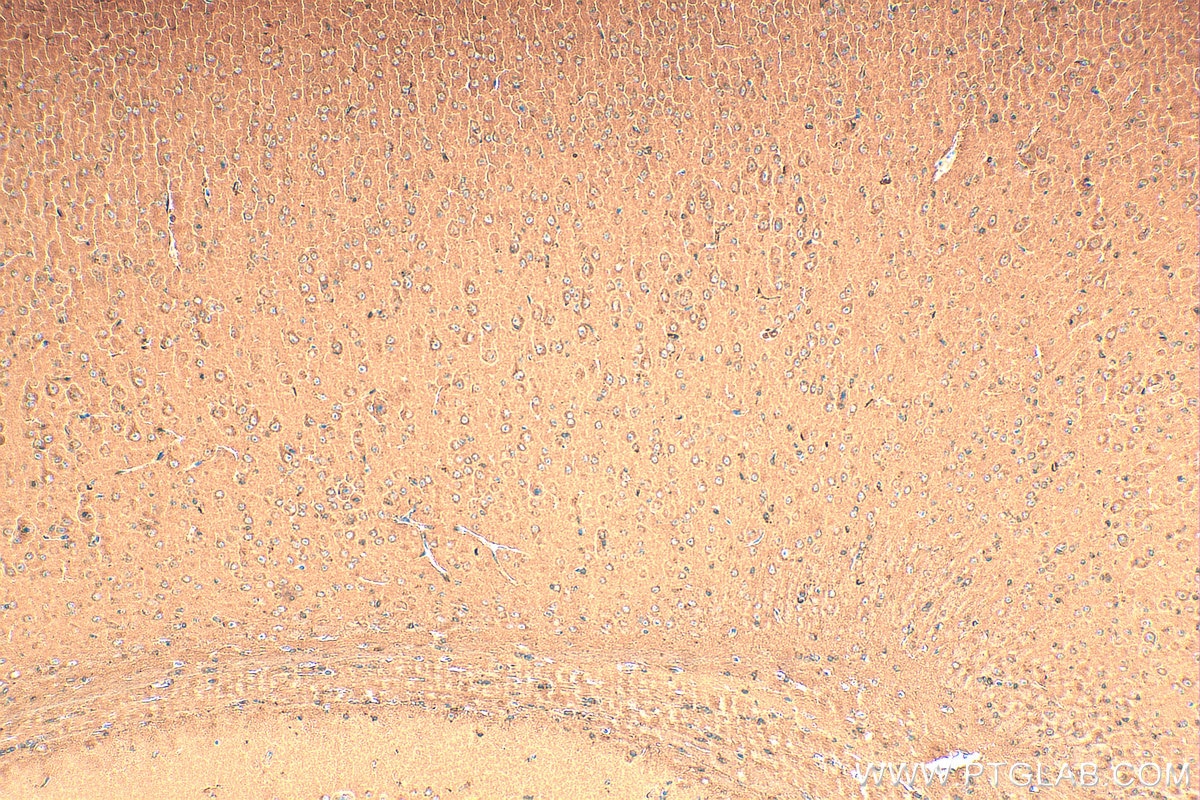
| Positive IHC detected in | mouse brain tissue Note: suggested antigen retrieval with TE buffer pH 9.0; (*) Alternatively, antigen retrieval may be performed with citrate buffer pH 6.0 |
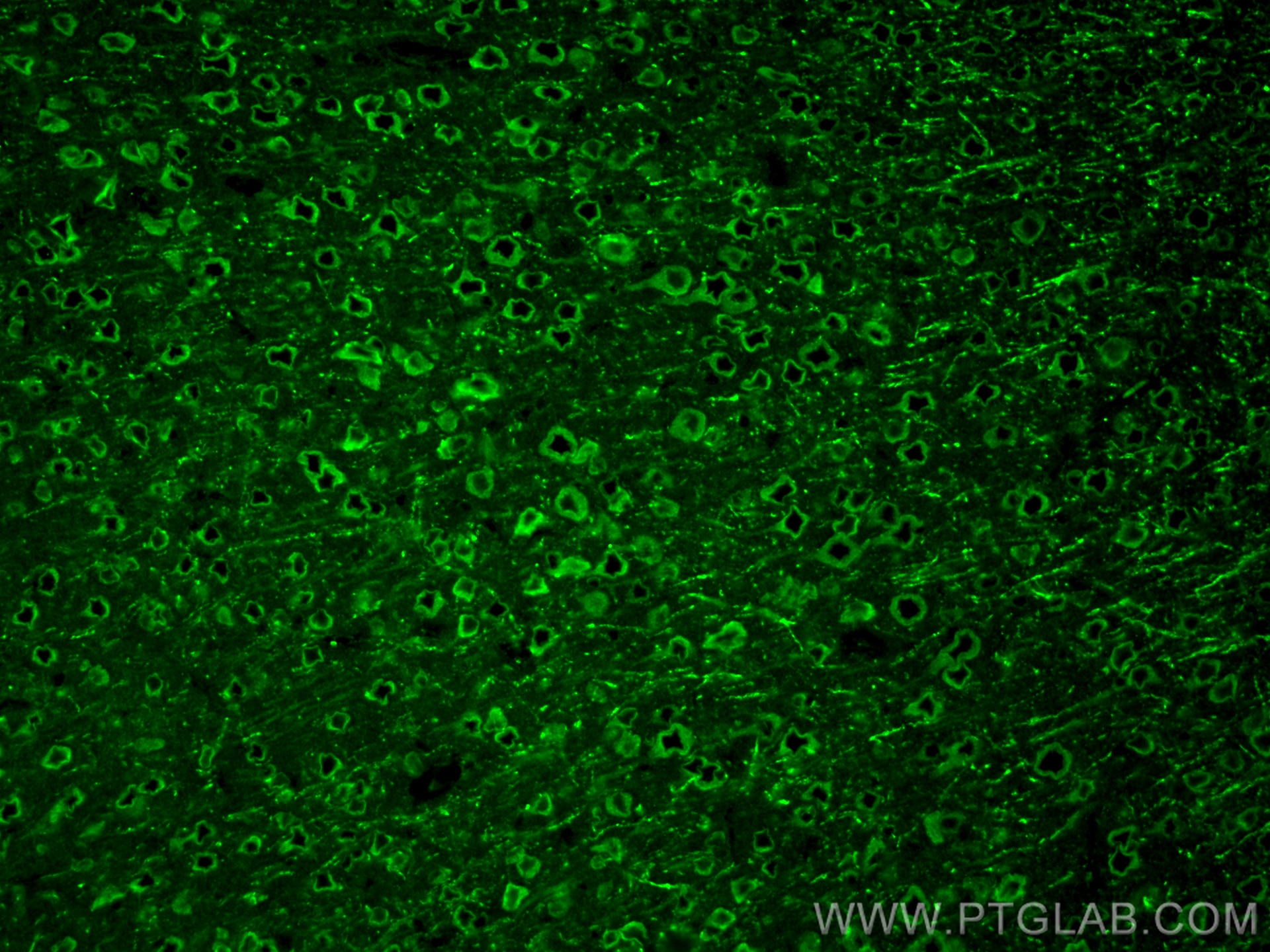
| Positive IF-P detected in | mouse brain tissue |
Recommended dilution
| Application | Dilution |
|---|---|
| Western Blot (WB) | WB : 1:500-1:1000 |
| Immunoprecipitation (IP) | IP : 0.5-4.0 ug for 1.0-3.0 mg of total protein lysate |
| Immunohistochemistry (IHC) | IHC : 1:50-1:500 |
| Immunofluorescence (IF)-P | IF-P : 1:50-1:500 |
| It is recommended that this reagent should be titrated in each testing system to obtain optimal results. | |
| Sample-dependent, Check data in validation data gallery. | |
Product Information
11991-1-AP targets Galc in WB, IHC, IF-P, IP, ELISA applications and shows reactivity with human, mouse, rat samples.
| Tested Reactivity | human, mouse, rat |
| Cited Reactivity | human, mouse, rat, zebrafish |
| Host / Isotype | Rabbit / IgG |
| Class | Polyclonal |
| Type | Antibody |
| Immunogen |
CatNo: Ag3914 Product name: Recombinant mouse Galc protein Source: e coli.-derived, PGEX-4T Tag: GST Domain: 340-513 aa of BC086671 Sequence: YYLKTVGHLEKGGSYVALTDGLGNLTIIIETMSHQHSMCIRPYLPYYNVSHQLATFTLKGSLREIQELQVWYTKLGTPQQRLHFKQLDTLWLLDGSGSFTLELEEDEIFTLTTLTTGRKGSYPPPPSSKPFPTNYKDDFNVEYPLFSEAPNFADQTGVFEYYMNNEDREHRFTL Predict reactive species |
| Full Name | galactosylceramidase |
| Calculated Molecular Weight | 77 kDa |
| Observed Molecular Weight | 80 kDa, 30 kDa, 50 kDa |
| GenBank Accession Number | BC086671 |
| Gene Symbol | Galc |
| Gene ID (NCBI) | 14420 |
| RRID | AB_10641987 |
| Conjugate | Unconjugated |
| Form | Liquid |
| Purification Method | Antigen affinity purification |
| UNIPROT ID | P54818 |
| Storage Buffer | PBS with 0.02% sodium azide and 50% glycerol, pH 7.3. |
| Storage Conditions | Store at -20°C. Stable for one year after shipment. Aliquoting is unnecessary for -20oC storage. 20ul sizes contain 0.1% BSA. |
Background Information
The GALC antibody targets the liposomal enzyme Galactosylceramidase (GALC), which belongs to the glycosyl hydrolase 59 family. It hydrolyzes the galactose ester bonds of galactosylceramide, galactosylsphingosine, lactosylceramide, and monogalactosyldiglyceride. It is primarily found in the brain and kidneys where galactolipids are hydrolyzed (PMID:8634707). Deficiencies of GALC are primarily associated with the autosomal recessive Krabbe's disease. This disease is characterized by developmental delay caused by apoptosis of myelin-forming cells. GALC is responsible for hydrolyzing galactosylceramide, a cerebroside that is an important component of myelin. A deficiency in GALC causes loss of myelin to nerve cells, resulting in delayed nerve transmissions. Krabbe's disease has varying degrees of severity due to a large number of different genetic mutations in the gene. The GALC antibody can be used to detect the deletions in the GALC gene and functions of the enzyme (PMID:20886637). Normal GALC mRNA encodes the 80 kDa precursor, which is processed into 50 and 30 kDa subunits (PMID: 26865610).
Protocols
| Product Specific Protocols | |
|---|---|
| IF protocol for Galc antibody 11991-1-AP | Download protocol |
| IHC protocol for Galc antibody 11991-1-AP | Download protocol |
| IP protocol for Galc antibody 11991-1-AP | Download protocol |
| WB protocol for Galc antibody 11991-1-AP | Download protocol |
| Standard Protocols | |
|---|---|
| Click here to view our Standard Protocols |
Publications
What published studies show
The Anti-GALC affinity-purified polyclonal antibody (Cat# 11991-1-AP) has 24 citations published in journals including Nature Communications, Advanced Materials, Developmental Cell, Molecular Therapy, Cell Death & Disease, FASEB Journal, Stem Cells, Glia, Experimental Neurology, and PLoS One. Research fields encompass Krabbe disease, sulfatide/lipid metabolism, neurodegeneration (Parkinson's, frontotemporal dementia), brain metastasis, ischemic stroke, EAE/multiple sclerosis, gene therapy, neural stem cell biology, astrocyte function, Niemann-Pick disease, and atherosclerosis.
| Species | Application | Title |
|---|---|---|
Adv Mater Directed Neural Stem Cells Differentiation via Signal Communication with Ni-Zn Micromotors | ||
Nat Commun Prosaposin maintains lipid homeostasis in dopamine neurons and counteracts experimental parkinsonism in rodents | ||
J Exp Clin Cancer Res RBM10 deficiency promotes brain metastasis by modulating sphingolipid metabolism in a BBB model of EGFR mutant lung adenocarcinoma | ||
Cell Death Dis The divergent effects of astrocyte ceruloplasmin on learning and memory function in young and old mice | ||
Mol Ther Extended normal life after AAVrh10-mediated gene therapy in the mouse model of Krabbe disease. |
Reviews
What customers say
The single review for this product is from Celia Warre (January 2025), who used it for Western Blot and gave it 5 stars. She reported that the antibody performed well, arrived promptly, and praised the Proteintech team for being very helpful in coordinating the order with her university. Overall, the feedback is positive, highlighting both product performance and customer service.
The reviews below have been submitted by verified Proteintech customers who received an incentive for providing their feedback.
Celia (Verified Customer) (01-14-2025) | Antibody worked well, arrived promptly and the team were really helpful getting the order sorted with my university.
|


