

Tested Applications
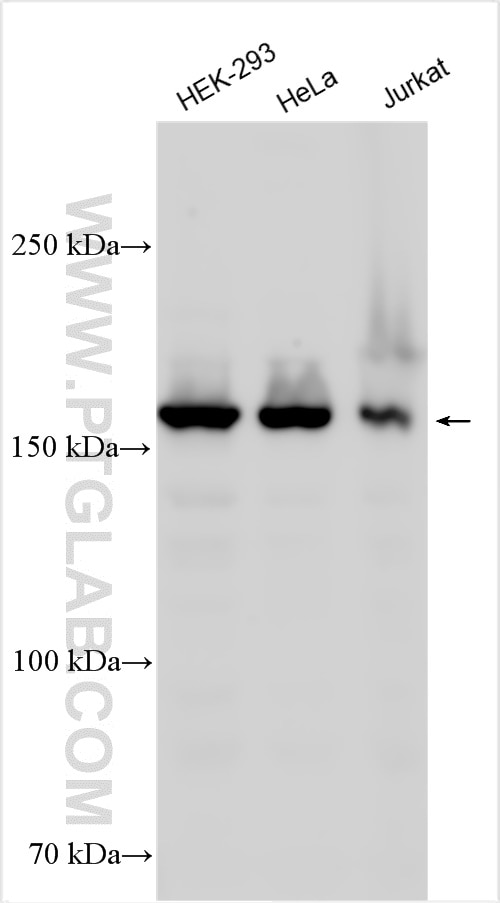
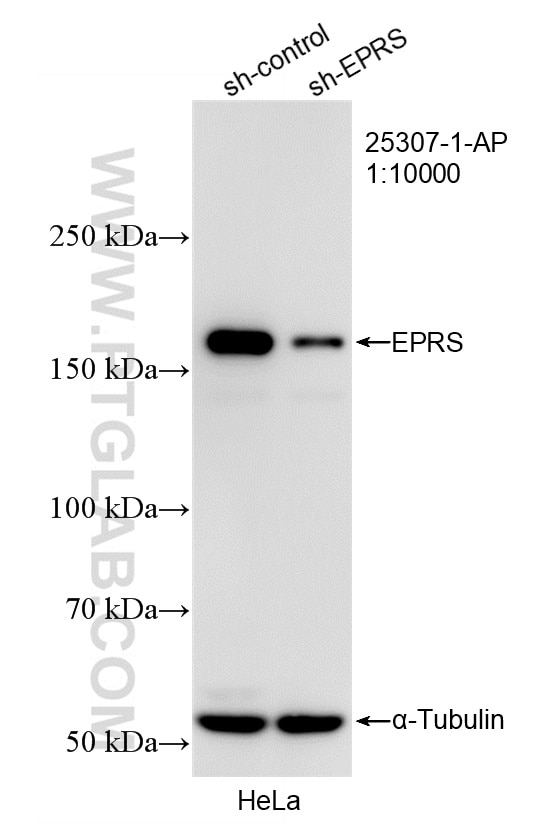
| Positive WB detected in | HEK-293 cells, HeLa cells, Jurkat cells |
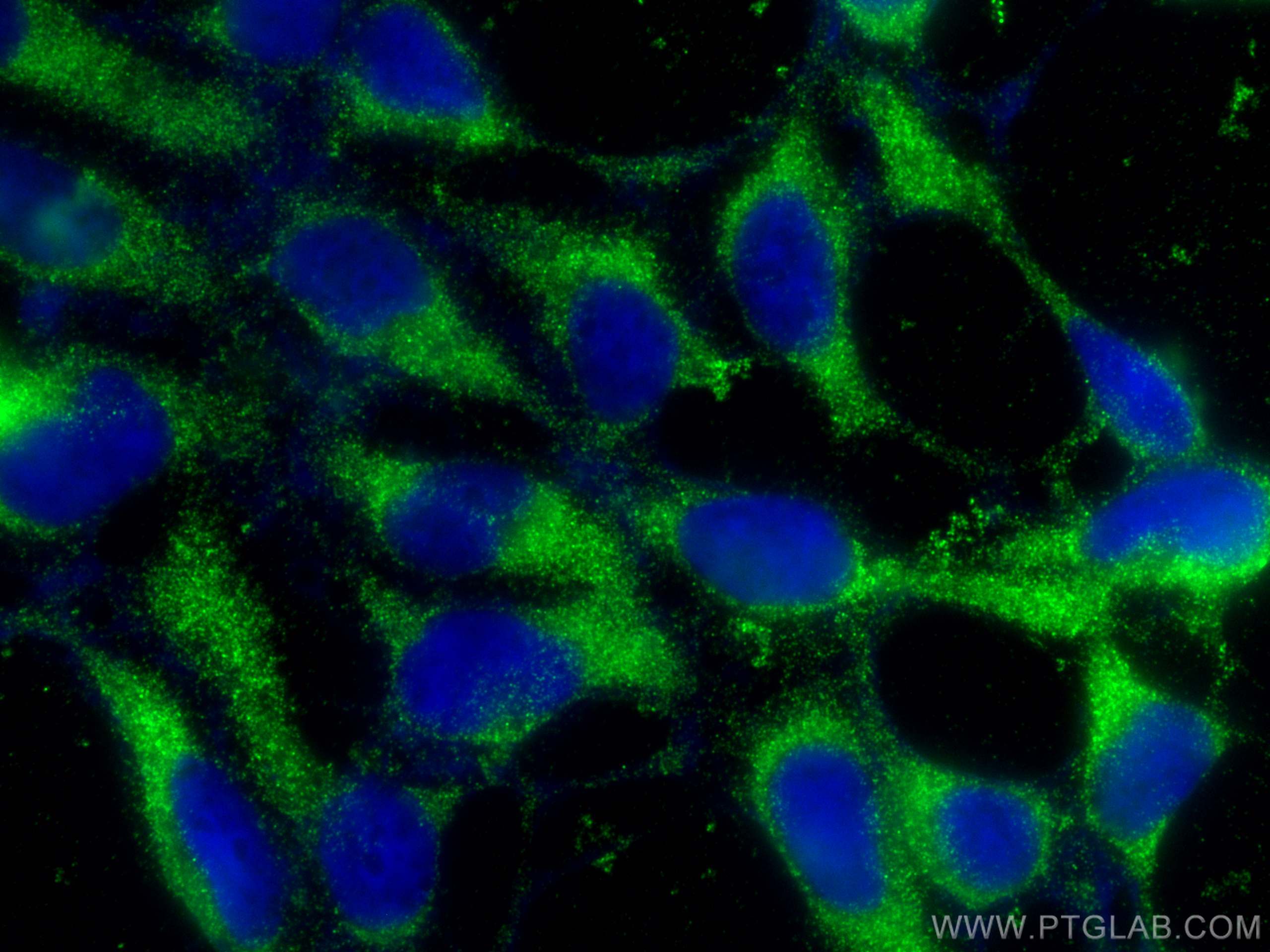
| Positive IF/ICC detected in | HEK-293 cells |
Recommended dilution
| Application | Dilution |
|---|---|
| Western Blot (WB) | WB : 1:5000-1:50000 |
| Immunofluorescence (IF)/ICC | IF/ICC : 1:200-1:800 |
| It is recommended that this reagent should be titrated in each testing system to obtain optimal results. | |
| Sample-dependent, Check data in validation data gallery. | |
Product Information
25307-1-AP targets EPRS in WB, IF/ICC, ELISA applications and shows reactivity with human samples.
| Tested Reactivity | human |
| Cited Reactivity | human |
| Host / Isotype | Rabbit / IgG |
| Class | Polyclonal |
| Type | Antibody |
| Immunogen |
CatNo: Ag18011 Product name: Recombinant human EPRS protein Source: e coli.-derived, PGEX-4T Tag: GST Domain: 1163-1512 aa of BC126275 Sequence: RTREFLWQEGHSAFATMEEAAEEVLQILDLYAQVYEELLAIPVVKGRKTEKEKFAGGDYTTTIEAFISASGRAIQGGTSHHLGQNFSKMFEIVFEDPKIPGEKQFAYQNSWGLTTRTIGVMTMVHGDNMGLVLPPRVACVQVVIIPCGITNALSEEDKEALIAKCNDYRRRLLSVNIRVRADLRDNYSPGWKFNHWELKGVPIRLEVGPRDMKSCQFVAVRRDTGEKLTVAENEAETKLQAILEDIQVTLFTRASEDLKTHMVVANTMEDFQKILDSGKIVQIPFCGEIDCEDWIKKTTARDQDLEPGAPSMGAKSLCIPFKPLCELQPGAKCVCGKNPAKYYTLFGRSY Predict reactive species |
| Full Name | glutamyl-prolyl-tRNA synthetase |
| Calculated Molecular Weight | 1512 aa, 171 kDa |
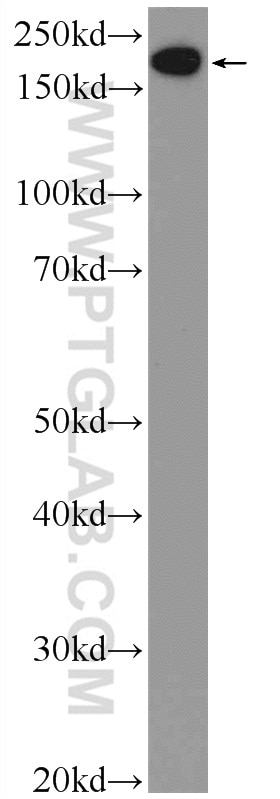
| Observed Molecular Weight | 171 kDa |
| GenBank Accession Number | BC126275 |
| Gene Symbol | EPRS |
| Gene ID (NCBI) | 2058 |
| RRID | AB_2880023 |
| Conjugate | Unconjugated |
| Form | Liquid |
| Purification Method | Antigen affinity purification |
| UNIPROT ID | P07814 |
| Storage Buffer | PBS with 0.02% sodium azide and 50% glycerol, pH 7.3. |
| Storage Conditions | Store at -20°C. Stable for one year after shipment. Aliquoting is unnecessary for -20oC storage. 20ul sizes contain 0.1% BSA. |
Background Information
Human EPRS is a 172 kDa, 1512 amino acid polypeptide consisting of three major domains. The N and C termini contain ERS and PRS catalytic domains, respectively, joined by a 300 amino acid linker containing three tandem WHEP-TRS (referred to as WHEP) domains. EPRS is a bifunctional aminoacyl-tRNA synthetase that catalyzes the aminoacylation of glutamic acid and proline tRNA species. EPRS has a special role in GAIT-mediated translational control, as it is solely responsible for recognition and interaction with GAIT elements in target mRNAs. (PMID: 29576217, PMID: 22386318, PMID: 19647514)
Protocols
| Product Specific Protocols | |
|---|---|
| IF protocol for EPRS antibody 25307-1-AP | Download protocol |
| WB protocol for EPRS antibody 25307-1-AP | Download protocol |
| Standard Protocols | |
|---|---|
| Click here to view our Standard Protocols |
Publications
What published studies show
The EPRS polyclonal antibody (Cat# 25307-1-AP) has 3 total citations. These appear in Nature Communications, Molecular Cell, and Proteomics. The associated research fields include tRNA aminoacylation and neurodegeneration (ALS/FTD), methyltransferase-independent roles in oncogenic transformation, and exosomal secretion of sugar metabolism regulatory proteins in hepatocellular carcinoma. All citations used the antibody for Western blot in human samples.
| Species | Application | Title |
|---|---|---|
Nat Commun Phenylalanine-tRNA aminoacylation is compromised by ALS/FTD-associated C9orf72 C4G2 repeat RNA | ||
Mol Cell A methyltransferase-independent role for METTL1 in tRNA aminoacylation and oncogenic transformation | ||
Proteomics Motile hepatocellular carcinoma cells preferentially secret sugar metabolism regulatory proteins via exosomes. |


