
Tested Applications
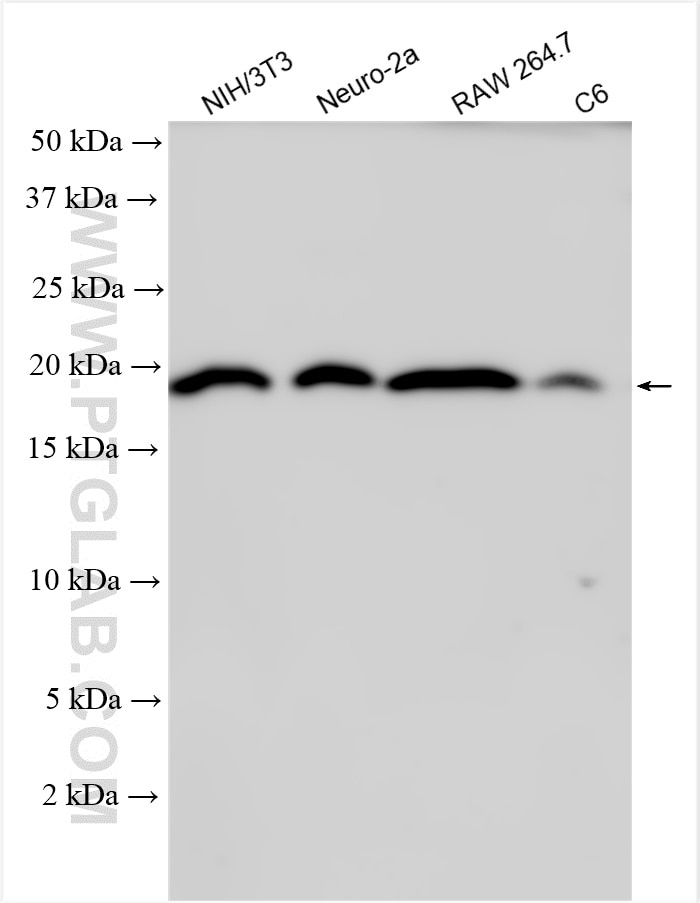
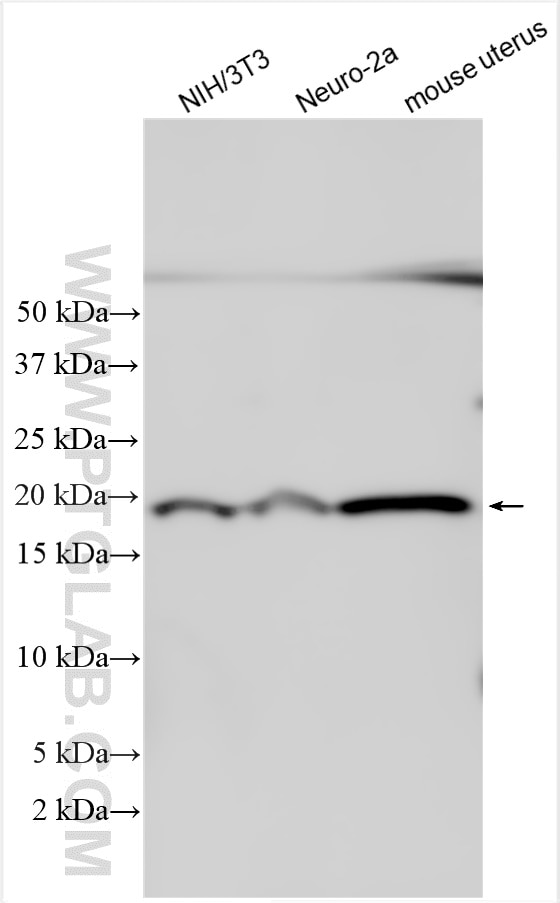
| Positive WB detected in | NIH/3T3 cells, Neuro-2a cells, RAW 264.7 cells, C6 cells, mouse uterus tissue |
Recommended dilution
| Application | Dilution |
|---|---|
| Western Blot (WB) | WB : 1:500-1:2000 |
| It is recommended that this reagent should be titrated in each testing system to obtain optimal results. | |
| Sample-dependent, Check data in validation data gallery. | |
Product Information
28416-1-AP targets CDKN2A/P16-INK4A in WB, IHC, IF, ELISA applications and shows reactivity with mouse, rat samples.
| Tested Reactivity | mouse, rat |
| Cited Reactivity | human, mouse, rat |
| Host / Isotype | Rabbit / IgG |
| Class | Polyclonal |
| Type | Antibody |
| Immunogen |
CatNo: Ag28927 Product name: Recombinant mouse Cdkn2a protein Source: e coli.-derived, PGEX-4T Tag: GST Domain: 1-168 aa of NM_001040654 Sequence: MESAADRLARAAAQGRVHDVRALLEAGVSPNAPNSFGRTPIQVMMMGNVHVAALLLNYGADSNCEDPTTFSRPVHDAAREGFLDTLVVLHGSGARLDVRDAWGRLPLDLAQERGHQDIVRYLRSAGCSLCSAGWSLCTAGNVAQTDGHSFSSSTPRALELRGQSQEQS Predict reactive species |
| Full Name | cyclin-dependent kinase inhibitor 2A |
| Calculated Molecular Weight | 18 kDa |
| Observed Molecular Weight | 18-23 kDa |
| GenBank Accession Number | NM_001040654 |
| Gene Symbol | Cdkn2a |
| Gene ID (NCBI) | 12578 |
| RRID | AB_3086048 |
| Conjugate | Unconjugated |
| Form | Liquid |
| Purification Method | Antigen affinity purification |
| UNIPROT ID | P51480 |
| Storage Buffer | PBS with 0.02% sodium azide and 50% glycerol, pH 7.3. |
| Storage Conditions | Store at -20°C. Stable for one year after shipment. Aliquoting is unnecessary for -20oC storage. 20ul sizes contain 0.1% BSA. |
Background Information
p16INK4a is a pivotal protein encoded by the CDKN2A gene on human chromosome 9p21. It functions as a tumor suppressor and is one of the most important regulators of the cell cycle. It acts as a cyclin-dependent kinase (CDK) inhibitor, specifically binding to CDK4 and CDK6 and blocking their association with cyclin D. Beyond cell-cycle control, p16INK4a is a key mediator of cellular senescence-an irreversible growth-arrest state that limits the expansion of damaged or oncogene-expressing cells. Its expression rises with age and in response to stresses such as DNA damage or oncogenic signaling, making it a biomarker of both biological aging and tumorigenic stress. In human cancers, the p16INK4a-RB pathway is frequently disabled through CDKN2A deletion, mutation, or promoter hyper-methylation, underscoring its importance in tumor suppression.
Protocols
| Product Specific Protocols | |
|---|---|
| WB protocol for CDKN2A/P16-INK4A antibody 28416-1-AP | Download protocol |
| Standard Protocols | |
|---|---|
| Click here to view our Standard Protocols |
Publications
What published studies show
| Species | Application | Title |
|---|---|---|
Adv Mater Ionizable Coenzyme-Engineered Lipid/Fiber Microplexes Boost Ribosomal Translation to Improve mRNA Therapy for Degenerative Diseases. | ||
Nat Aging Single-cell and spatial RNA sequencing identify divergent microenvironments and progression signatures in early- versus late-onset prostate cancer | ||
Autophagy Oxidative stress-preconditioned exosomes target BMF to restore mitophagy for alleviating intervertebral disc degeneration. | ||
Nat Commun Targeting NAT10 alleviates colonic senescence and elderly-onset colitis by disrupting N4-acetylation of DYRK1A | ||
Adv Sci (Weinh) Inhibiting cGAS-STING to Preserve Mitochondrial-Nuclear Communication and Stemness in Young Tendon Stem Cells: A Hydrogel Strategy against Age-Related Tendinopathy. | ||
Biomaterials Enhanced osteointegration of implants in aged rats via a stem cell pool aging reversion strategy. |


