

Tested Applications
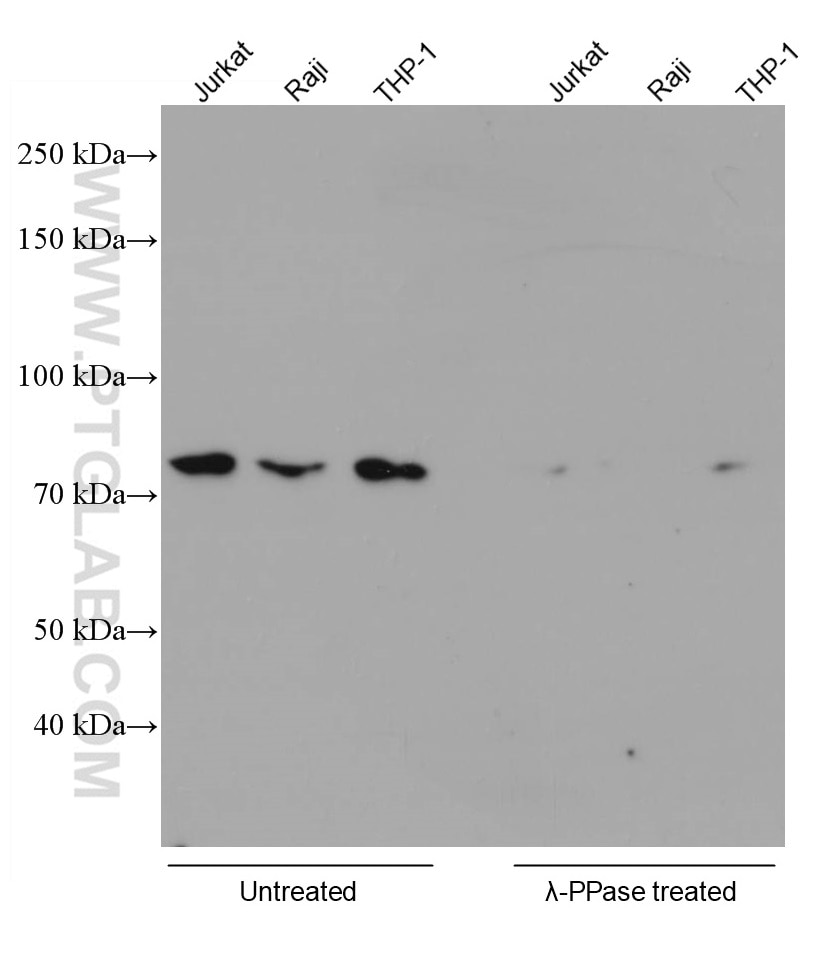
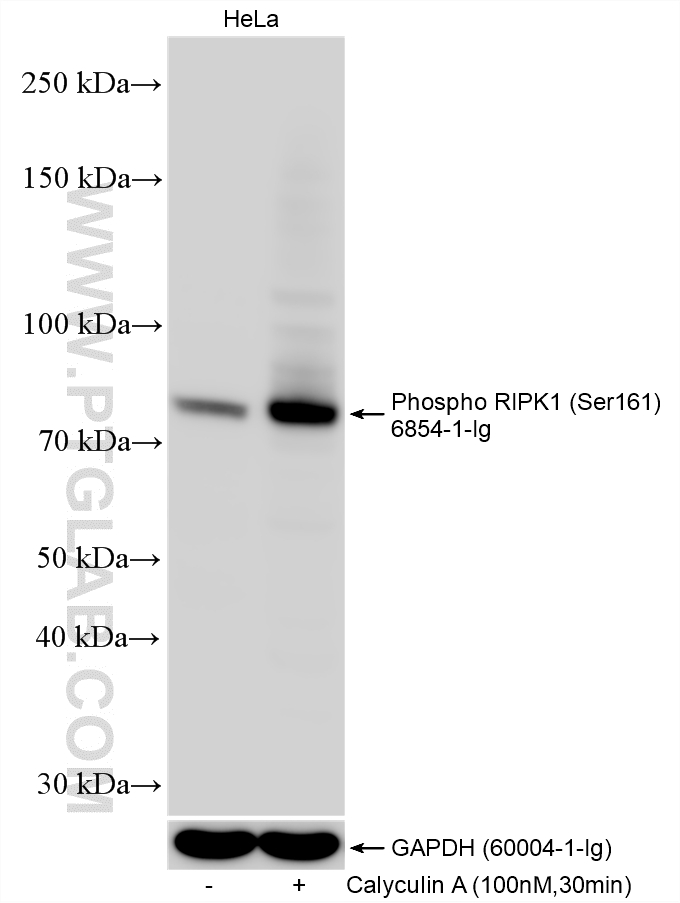
| Positive WB detected in | Jurkat cells, Calyculin A treated HeLa cells, Raji cells, THP-1 cells |
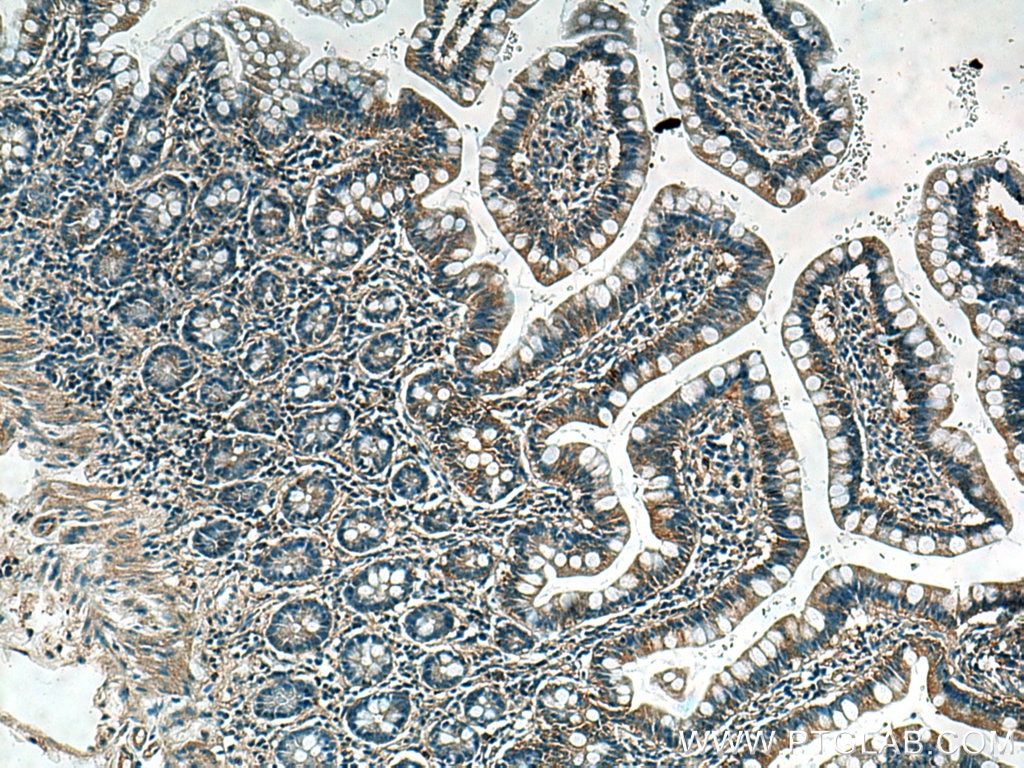
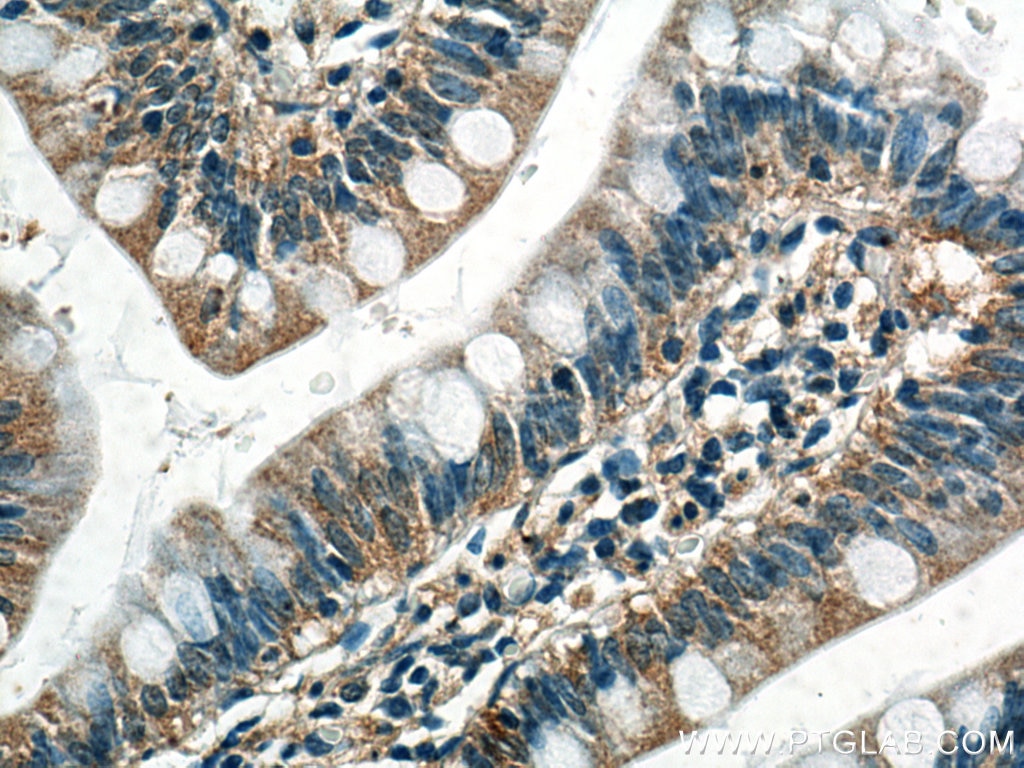
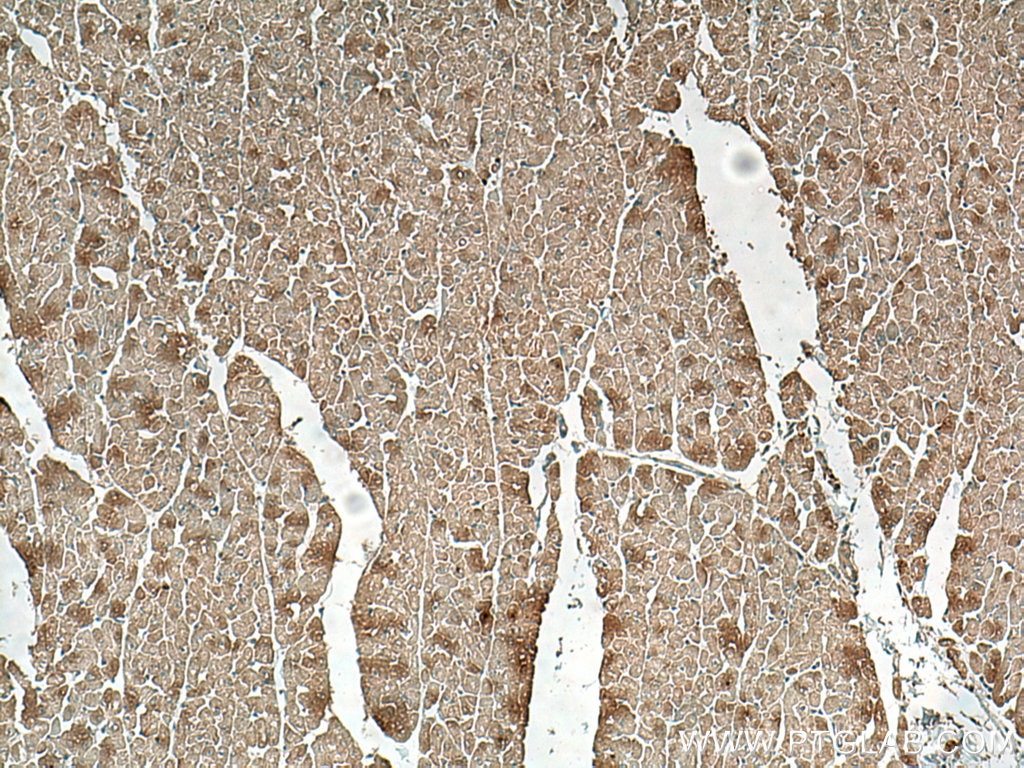
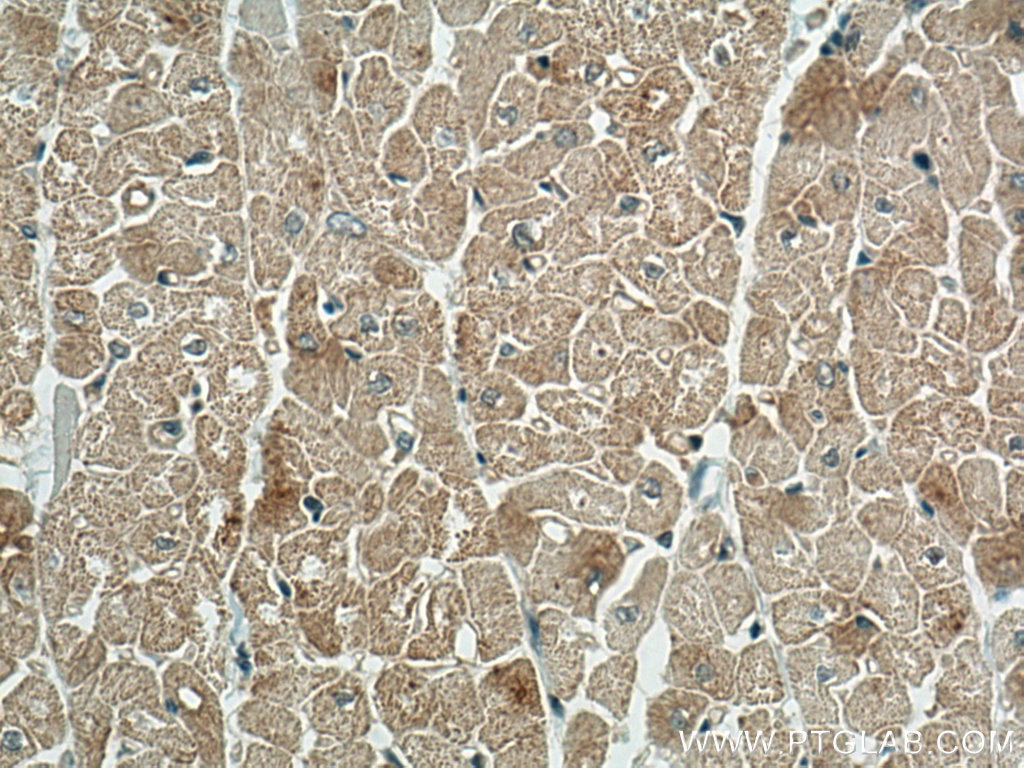
| Positive IHC detected in | human small intestine tissue, human heart tissue Note: suggested antigen retrieval with TE buffer pH 9.0; (*) Alternatively, antigen retrieval may be performed with citrate buffer pH 6.0 |
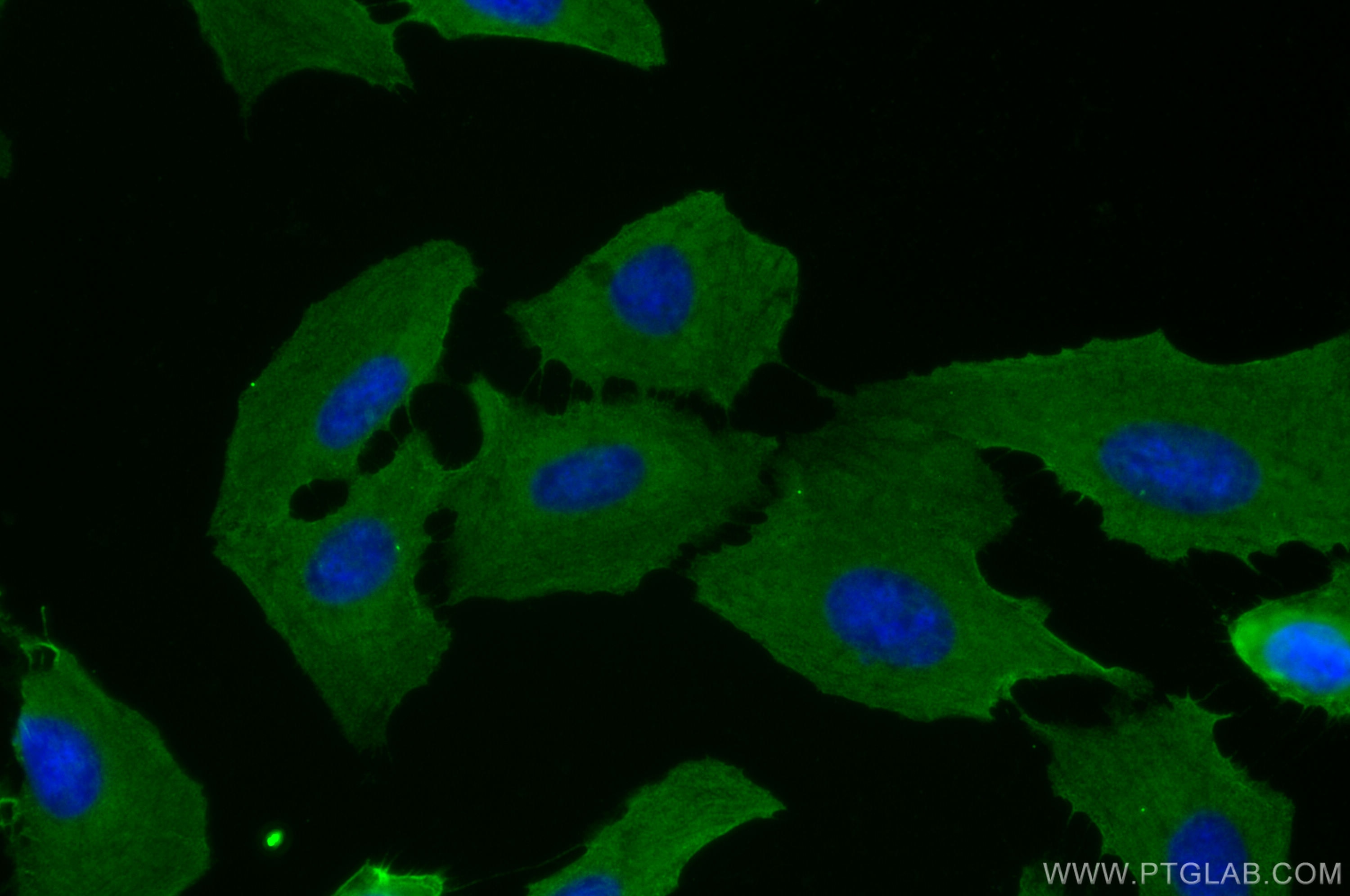
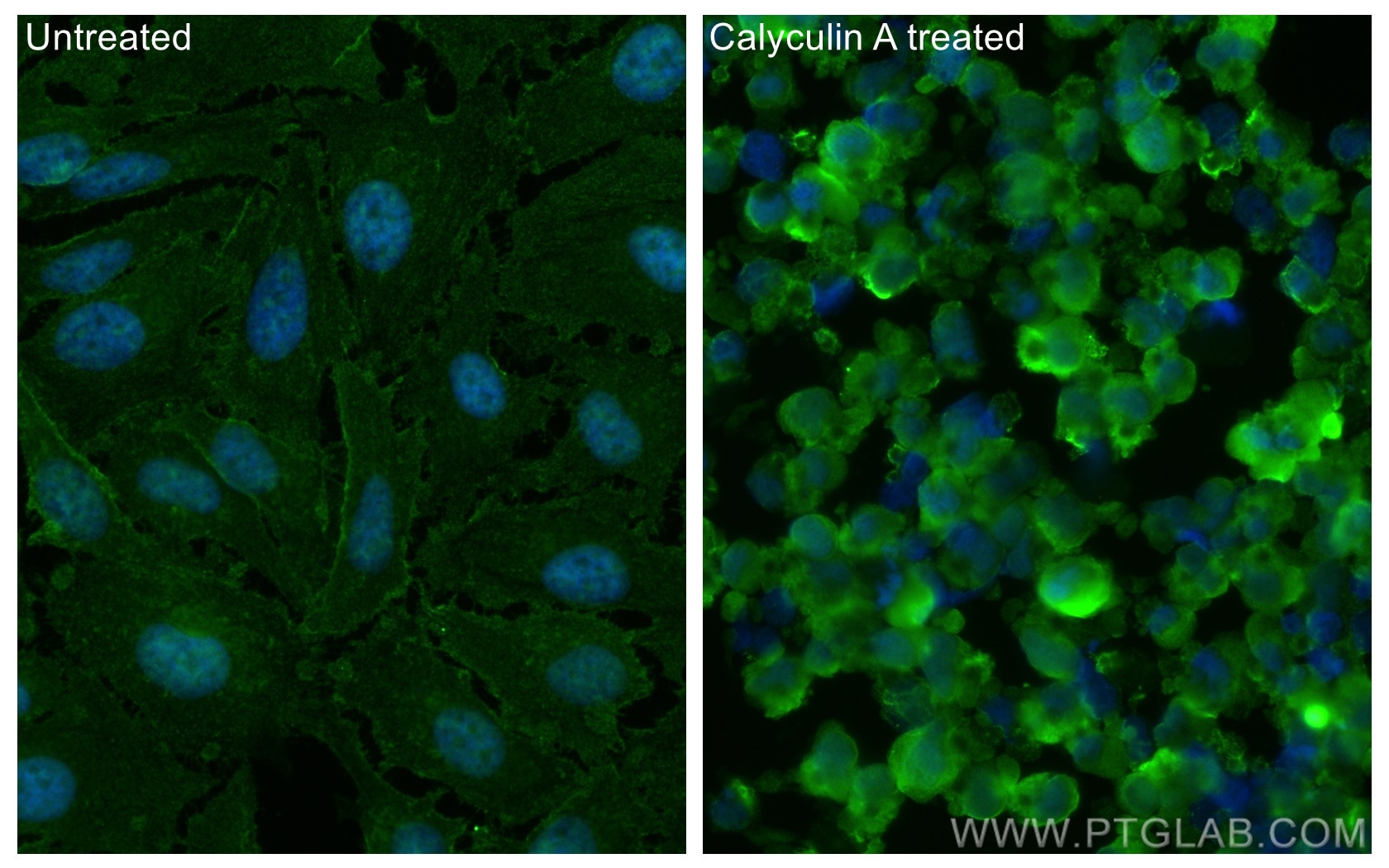
| Positive IF/ICC detected in | U2OS cells, Calyculin A treated HeLa cells |
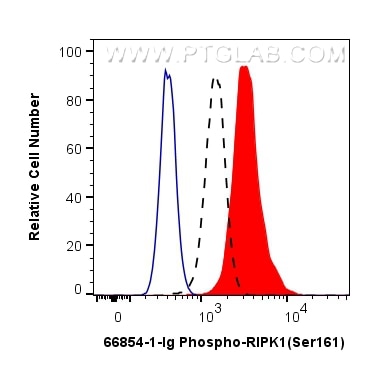
| Positive FC (Intra) detected in | Calyculin A treated HEK-293T cells |
Recommended dilution
| Application | Dilution |
|---|---|
| Western Blot (WB) | WB : 1:2000- 1:20000 |
| Immunohistochemistry (IHC) | IHC : 1:250-1:1000 |
| Immunofluorescence (IF)/ICC | IF/ICC : 1:400-1:1600 |
| Flow Cytometry (FC) (INTRA) | FC (INTRA) : 0.13 ug per 10^6 cells in a 100 µl suspension |
| It is recommended that this reagent should be titrated in each testing system to obtain optimal results. | |
| Sample-dependent, Check data in validation data gallery. | |
Product Information
66854-1-Ig targets Phospho-RIPK1 (Ser161) in WB, IHC, IF/ICC, FC (Intra), ELISA applications and shows reactivity with human samples.
| Tested Reactivity | human |
| Cited Reactivity | human, mouse, rat, pig |
| Host / Isotype | Mouse / IgG1 |
| Class | Monoclonal |
| Type | Antibody |
| Immunogen |
Peptide Predict reactive species |
| Full Name | receptor (TNFRSF)-interacting serine-threonine kinase 1 |
| Calculated Molecular Weight | 76 kDa |
| Observed Molecular Weight | 74 kDa, 45 kDa |
| GenBank Accession Number | NM_003804 |
| Gene Symbol | RIPK1 |
| Gene ID (NCBI) | 8737 |
| RRID | AB_2882194 |
| Conjugate | Unconjugated |
| Form | Liquid |
| Purification Method | Protein G purification |
| UNIPROT ID | Q13546 |
| Storage Buffer | PBS with 0.02% sodium azide and 50% glycerol, pH 7.3. |
| Storage Conditions | Store at -20°C. Stable for one year after shipment. Aliquoting is unnecessary for -20oC storage. 20ul sizes contain 0.1% BSA. |
Background Information
RIPK1(Receptor-interacting serine/threonine-protein kinase 1) is primarily involved in mediating TNF-R1-induced cell activation, apoptosis and necroptosis and belongs to a novel class of kinases thatfunction in cell survival and cell death mechanisms(PMID:22685397 ).It has 2 isoforms produced by alternative splicing.It also can exist as the protein with lower molecular weight about 25kd and 45kd in HAEC and HUVEC(PMID:22685397).
Protocols
| Product Specific Protocols | |
|---|---|
| IF protocol for Phospho-RIPK1 (Ser161) antibody 66854-1-Ig | Download protocol |
| IHC protocol for Phospho-RIPK1 (Ser161) antibody 66854-1-Ig | Download protocol |
| WB protocol for Phospho-RIPK1 (Ser161) antibody 66854-1-Ig | Download protocol |
| Standard Protocols | |
|---|---|
| Click here to view our Standard Protocols |
Publications
What published studies show
RIPK1 antibody (Cat# 66854-1-Ig) has accumulated 54 citations published in high-impact journals including Nature Communications, Science Advances, Advanced Science, Biomaterials, Cell Death & Disease, International Journal of Biological Sciences, Phytomedicine, Journal of Translational Medicine, British Journal of Pharmacology, International Immunopharmacology, and more. Associated research fields encompass necroptosis, PANoptosis, pyroptosis, inflammatory diseases, oncology, cardiovascular protection, renal injury, osteoarthritis, sepsis, and neuroinflammation. Western blot is the most frequently used application, supplemented by IHC and IF.
| Species | Application | Title |
|---|---|---|
Signal Transduct Target Ther Nucleosome assembly protein-like 1 degradation-dependent novel cardioprotection mechanism of Wnt2 against ischemia‒reperfusion injury | ||
Bioact Mater Hierarchical ROS-scavenging hydrogel system for coordinating the modulation of RGC necroptosis and oxidative stress in an acute glaucoma model. | ||
Nat Commun NPM3 functions as a lactyltransferase to promote necroptosis in male diabetic cardiomyopathy mice models via FASN transcription modulation. | ||
Microbiome Faecalibacterium prausnitzii-derived outer membrane vesicles reprogram gut microbiota metabolism to alleviate Porcine Epidemic Diarrhea Virus infection | ||
Adv Sci (Weinh) CD44-Targeting Hydroxyapatite Nanoparticles (HAP) Induce Mitochondrial Dysfunction-Driven PANoptosis and Immunogenic Cell Death (ICD) via Ca Overload in Colorectal Cancer. | ||
Sci Adv Bimetallic peroxide nanoparticles induce PANoptosis by disrupting ion homeostasis for enhanced immunotherapy |


