

Tested Applications
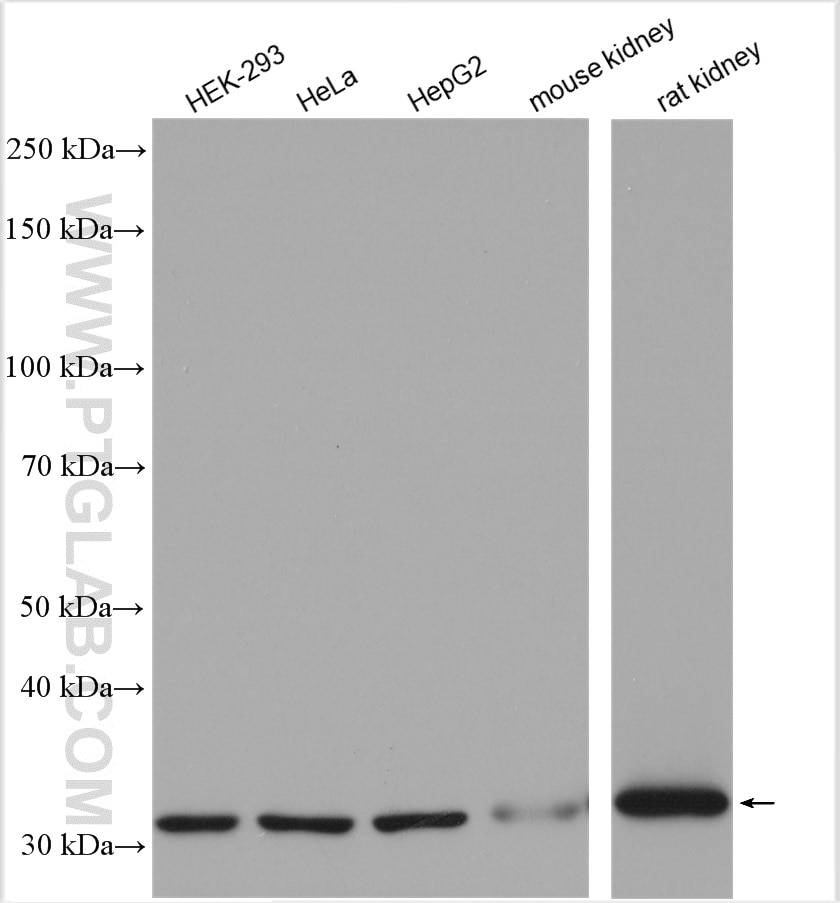
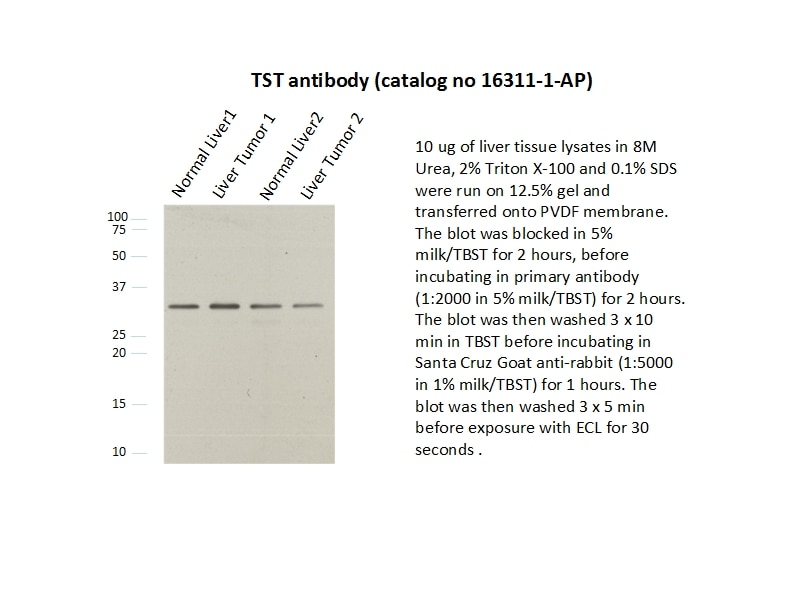
| Positive WB detected in | HEK-293 cells, human kidney tissue, liver tissue, HeLa cells, HepG2 cells, mouse kidney, rat kidney |
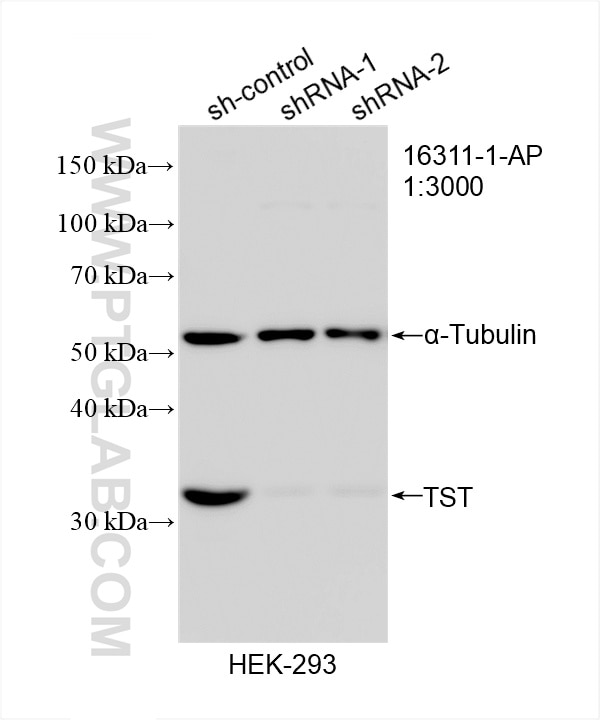
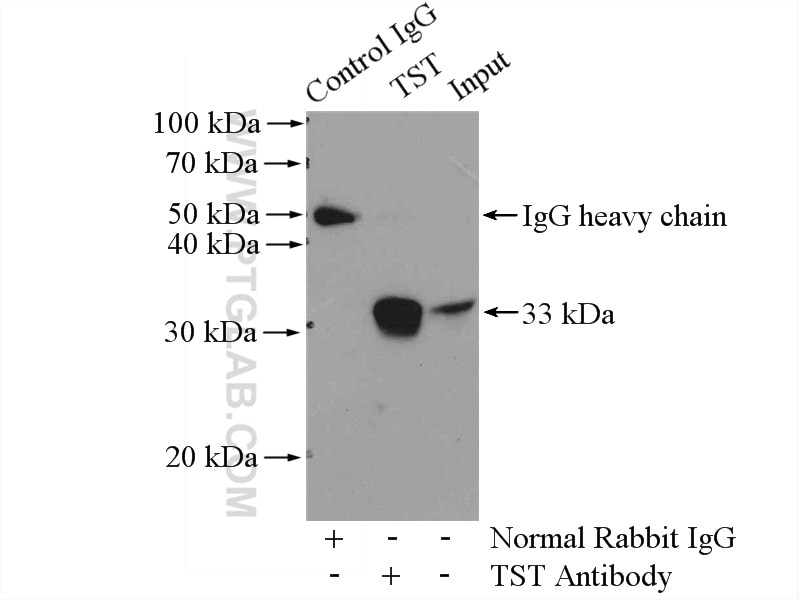
| Positive IP detected in | HEK-293 cells |
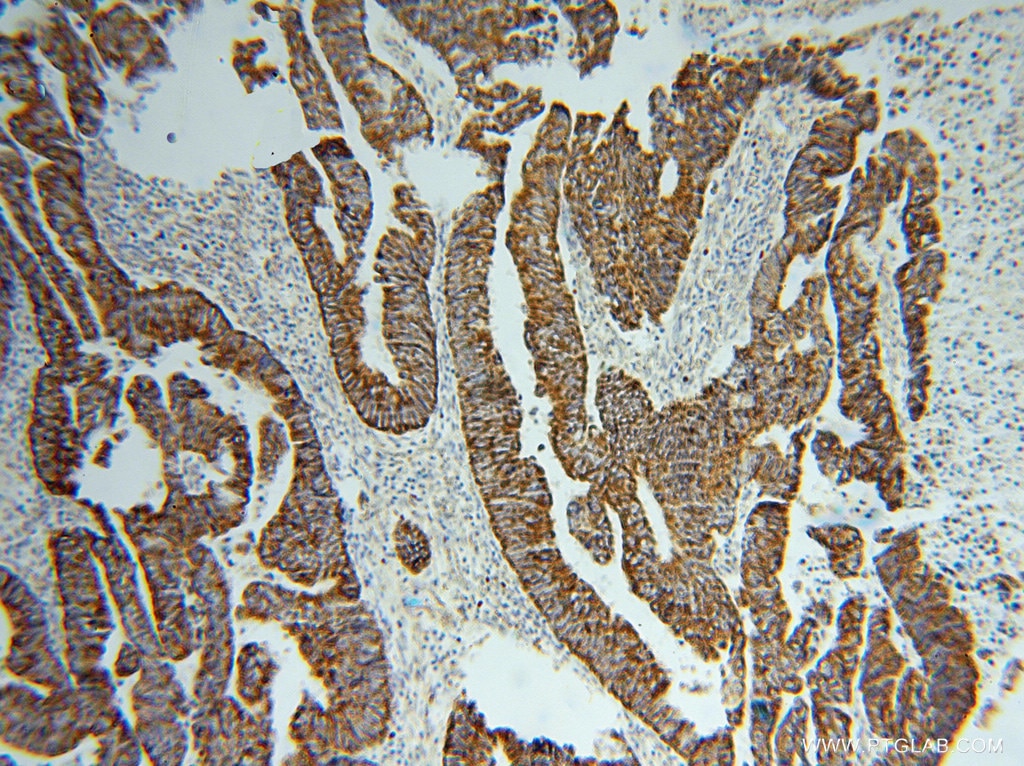
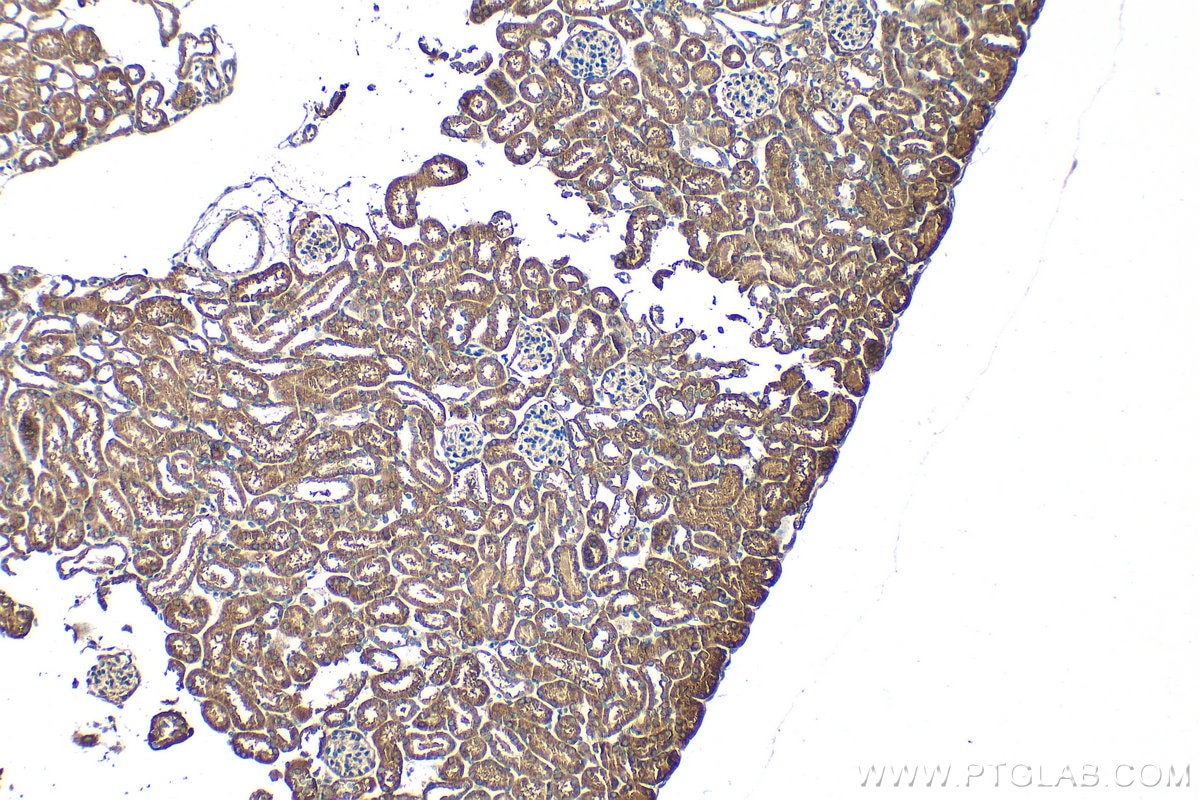
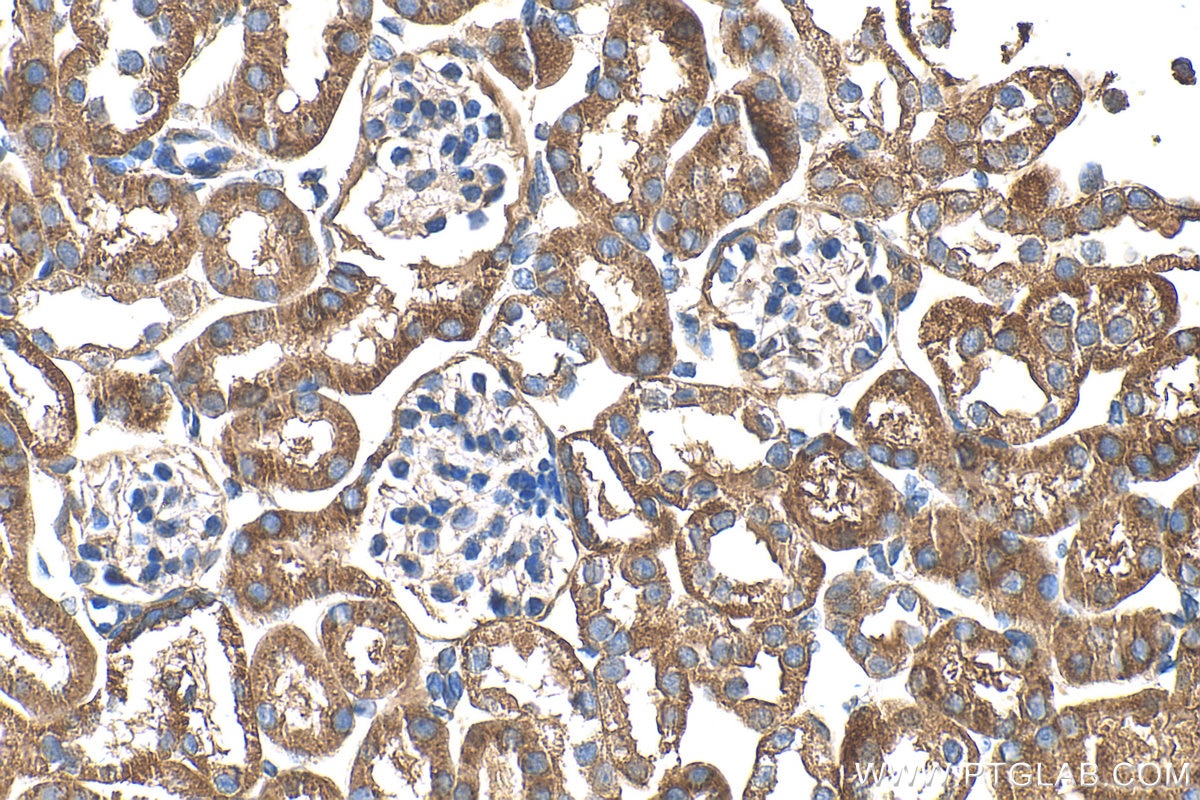
| Positive IHC detected in | mouse kidney tissue, human colon cancer tissue Note: suggested antigen retrieval with TE buffer pH 9.0; (*) Alternatively, antigen retrieval may be performed with citrate buffer pH 6.0 |
Recommended dilution
| Application | Dilution |
|---|---|
| Western Blot (WB) | WB : 1:1000-1:8000 |
| Immunoprecipitation (IP) | IP : 0.5-4.0 ug for 1.0-3.0 mg of total protein lysate |
| Immunohistochemistry (IHC) | IHC : 1:50-1:500 |
| It is recommended that this reagent should be titrated in each testing system to obtain optimal results. | |
| Sample-dependent, Check data in validation data gallery. | |
Product Information
16311-1-AP targets TST in WB, IHC, IP, ELISA applications and shows reactivity with human, mouse, rat samples.
| Tested Reactivity | human, mouse, rat |
| Cited Reactivity | human, mouse |
| Host / Isotype | Rabbit / IgG |
| Class | Polyclonal |
| Type | Antibody |
| Immunogen |
CatNo: Ag9346 Product name: Recombinant human TST protein Source: e coli.-derived, PGEX-4T Tag: GST Domain: 1-297 aa of BC010148 Sequence: MVHQVLYRALVSTKWLAESIRTGKLGPGLRVLDASWYSPGTREARKEYLERHVPGASFFDIEECRDTASPYEMMLPSEAGFAEYVGRLGISNHTHVVVYDGEHLGSFYAPRVWWMFRVFGHRTVSVLNGGFRNWLKEGHPVTSEPSRPEPAVFKATLDRSLLKTYEQVLENLESKRFQLVDSRSQGRFLGTEPEPDAVGLDSGHIRGAVNMPFMDFLTEDGFEKGPEELRALFQTKKVDLSQPLIATCRKGVTACHVALAAYLCGKPDVAVYDGSWSEWFRRAPPESRVSQGKSEKA Predict reactive species |
| Full Name | thiosulfate sulfurtransferase (rhodanese) |
| Calculated Molecular Weight | 297 aa, 33 kDa |
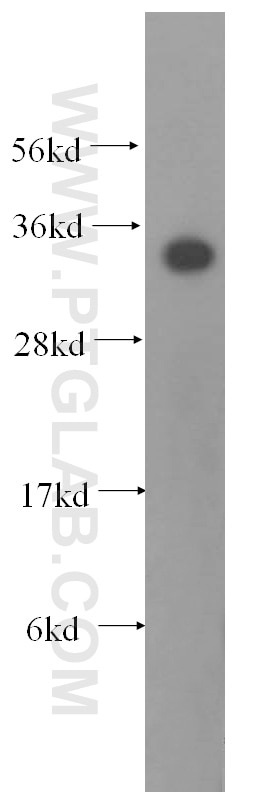
| Observed Molecular Weight | 33 kDa |
| GenBank Accession Number | BC010148 |
| Gene Symbol | TST |
| Gene ID (NCBI) | 7263 |
| RRID | AB_2211217 |
| Conjugate | Unconjugated |
| Form | Liquid |
| Purification Method | Antigen affinity purification |
| UNIPROT ID | Q16762 |
| Storage Buffer | PBS with 0.02% sodium azide and 50% glycerol, pH 7.3. |
| Storage Conditions | Store at -20°C. Stable for one year after shipment. Aliquoting is unnecessary for -20oC storage. 20ul sizes contain 0.1% BSA. |
Background Information
Thiosulfate sulfurtransferase (TST), also known as rhodanese, is a mitochondrial enzyme involved in cyanide detoxification and the formation of iron-sulfur proteins and the modification of sulfur-containing enzymes.
Protocols
| Product Specific Protocols | |
|---|---|
| IHC protocol for TST antibody 16311-1-AP | Download protocol |
| IP protocol for TST antibody 16311-1-AP | Download protocol |
| WB protocol for TST antibody 16311-1-AP | Download protocol |
| Standard Protocols | |
|---|---|
| Click here to view our Standard Protocols |
Publications
What published studies show
Anti-TST (Thiosulfate Sulfurtransferase) polyclonal antibody, catalog #16311-1-AP, has 11 citations appearing in journals including Redox Biology, Pharmacological Research, Free Radical Biology and Medicine, EMBO Molecular Medicine, Antioxidants & Redox Signaling, Biochemical Pharmacology, Frontiers in Pharmacology, Amino Acids, and Human Molecular Genetics. Associated research fields include sulfur metabolism, mitochondrial sulfide oxidation, metabolic syndrome, vascular inflammation, colorectal cancer, cysteine homeostasis, and coenzyme Q deficiency.
| Species | Application | Title |
|---|---|---|
Redox Biol Cth/Mpst double ablation results in early onset fatty liver disease in lean mice | ||
Pharmacol Res Protective role of 3-mercaptopyruvate sulfurtransferase (MPST) in the development of metabolic syndrome and vascular inflammation | ||
Free Radic Biol Med The role of 3-mercaptopyruvate sulfurtransferase in colorectal cancer progression and tumor angiogenesis. | ||
EMBO Mol Med CoQ deficiency causes disruption of mitochondrial sulfide oxidation, a new pathomechanism associated with this syndrome. | ||
Antioxid Redox Signal The Cysteine Dioxgenase Knockout Mouse: Altered Cysteine Metabolism in Nonhepatic Tissues Leads to Excess H2S/HS(-) Production and Evidence of Pancreatic and Lung Toxicity. |


