

Tested Applications
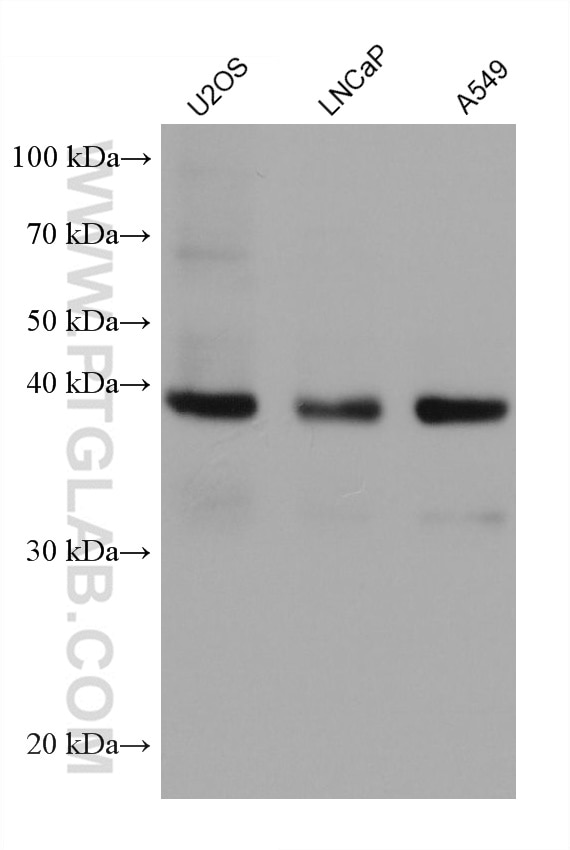
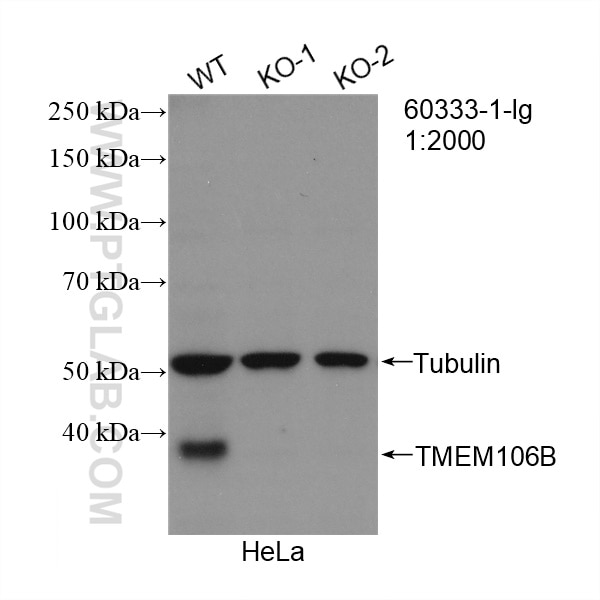
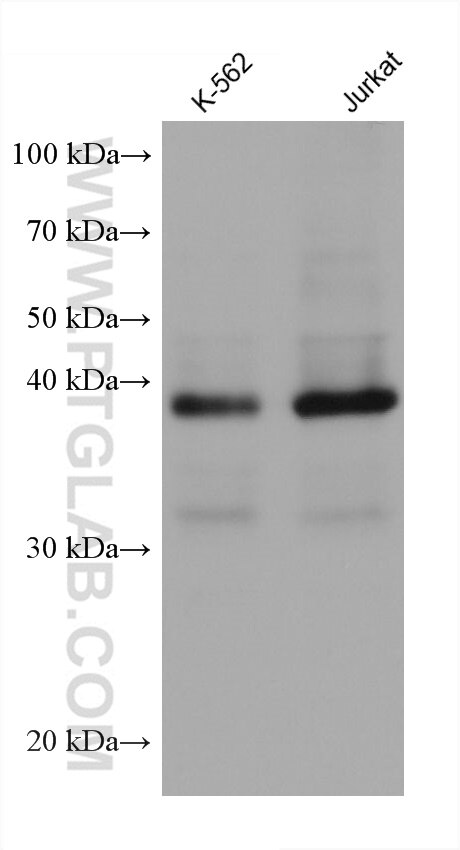
| Positive WB detected in | U2OS cells, HeLa cells, K-562 cells, LNCaP cells, A549 cells, Jurkat cells |
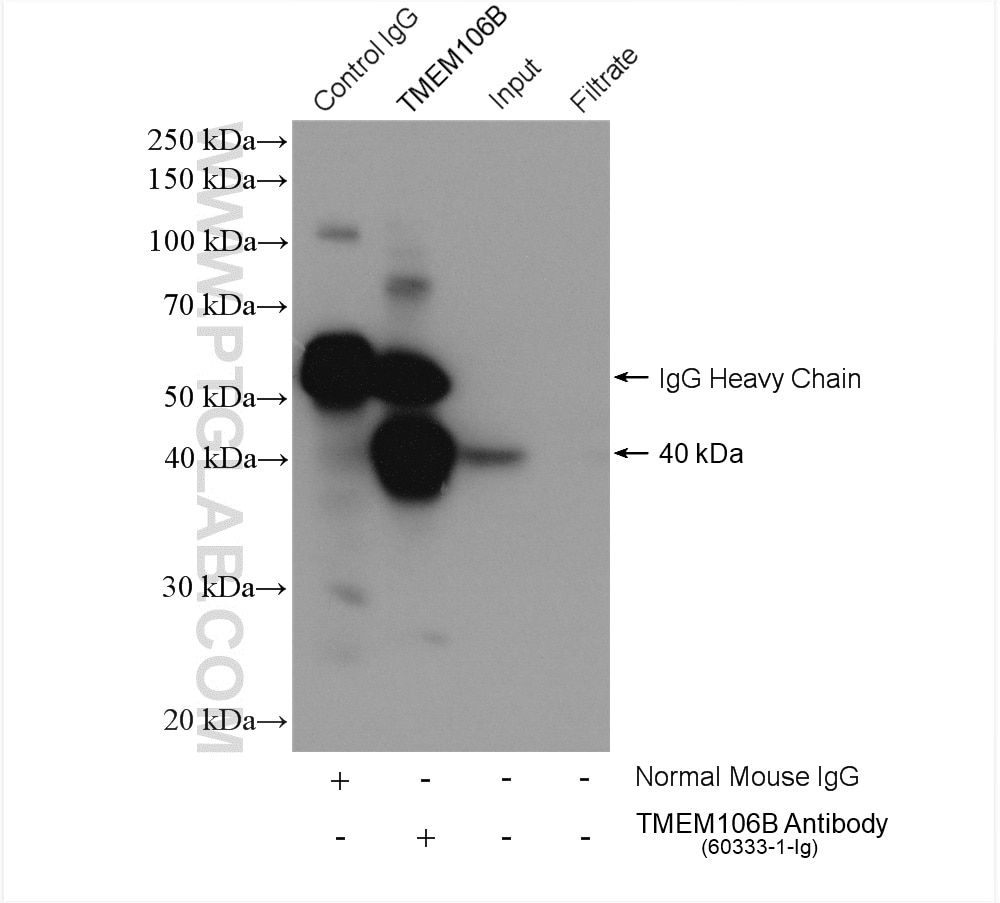
| Positive IP detected in | HeLa cells |
Recommended dilution
| Application | Dilution |
|---|---|
| Western Blot (WB) | WB : 1:5000-1:50000 |
| Immunoprecipitation (IP) | IP : 0.5-4.0 ug for 1.0-3.0 mg of total protein lysate |
| It is recommended that this reagent should be titrated in each testing system to obtain optimal results. | |
| Sample-dependent, Check data in validation data gallery. | |
Product Information
60333-1-Ig targets TMEM106B (1-46aa) in WB, IHC, IF, IP, CoIP, ELISA applications and shows reactivity with human samples.
| Tested Reactivity | human |
| Cited Reactivity | human, mouse |
| Host / Isotype | Mouse / IgG1 |
| Class | Monoclonal |
| Type | Antibody |
| Immunogen |
CatNo: Ag21448 Product name: Recombinant human TMEM106B protein Source: e coli.-derived, PGEX-4T Tag: GST Domain: 1-46 aa of BC033901 Sequence: MGKSLSHLPLHSSKEDAYDGVTSENMRNGLVNSEVHNEDGRNGDVS Predict reactive species |
| Full Name | transmembrane protein 106B |
| Calculated Molecular Weight | 31 kDa |
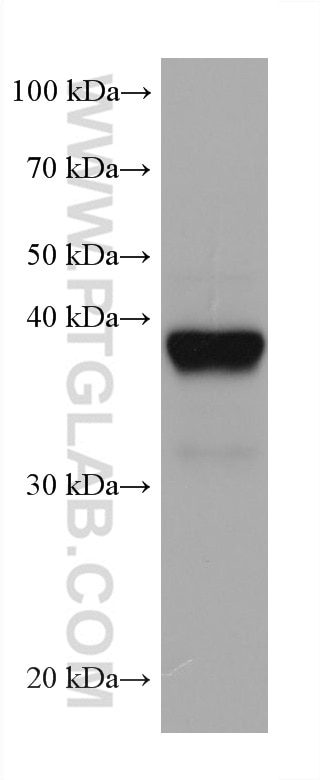
| Observed Molecular Weight | ~40 kDa |
| GenBank Accession Number | BC033901 |
| Gene Symbol | TMEM106B |
| Gene ID (NCBI) | 54664 |
| RRID | AB_2881442 |
| Conjugate | Unconjugated |
| Form | Liquid |
| Purification Method | Protein G purification |
| UNIPROT ID | Q9NUM4 |
| Storage Buffer | PBS with 0.02% sodium azide and 50% glycerol, pH 7.3. |
| Storage Conditions | Store at -20°C. Stable for one year after shipment. Aliquoting is unnecessary for -20oC storage. 20ul sizes contain 0.1% BSA. |
Background Information
TMEM106B is a genetic risk factor for frontotemporal lobar degeneration with TDP-43 inclusions (FTLD-TDP). Amyotrophic lateral sclerosis (ALS), like FTLD-TDP, is characterized by pathological TDP-43 inclusions. TMEM106B expression in the brain may be linked to mechanisms of disease in FTLD-TDP and risk alleles confer genetic susceptibility by increasing gene expression.
Protocols
| Product Specific Protocols | |
|---|---|
| IP protocol for TMEM106B (1-46aa) antibody 60333-1-Ig | Download protocol |
| WB protocol for TMEM106B (1-46aa) antibody 60333-1-Ig | Download protocol |
| Standard Protocols | |
|---|---|
| Click here to view our Standard Protocols |
Publications
What published studies show
The anti-TMEM106B antibody (Cat# 60333-1-Ig) has 12 total citations. Citations appear in journals including Cell, Brain, Molecular Neurodegeneration, Acta Neuropathologica, Life Medicine, Acta Neuropathology Communications, Frontiers in Cellular Neuroscience, FASEB Journal, Journal of Medical Virology, Pathological Research and Practice, International Journal of Biochemistry and Cell Biology, and F1000Research. Research fields span neurodegenerative diseases (Parkinson's, ALS/FTD), lysosomal dysfunction, viral entry mechanisms, hematopoietic stem cell biology, cancer, and renal physiology.
| Species | Application | Title |
|---|---|---|
Mol Neurodegener Increased TMEM106B levels lead to lysosomal dysfunction which affects synaptic signaling and neuronal health | ||
Brain C-terminal TMEM106B fragments in human brain correlate with disease-associated TMEM106B haplotypes | ||
Acta Neuropathol Accumulation of TMEM106B C-terminal fragments in neurodegenerative disease and aging | ||
Life Med Tracing TMEM106B fibril deposition in aging and Parkinson's disease with dementia brains | ||
Acta Neuropathol Commun Divergent and convergent TMEM106B pathology in murine models of neurodegeneration and human disease. |


