

Tested Applications
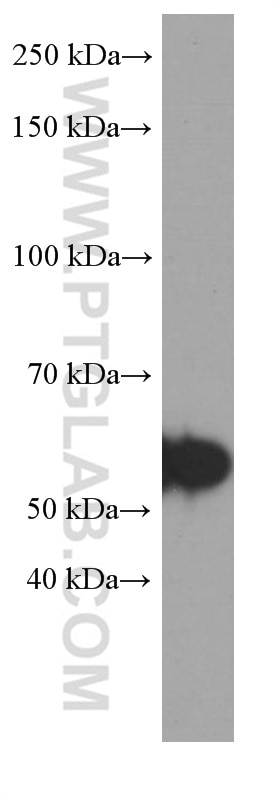
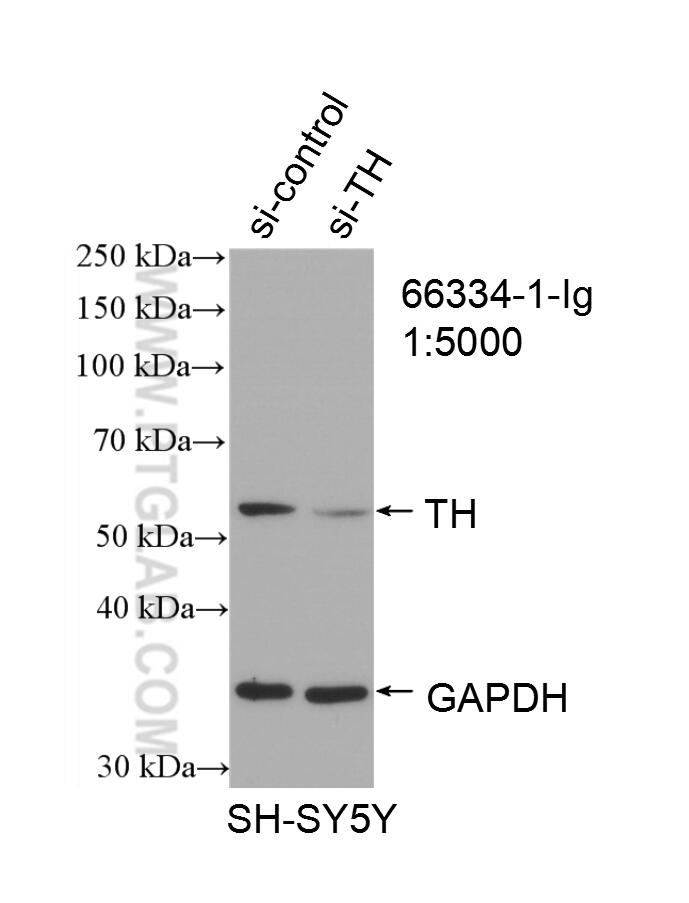
| Positive WB detected in | SH-SY5Y cells |
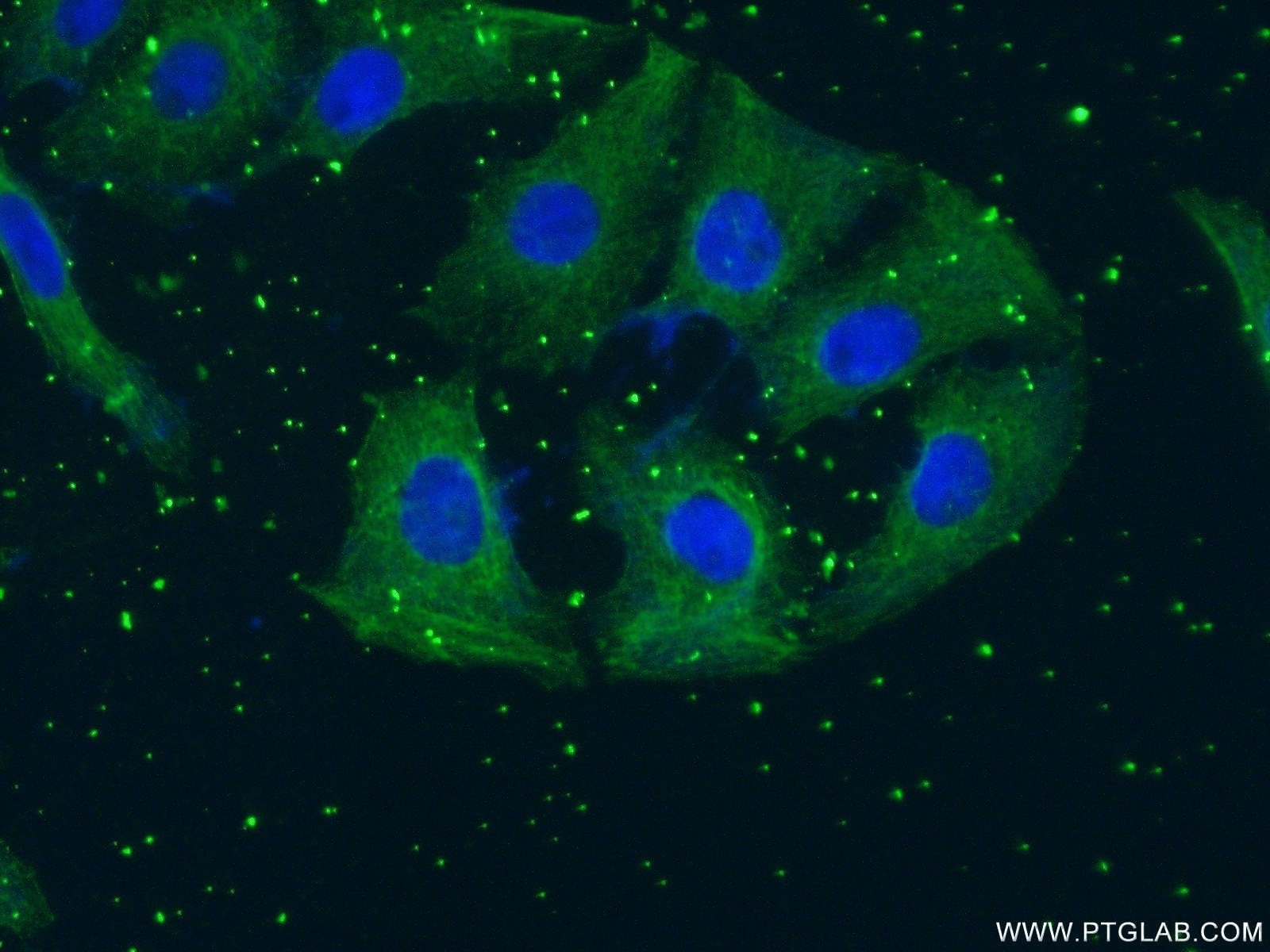
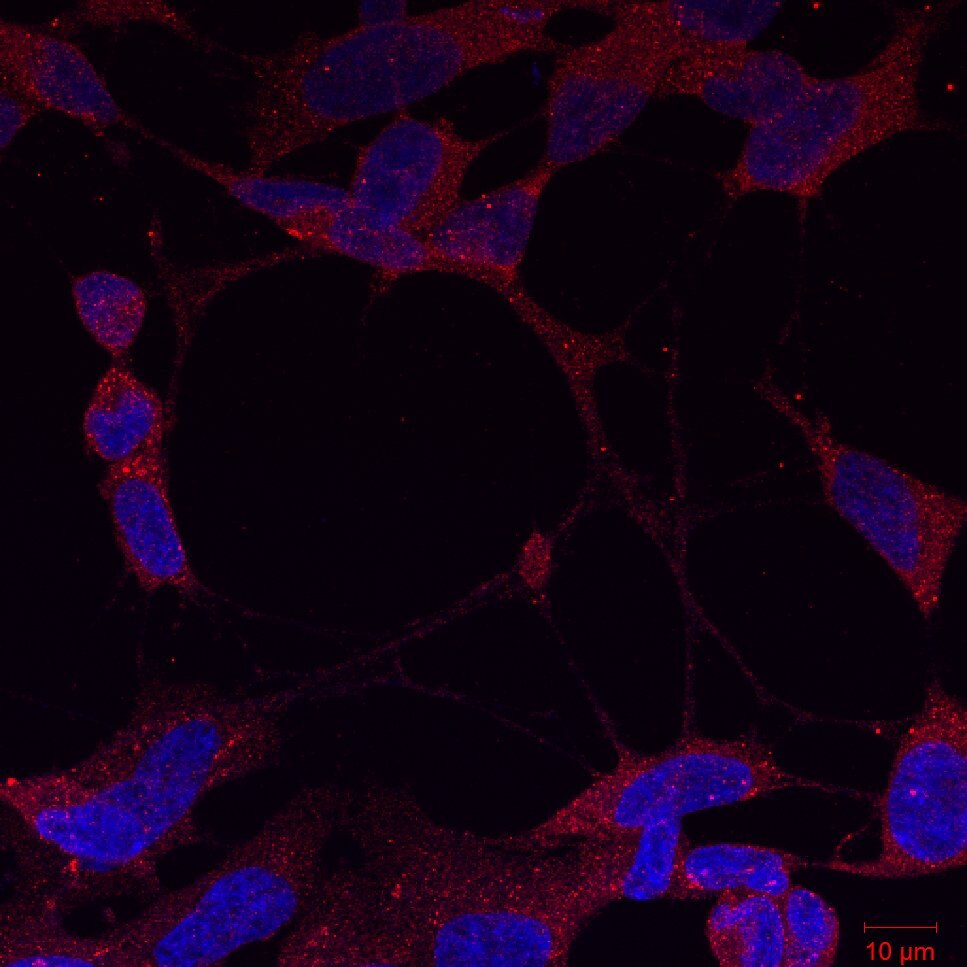
| Positive IF/ICC detected in | SH-SY5Y cells |
Recommended dilution
| Application | Dilution |
|---|---|
| Western Blot (WB) | WB : 1:1000-1:4000 |
| Immunofluorescence (IF)/ICC | IF/ICC : 1:50-1:500 |
| It is recommended that this reagent should be titrated in each testing system to obtain optimal results. | |
| Sample-dependent, Check data in validation data gallery. | |
Product Information
66334-1-Ig targets TH in WB, IHC, IF/ICC, ELISA applications and shows reactivity with human samples.
| Tested Reactivity | human |
| Cited Reactivity | human |
| Host / Isotype | Mouse / IgG1 |
| Class | Monoclonal |
| Type | Antibody |
| Immunogen |
CatNo: Ag23075 Product name: Recombinant human TH protein Source: e coli.-derived, PET30a Tag: 6*His Domain: 1-260 aa of BC104967 Sequence: MPTPDATTPQAKGFRRAVSELDAKQAEAIMSPRFIGRRQSLIEDARKEREAAVAAAAAAVPSEPGDPLEAVAFEEKEGKAMLNLLFSPRATKPSALSRAVKVFETFEAKIHHLETRPAQRPRAGGPHLEYFVRLEVRRGDLAALLSGVRQVSEDVRSPAGPKVPWFPRKVSELDKCHHLVTKFDPDLDLDHPGFSDQVYRQRRKLIAEIAFQYRHGDPIPRVEYTAEEIATWKEVYTTLKGLYATHACGEHLEAFALLER Predict reactive species |
| Full Name | tyrosine hydroxylase |
| Calculated Molecular Weight | 528 aa, 59 kDa |
| Observed Molecular Weight | 55 kDa |
| GenBank Accession Number | BC104967 |
| Gene Symbol | TH |
| Gene ID (NCBI) | 7054 |
| RRID | AB_2881714 |
| Conjugate | Unconjugated |
| Form | Liquid |
| Purification Method | Protein G purification |
| UNIPROT ID | P07101 |
| Storage Buffer | PBS with 0.02% sodium azide and 50% glycerol, pH 7.3. |
| Storage Conditions | Store at -20°C. Stable for one year after shipment. Aliquoting is unnecessary for -20oC storage. 20ul sizes contain 0.1% BSA. |
Background Information
TH(Tyrosine 3-monooxygenase) converts L-tyrosine to L-3,4-dihydroxyphenylalanine (L-DOPA), the essential and rate-limiting step to formation of DA and other catecholamines. TH plays an important role in the physiology of adrenergic neurons and can be used as a marker for DA and noradrenergic neurons.
Protocols
| Product Specific Protocols | |
|---|---|
| IF protocol for TH antibody 66334-1-Ig | Download protocol |
| WB protocol for TH antibody 66334-1-Ig | Download protocol |
| Standard Protocols | |
|---|---|
| Click here to view our Standard Protocols |
Publications
What published studies show
The TH Monoclonal antibody (2H7B7), catalog number 66334-1-Ig, has 35 citations. These appear in journals including Science Advances, Journal of Neuroinflammation, Journal of Translational Medicine, NPJ Parkinson's Disease, Molecular Neurobiology, Journal of Neurochemistry, Frontiers in Pharmacology, and Biochemical and Biophysical Research Communications. The research fields are dominated by Parkinson's disease and dopaminergic neuron studies, along with neurodegeneration, mitochondrial dysfunction, oxidative stress, ferroptosis, and neuroinflammation, with a few citations in cancer (colon cancer, neuroblastoma).
| Species | Application | Title |
|---|---|---|
Sci Adv A nanoparticle-based wireless deep brain stimulation system that reverses Parkinson's disease | ||
J Neuroinflammation Activation of HCA2 regulates microglial responses to alleviate neurodegeneration in LPS-induced in vivo and in vitro models | ||
J Transl Med Chronic sleep deprivation induces plasma exosome-derived miR-150-5p downregulation as a novel mechanism involved in Parkinson's disease progression by targeting DCLK1 | ||
Neural Regen Res Schwann cells differentiated from skin-derived precursors provide neuroprotection via autophagy inhibition in a cellular model of Parkinson's disease. | ||
NPJ Parkinsons Dis Disruption of axonal transport in Parkinson's disease: the role of pathological α-Syn and AMPK/p38 MAPK signaling | ||
Antioxidants (Basel) Mitochondrial Calcium-Triggered Oxidative Stress and Developmental Defects in Dopaminergic Neurons Differentiated from Deciduous Teeth-Derived Dental Pulp Stem Cells with MFF Insufficiency |
Reviews
What customers say
Customers report positive results with this antibody across applications. One user achieved strong immunohistochemistry staining on rat brain tissue at a 1:600 dilution, rating the product 5 out of 5. Another user performed immunofluorescence on differentiated SH-SY-5Y cells using a 1:200 dilution with overnight primary incubation at 4 °C, followed by a 1-hour secondary antibody step, and rated it 4 out of 5. Overall, reviewers find the antibody reliable and effective for both tissue and cell-based staining.
The reviews below have been submitted by verified Proteintech customers who received an incentive for providing their feedback.
Marion (Verified Customer) (10-27-2025) | Very good product
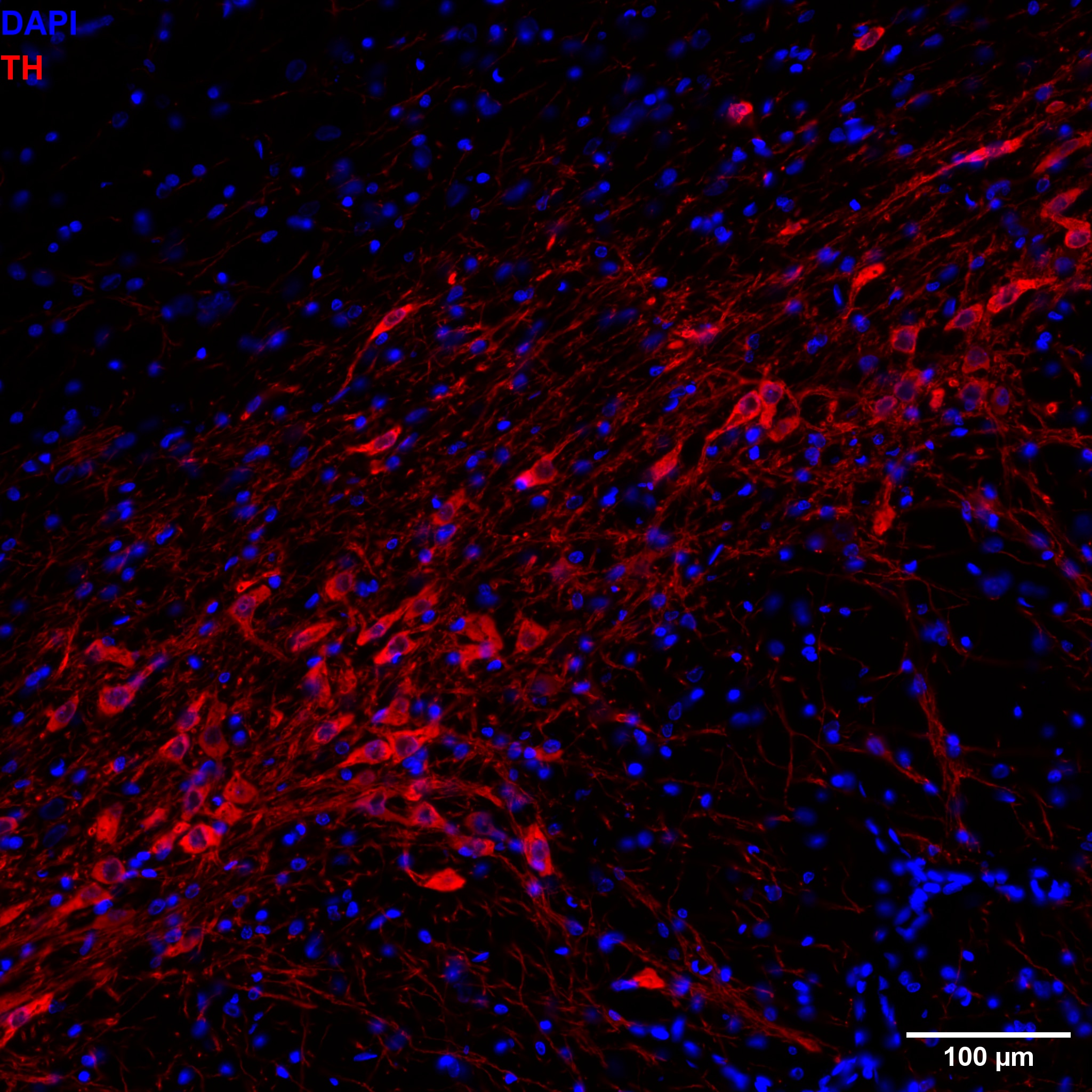 |
Angie (Verified Customer) (01-20-2025) | Overnight incubation of primary antibody (used at 1:200) at 4 °C followed by 1 h incubation of secondary antibody (Alexa Fluor Donkey anti-mouse 594, 1:500) at room temperature.
 |


