

Tested Applications
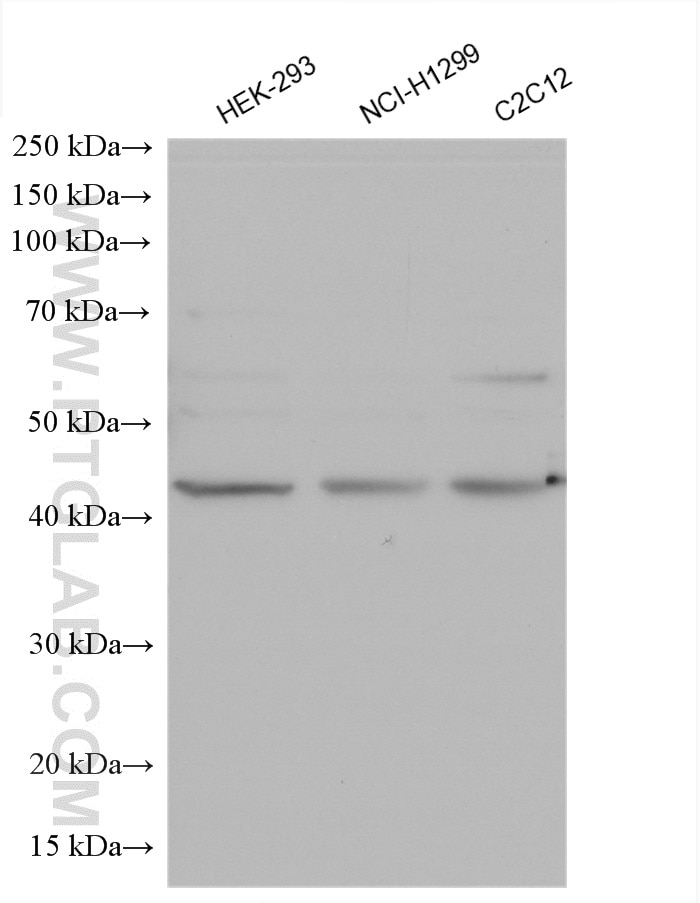
| Positive WB detected in | C2C12 cells |
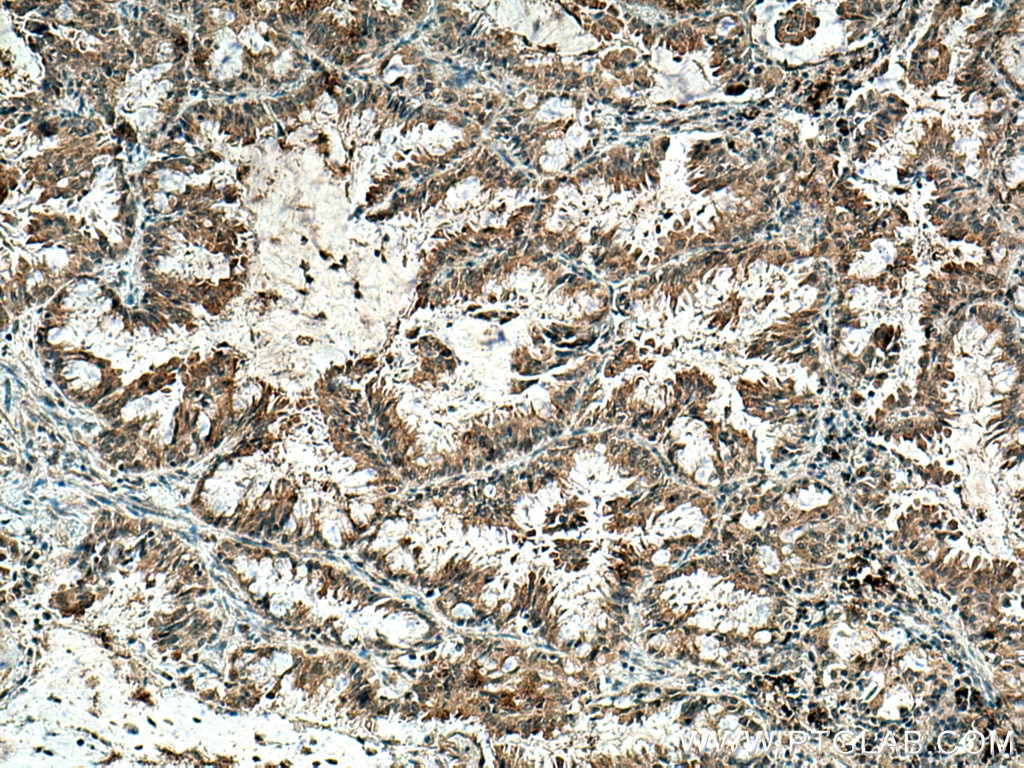
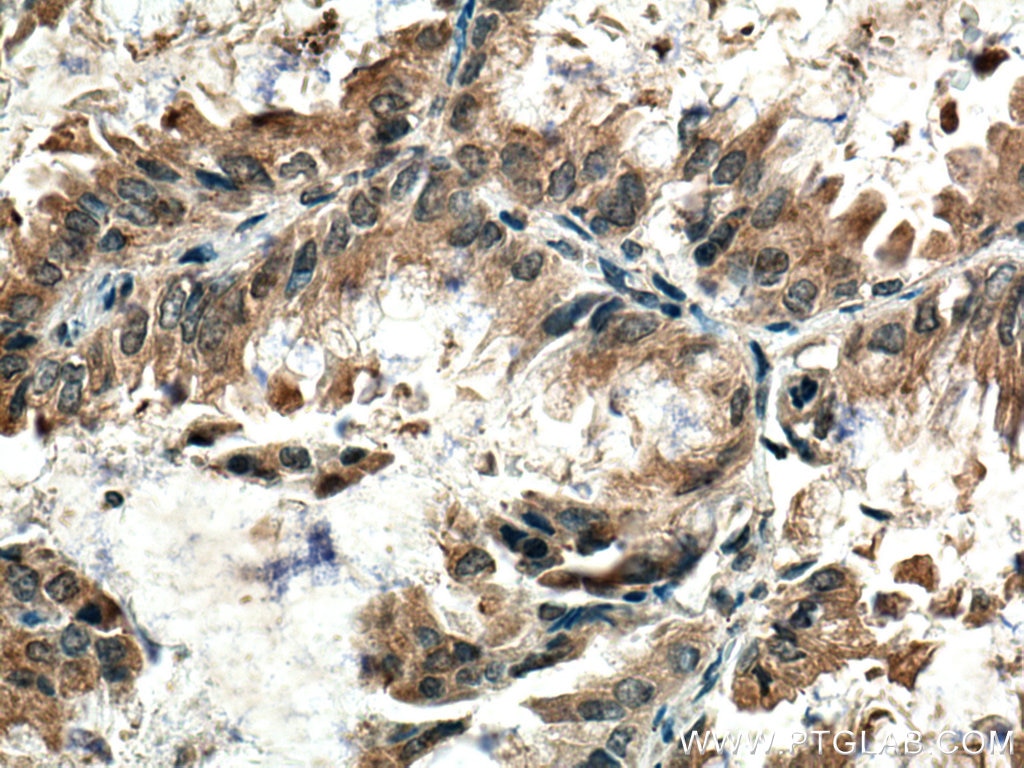
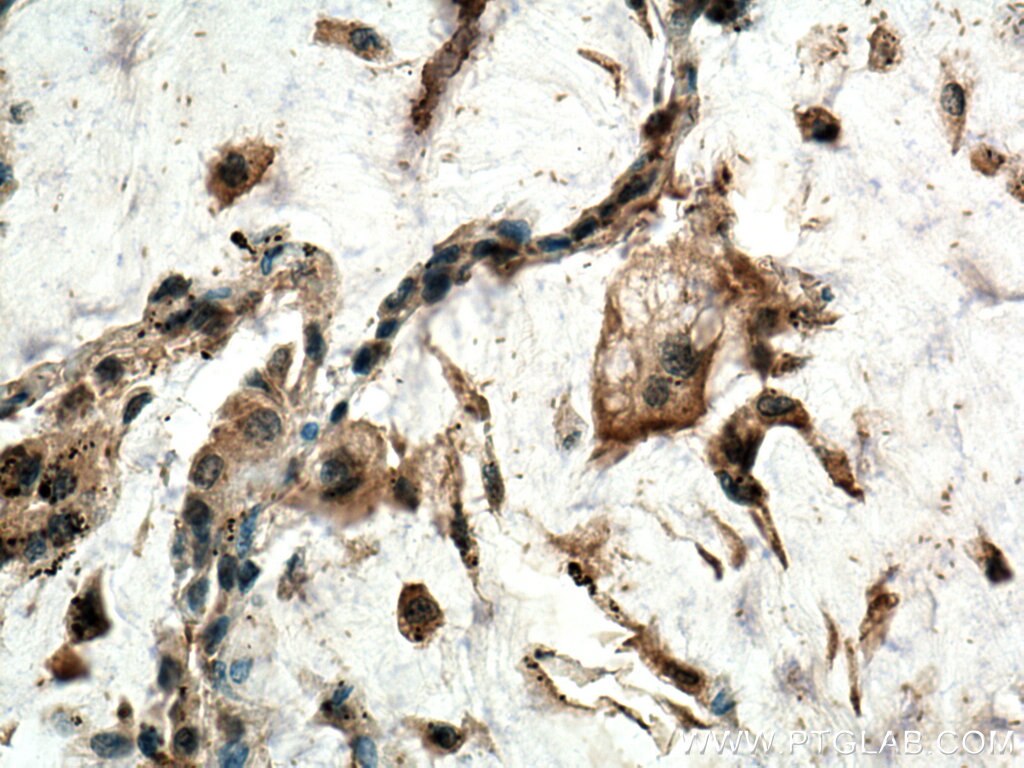
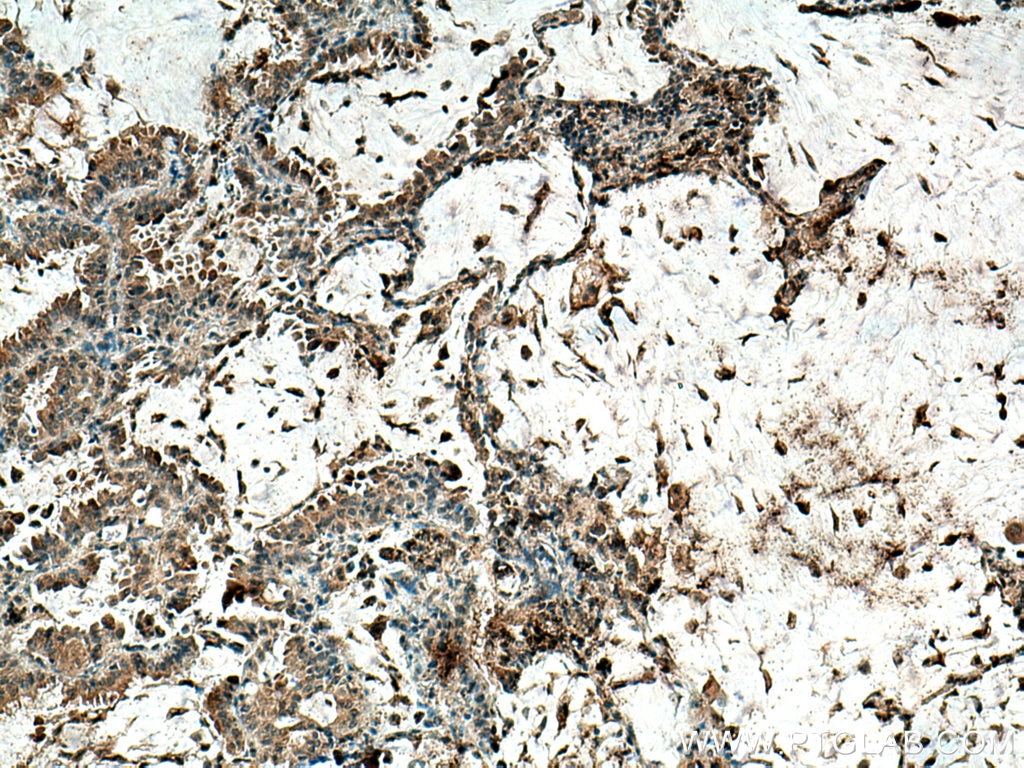
| Positive IHC detected in | human lung cancer tissue Note: suggested antigen retrieval with TE buffer pH 9.0; (*) Alternatively, antigen retrieval may be performed with citrate buffer pH 6.0 |
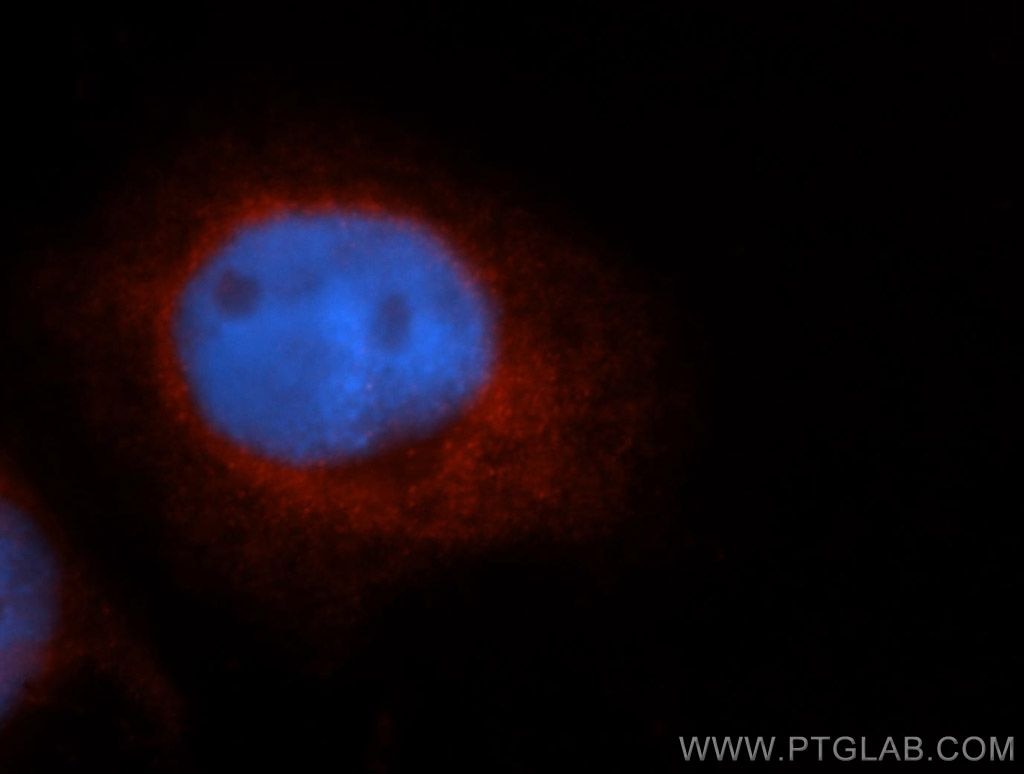
| Positive IF/ICC detected in | A431 cells |
Recommended dilution
| Application | Dilution |
|---|---|
| Western Blot (WB) | WB : 1:500-1:2000 |
| Immunohistochemistry (IHC) | IHC : 1:50-1:500 |
| Immunofluorescence (IF)/ICC | IF/ICC : 1:20-1:200 |
| It is recommended that this reagent should be titrated in each testing system to obtain optimal results. | |
| Sample-dependent, Check data in validation data gallery. | |
Product Information
13966-1-AP targets ZnT7 in WB, IHC, IF/ICC, ELISA applications and shows reactivity with human, mouse, rat samples.
| Tested Reactivity | human, mouse, rat |
| Cited Reactivity | human, mouse, rat, chicken |
| Host / Isotype | Rabbit / IgG |
| Class | Polyclonal |
| Type | Antibody |
| Immunogen |
CatNo: Ag4957 Product name: Recombinant human SLC30A7 protein Source: e coli.-derived, PGEX-4T Tag: GST Domain: 287-376 aa of BC064692 Sequence: RESVGILMQRTPPLLENSLPQCYQRVQQLQGVYSLQEQHFWTLCSDVYVGTLKLIVAPDADARWILSQTHNIFTQAGVRQLYVQIDFAAM Predict reactive species |
| Full Name | solute carrier family 30 (zinc transporter), member 7 |
| Calculated Molecular Weight | 42 kDa |
| Observed Molecular Weight | 42 kDa |
| GenBank Accession Number | BC064692 |
| Gene Symbol | SLC30A7 |
| Gene ID (NCBI) | 148867 |
| RRID | AB_2189776 |
| Conjugate | Unconjugated |
| Form | Liquid |
| Purification Method | Antigen affinity purification |
| UNIPROT ID | Q8NEW0 |
| Storage Buffer | PBS with 0.02% sodium azide and 50% glycerol, pH 7.3. |
| Storage Conditions | Store at -20°C. Stable for one year after shipment. Aliquoting is unnecessary for -20oC storage. 20ul sizes contain 0.1% BSA. |
Publications
What published studies show
Anti-ZnT3 antibody (Cat# 13966-1-AP) has 12 total citations. Publications appear in journals including Acta Neuropathologica Communications, Poultry Science, Frontiers in Physiology, Journal of Trace Elements in Medicine and Biology, Journal of Animal Science, Journal of Neuroscience Research, American Journal of Physiology–Gastrointestinal and Liver Physiology, Metallomics, FEBS Open Bio, Biological Open, and bioRxiv. Research fields span zinc transporter biology, neurodegenerative diseases (ALS, neuronal ceroid lipofuscinosis), alcoholic liver disease, reproductive health, poultry nutrition, immune regulation, and cellular senescence.
| Species | Application | Title |
|---|---|---|
Acta Neuropathol Commun Deregulation of subcellular biometal homeostasis through loss of the metal transporter, Zip7, in a childhood neurodegenerative disorder. | ||
Poult Sci The organic zinc with moderate chelation strength enhances the expression of related transporters in the jejunum and ileum of broilers | ||
Front Physiol Organic zinc with moderate chelation strength enhances zinc absorption in the small intestine and expression of related transporters in the duodenum of broilers | ||
J Trace Elem Med Biol Ginsenoside Rb1 combined with Lycium barbarum polysaccharide alleviate the Tripterygium wilfordii polyglycoside-induced oligoasthenozoospermia in mice by inhibiting ZnT3-mediated oxidative stress response | ||
J Anim Sci Zinc proteinate with moderate chelation strength enhances zinc absorption by upregulating the expression of zinc and amino acid transporters in primary cultured duodenal epithelial cells of broiler embryos | ||
J Neurosci Res Zinc transporters ZnT3 and ZnT6 are downregulated in the spinal cords of patients with sporadic amyotrophic lateral sclerosis. |


