

Tested Applications
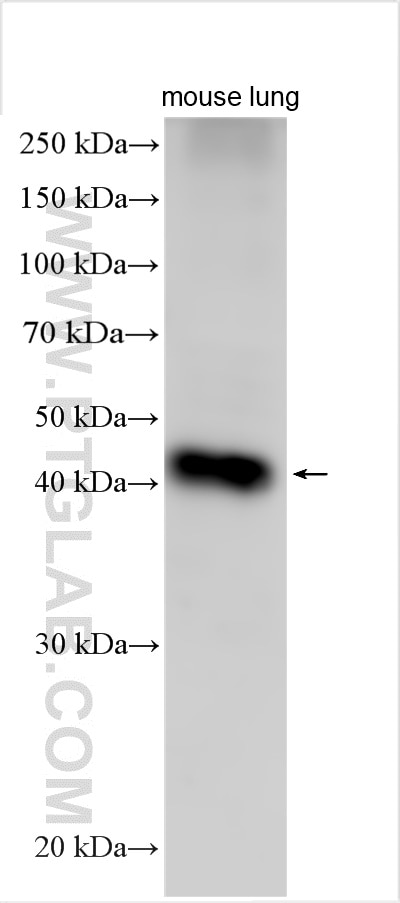
| Positive WB detected in | mouse lung tissue |
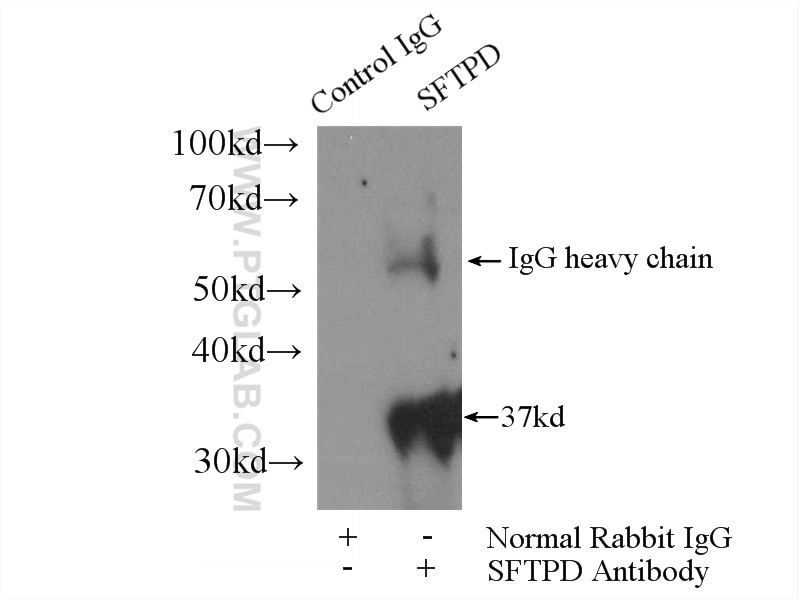
| Positive IP detected in | mouse lung tissue |
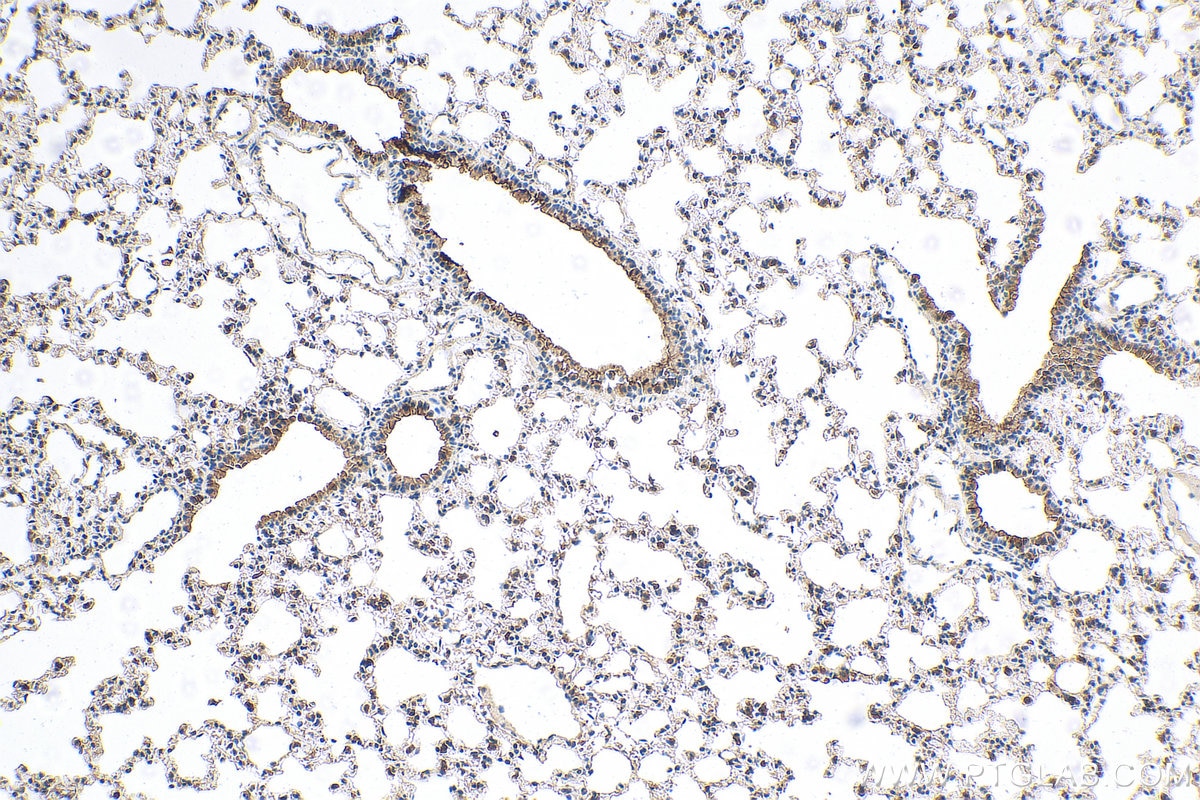
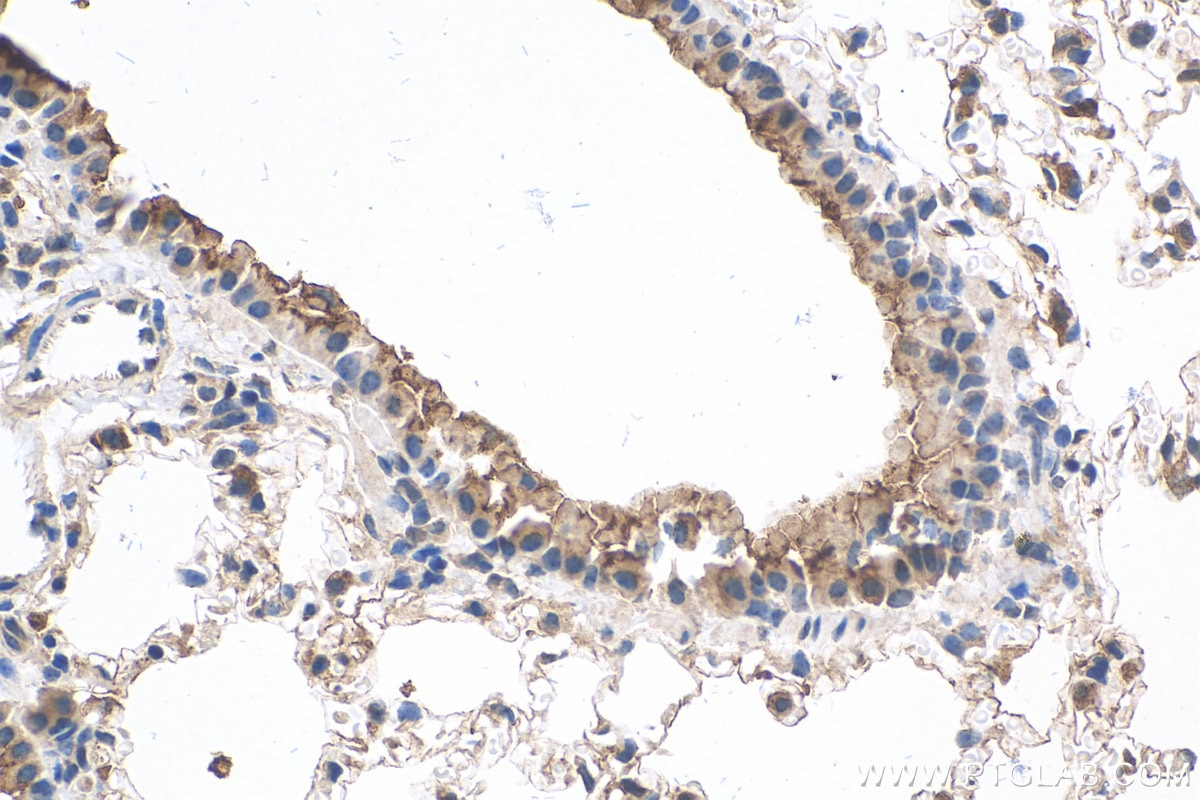
| Positive IHC detected in | mouse lung tissue Note: suggested antigen retrieval with TE buffer pH 9.0; (*) Alternatively, antigen retrieval may be performed with citrate buffer pH 6.0 |
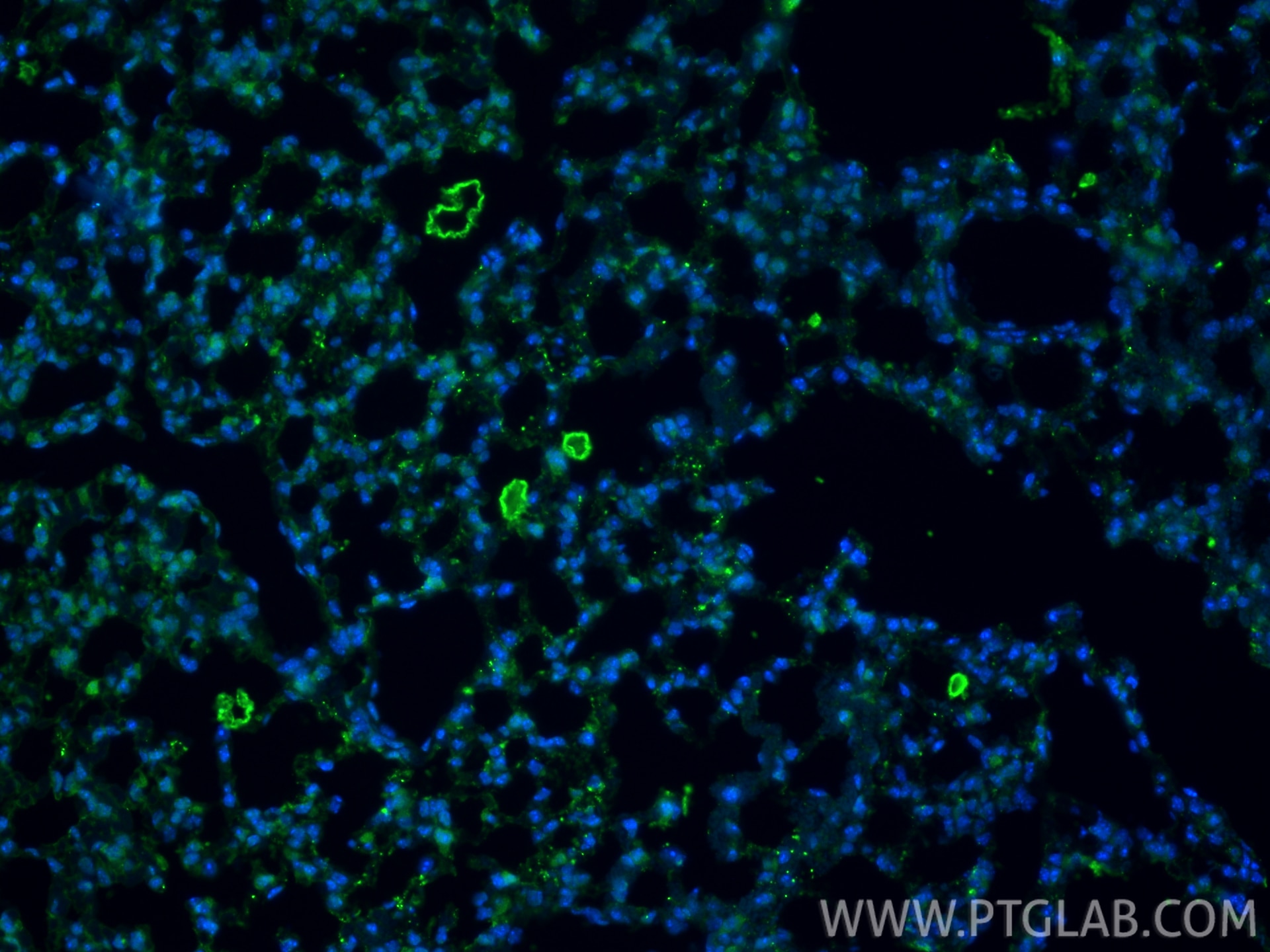
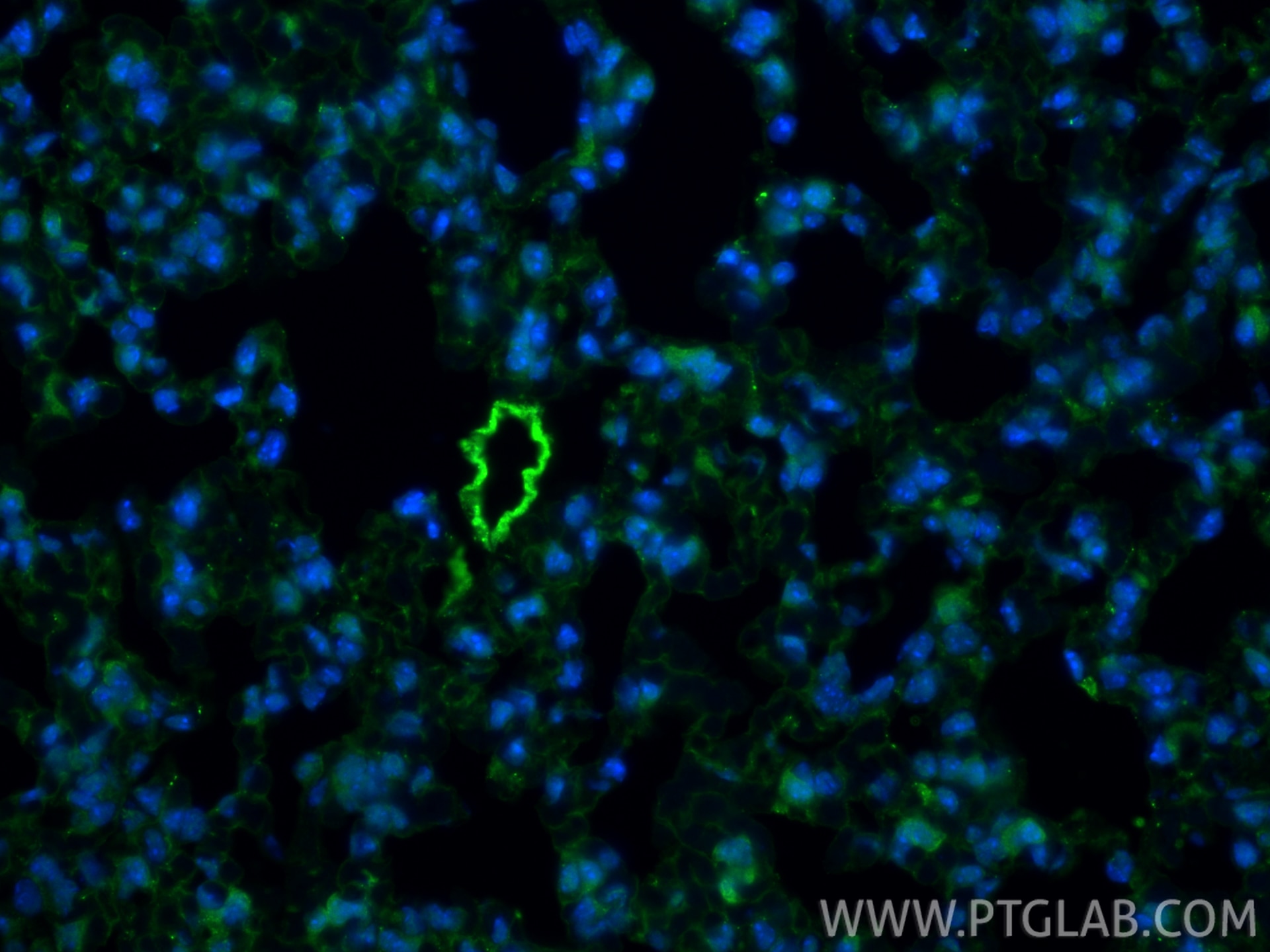
| Positive IF-P detected in | mouse lung tissue |
Recommended dilution
| Application | Dilution |
|---|---|
| Western Blot (WB) | WB : 1:500-1:3000 |
| Immunoprecipitation (IP) | IP : 0.5-4.0 ug for 1.0-3.0 mg of total protein lysate |
| Immunohistochemistry (IHC) | IHC : 1:50-1:500 |
| Immunofluorescence (IF)-P | IF-P : 1:200-1:800 |
| It is recommended that this reagent should be titrated in each testing system to obtain optimal results. | |
| Sample-dependent, Check data in validation data gallery. | |
Product Information
11839-1-AP targets Surfactant protein D in WB, IHC, IF-P, IP, ELISA applications and shows reactivity with human, mouse, rat samples.
| Tested Reactivity | human, mouse, rat |
| Cited Reactivity | human, mouse, rat |
| Host / Isotype | Rabbit / IgG |
| Class | Polyclonal |
| Type | Antibody |
| Immunogen |
CatNo: Ag2461 Product name: Recombinant human SFTPD protein Source: e coli.-derived, PGEX-4T Tag: GST Domain: 21-375 aa of BC022318 Sequence: AGMKTYSHRTMPSACTLVMCSSVESGLPGRDGRDGREGPRGEKGDPGLPGAAGQAGMPGQAGPVGPKGDNGSVGEPGPKGDTGPSGPPGPPGVPGPAGREGPLGKQGNIGPQGKPGPKGEAGPKGEVGAPGMQGSAGARGLAGPKGERGVPGERGVPGNTGAAGSAGAMGPQGSPGARGPPGLKGDKGIPGDKGAKGESGLPDVASLRQQVEALQGQVQHLQAAFSQYKKVELFPNGQSVGEKIFKTAGFVKPFTEAQLLCTQAGGQLASPRSAAENAALQQLVVAKNEAAFLSMTDSKTEGKFTYPTGESLVYSNWAPGKPNDDGGSEDCVEIFTNGKWNDRACGEKRLVVCEF Predict reactive species |
| Full Name | surfactant protein D |
| Calculated Molecular Weight | 375 aa, 38 kDa |
| Observed Molecular Weight | 37-40 kDa |
| GenBank Accession Number | BC022318 |
| Gene Symbol | Surfactant protein D |
| Gene ID (NCBI) | 6441 |
| RRID | AB_2254351 |
| Conjugate | Unconjugated |
| Form | Liquid |
| Purification Method | Antigen affinity purification |
| UNIPROT ID | P35247 |
| Storage Buffer | PBS with 0.02% sodium azide and 50% glycerol, pH 7.3. |
| Storage Conditions | Store at -20°C. Stable for one year after shipment. Aliquoting is unnecessary for -20oC storage. 20ul sizes contain 0.1% BSA. |
Background Information
Surfactant protein-D (SP-D) is a pattern recognition molecule of the collectin family of C-type lectins, which consist of four structural domains: a cysteine-rich N-terminal domain, a collagen-like region, an alpha-helical coiled-coil neck domain and a C-terminal lectin or carbohydrate-recognition domain (PMID: 16213021; 15030473). SP-D is primarily expressed and secreted by type II alveolar cells (PMID: 16684127). It plays a central role in the pulmonary host defence and the modulation of allergic responses.
Protocols
| Product Specific Protocols | |
|---|---|
| IF protocol for Surfactant protein D antibody 11839-1-AP | Download protocol |
| IHC protocol for Surfactant protein D antibody 11839-1-AP | Download protocol |
| IP protocol for Surfactant protein D antibody 11839-1-AP | Download protocol |
| WB protocol for Surfactant protein D antibody 11839-1-AP | Download protocol |
| Standard Protocols | |
|---|---|
| Click here to view our Standard Protocols |
Publications
What published studies show
The Surfactant protein D (SP-D) polyclonal antibody (Cat# 11839-1-AP) has 8 total citations spanning journals including Environmental Pollution, International Journal of Molecular Sciences, BMC Cancer, International Journal of Chronic Obstructive Pulmonary Disease, Cell Biochemistry and Function, Human Cell, Journal of Thoracic Disease, and Translational Pediatrics. The research fields center on pulmonary biology, covering acute lung injury, lung development, bronchopulmonary dysplasia, ventilator-induced lung injury, and alveolar epithelial cell function in mouse, rat, and human models.
| Species | Application | Title |
|---|---|---|
Environ Pollut LRRK2 is involved in heat exposure-induced acute lung injury and alveolar type II epithelial cell dysfunction | ||
Int J Mol Sci Kub3 Deficiency Causes Aberrant Late Embryonic Lung Development in Mice by the FGF Signaling Pathway. | ||
Int J Chron Obstruct Pulmon Dis Effective-Component Compatibility of Bufei Yishen Formula III Protects Lung Air-Blood Barrier by Regulating the Oxidative Stress: via the Nuclear Factor-E2-Related Factor 2 Pathway | ||
Cell Biochem Funct IL-37 Protects Against Ventilator-Induced Lung Injury by Inhibiting NLRP3 Activation | ||
Hum Cell Aryl hydrocarbon receptor promotes lipid droplet biogenesis and metabolic shift in respiratory Club cells. |


