

Tested Applications
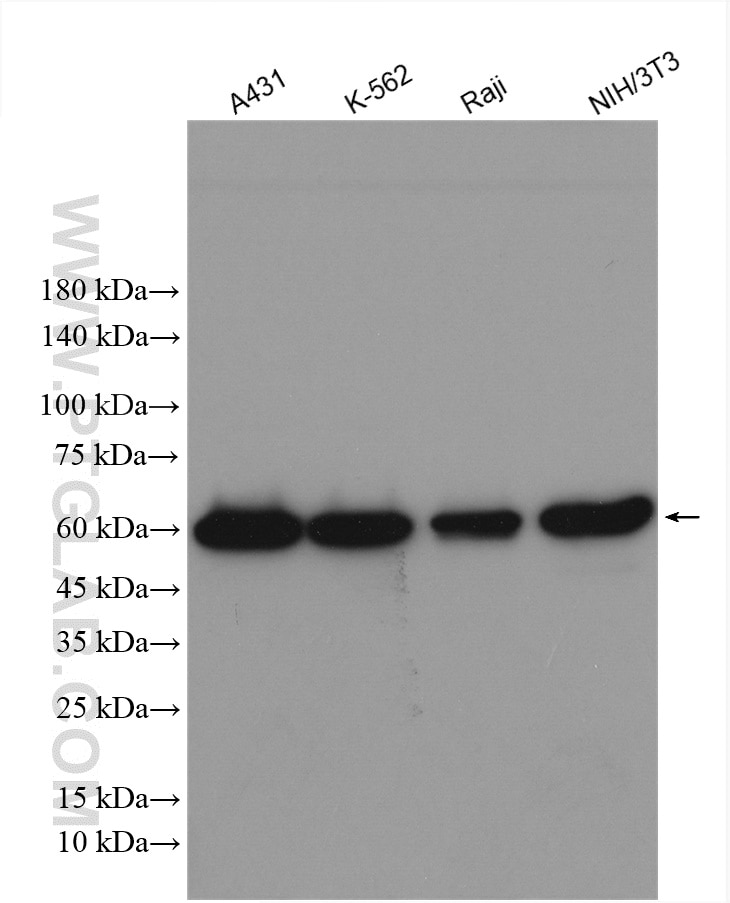
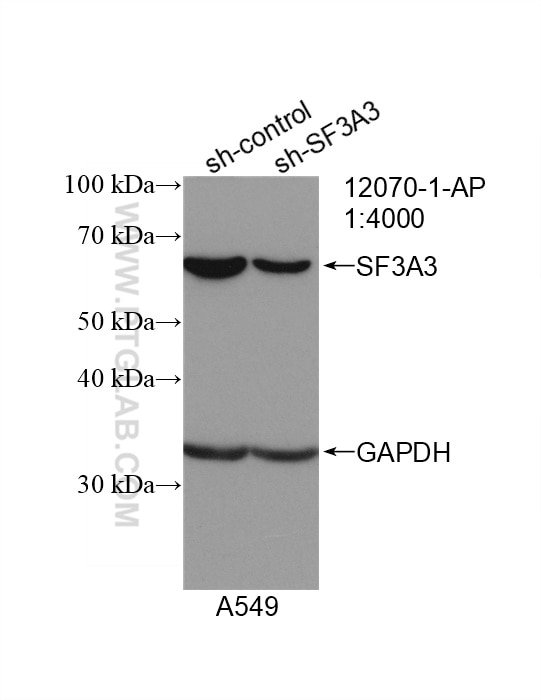
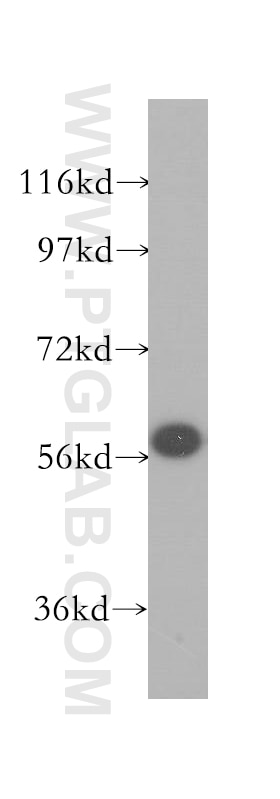
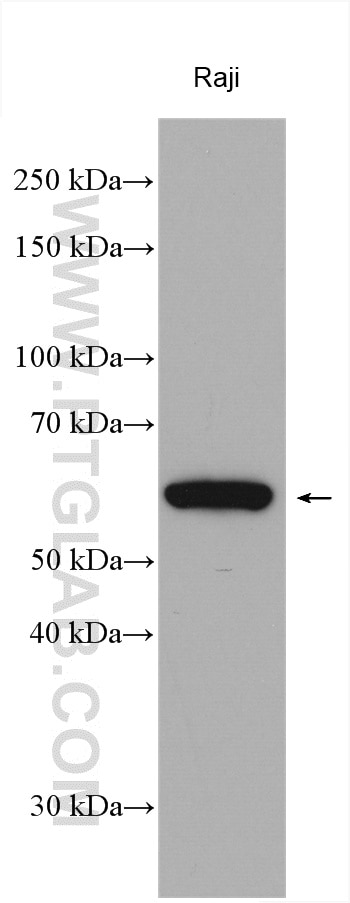
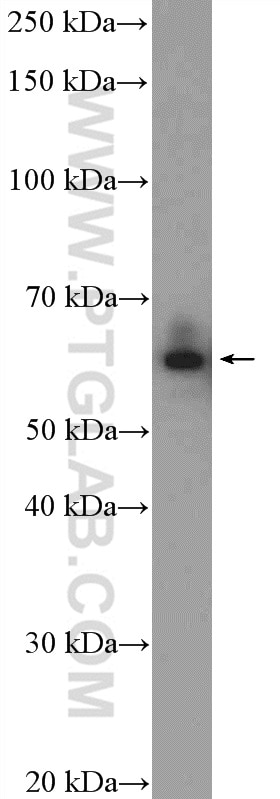
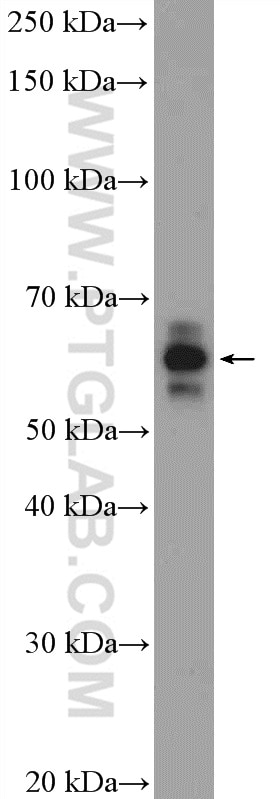
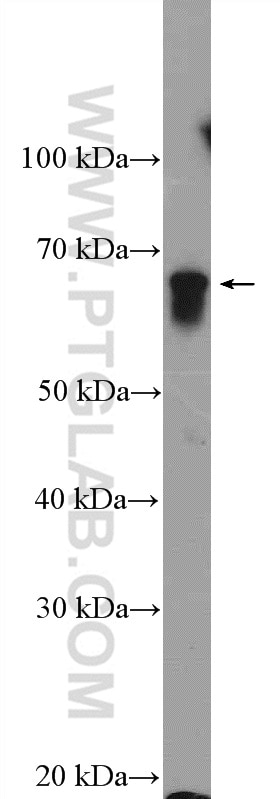
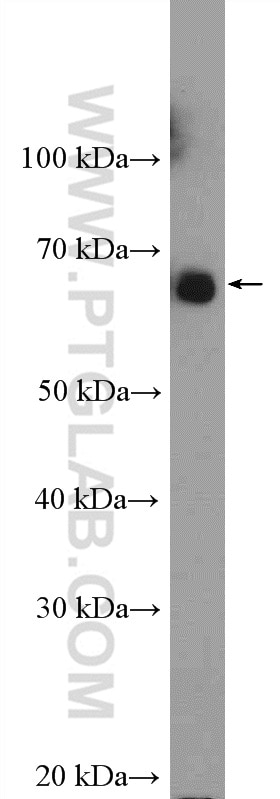
| Positive WB detected in | A431 cells, Raji cells, A549 cells, K-562 cells, NIH/3T3 cells |
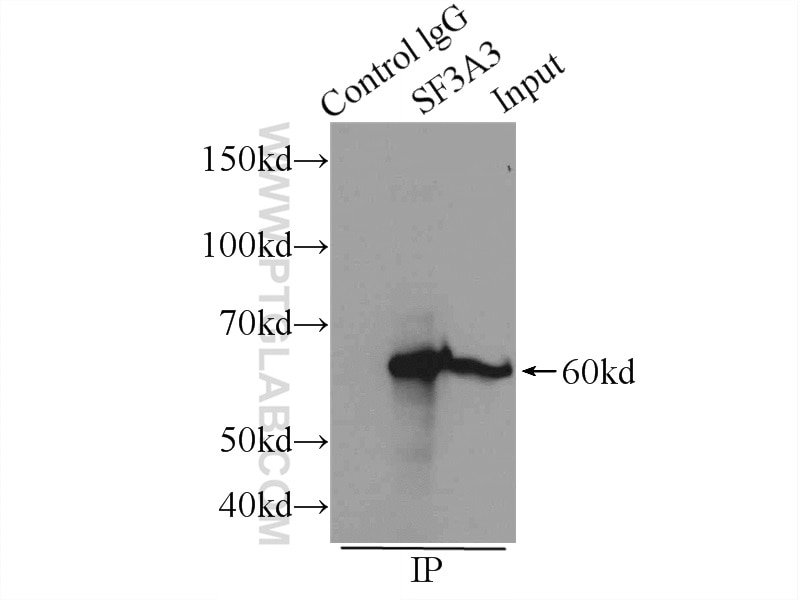
| Positive IP detected in | Raji cells |
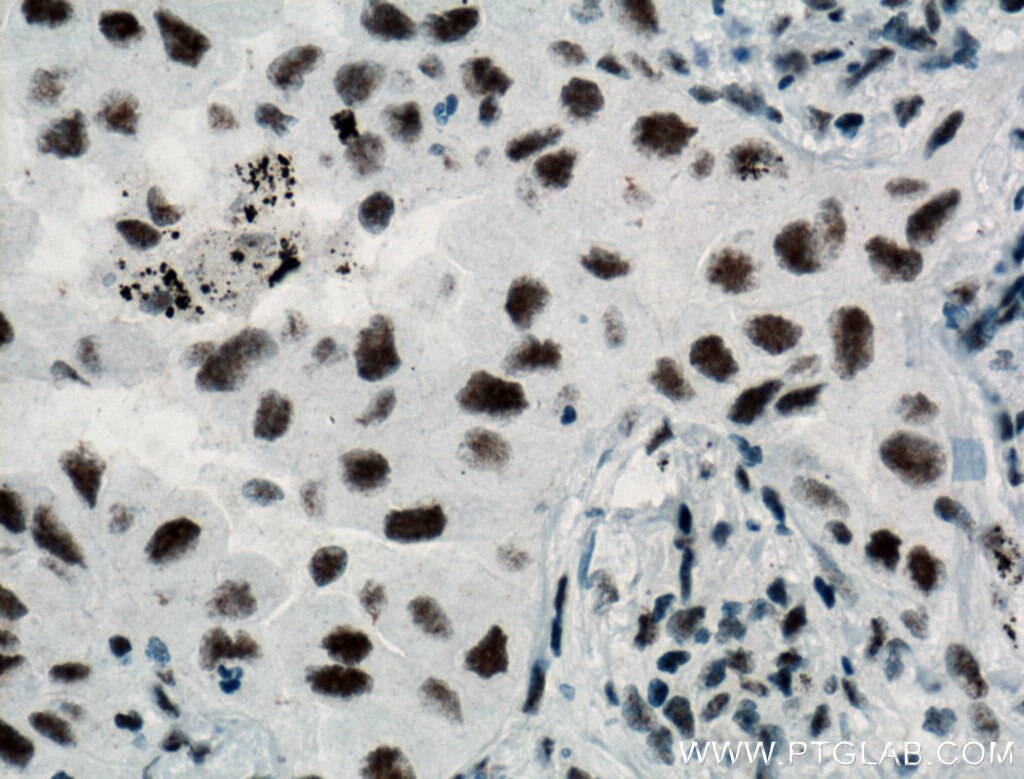
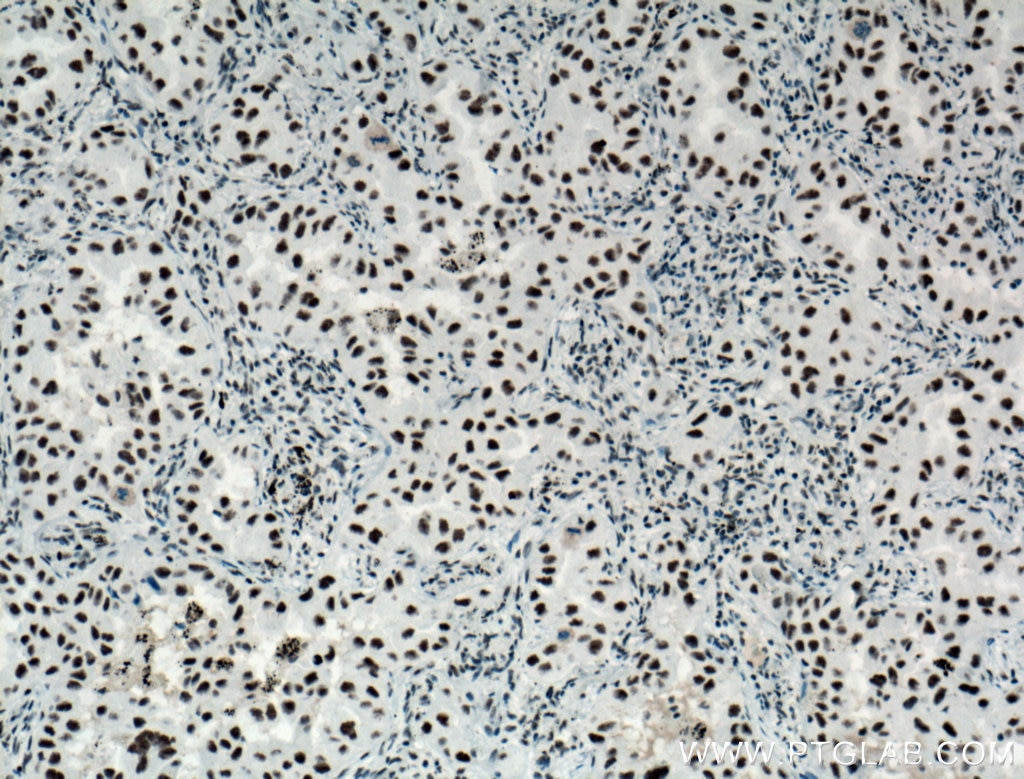
| Positive IHC detected in | human lung cancer tissue Note: suggested antigen retrieval with TE buffer pH 9.0; (*) Alternatively, antigen retrieval may be performed with citrate buffer pH 6.0 |
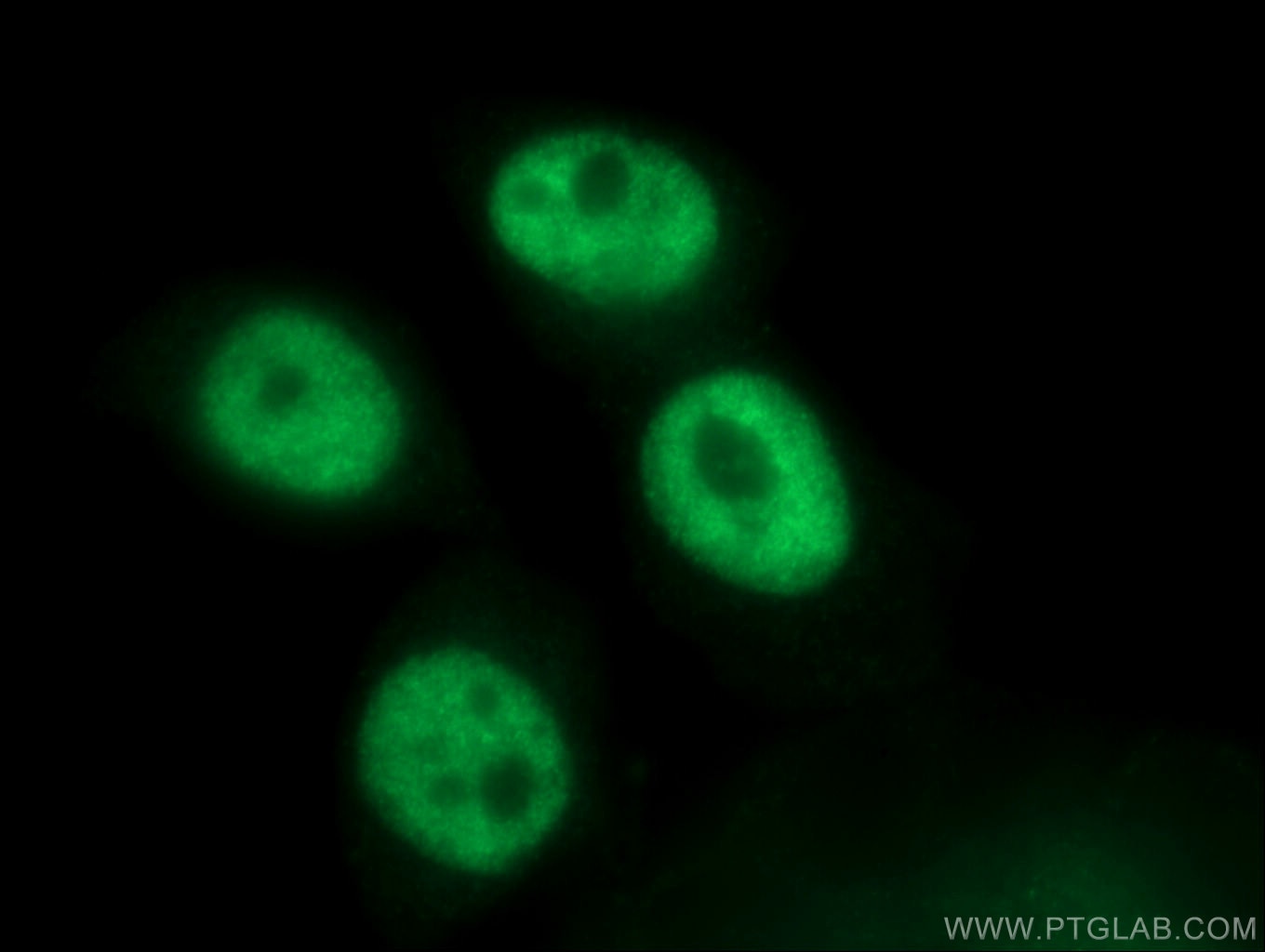
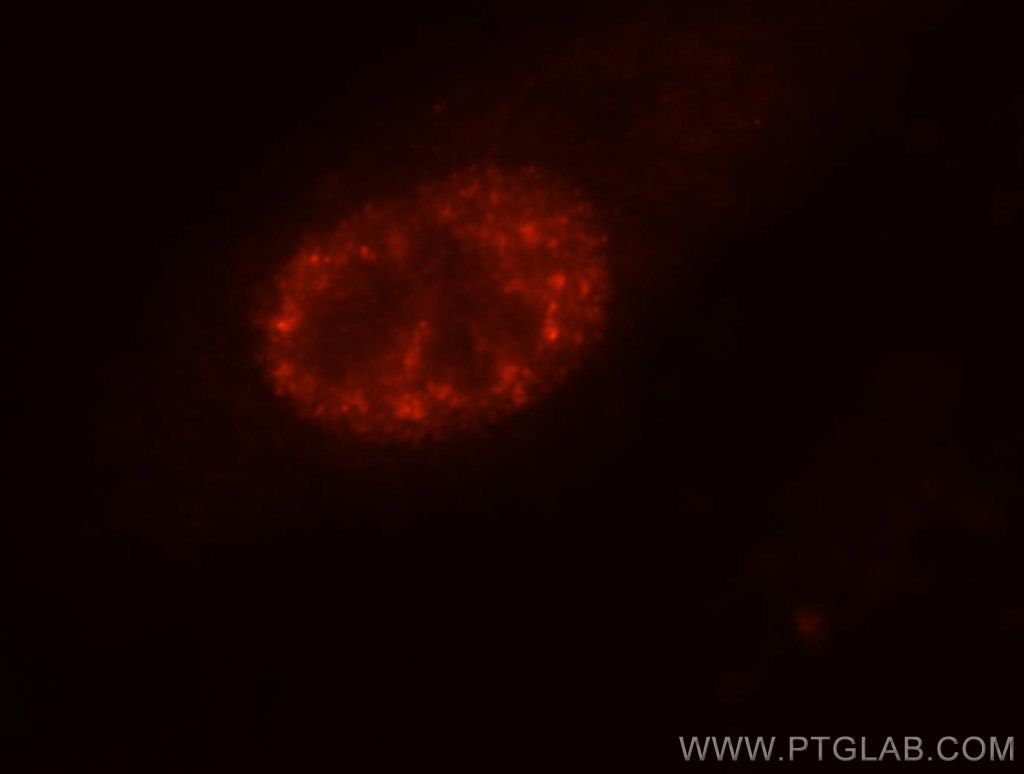
| Positive IF/ICC detected in | HeLa cells |
Recommended dilution
| Application | Dilution |
|---|---|
| Western Blot (WB) | WB : 1:1000-1:6000 |
| Immunoprecipitation (IP) | IP : 0.5-4.0 ug for 1.0-3.0 mg of total protein lysate |
| Immunohistochemistry (IHC) | IHC : 1:50-1:500 |
| Immunofluorescence (IF)/ICC | IF/ICC : 1:50-1:500 |
| It is recommended that this reagent should be titrated in each testing system to obtain optimal results. | |
| Sample-dependent, Check data in validation data gallery. | |
Product Information
12070-1-AP targets SF3A3 in WB, IHC, IF/ICC, IP, ELISA applications and shows reactivity with human, mouse, rat samples.
| Tested Reactivity | human, mouse, rat |
| Cited Reactivity | human, mouse, bovine |
| Host / Isotype | Rabbit / IgG |
| Class | Polyclonal |
| Type | Antibody |
| Immunogen |
CatNo: Ag2708 Product name: Recombinant human SF3A3 protein Source: e coli.-derived, PGEX-4T Tag: GST Domain: 202-501 aa of BC011523 Sequence: PLQDQNELFGKIQAEFEKKWENGTFPGWPKETSSALTHAGAHLDLSAFSSWEELASLGLDRLKSALLALGLKCGGTLEERAQRLFSTKGKSLESLDTSLFAKNPKSKGTKRDTERNKDIAFLEAQIYEYVEILGEQRHLTHENVQRKQARTGEEREEEEEEQISESESEDEENEIIYNPKNLPLGWDGKPIPYWLYKLHGLNINYNCEICGNYTYRGPKAFQRHFAEWRHAHGMRCLGIPNTAHFANVTQIEDAVSLWAKLKLQKASERWQPDTEEEYEDSSGNVVNKKTYEDLKRQGLL Predict reactive species |
| Full Name | splicing factor 3a, subunit 3, 60kDa |
| Calculated Molecular Weight | 501 aa, 59 kDa |
| Observed Molecular Weight | 59 kDa |
| GenBank Accession Number | BC011523 |
| Gene Symbol | SF3A3 |
| Gene ID (NCBI) | 10946 |
| RRID | AB_2186372 |
| Conjugate | Unconjugated |
| Form | Liquid |
| Purification Method | Antigen affinity purification |
| UNIPROT ID | Q12874 |
| Storage Buffer | PBS with 0.02% sodium azide and 50% glycerol, pH 7.3. |
| Storage Conditions | Store at -20°C. Stable for one year after shipment. Aliquoting is unnecessary for -20oC storage. 20ul sizes contain 0.1% BSA. |
Protocols
| Product Specific Protocols | |
|---|---|
| IF protocol for SF3A3 antibody 12070-1-AP | Download protocol |
| IHC protocol for SF3A3 antibody 12070-1-AP | Download protocol |
| IP protocol for SF3A3 antibody 12070-1-AP | Download protocol |
| WB protocol for SF3A3 antibody 12070-1-AP | Download protocol |
| Standard Protocols | |
|---|---|
| Click here to view our Standard Protocols |
Publications
What published studies show
The SF3A3 Polyclonal antibody (Cat# 12070-1-AP) has 8 citations published in journals including Advanced Science, International Journal of Molecular Sciences, iScience, PLoS One, Biochemical and Biophysical Research Communications, BioRxiv, Biosciences Reports, and Nature Communications. Research fields span esophageal squamous cell carcinoma, autophagy and inflammation, adipocyte thermogenesis, hepatocellular carcinoma metabolic reprogramming, ribosome biogenesis, splicing machinery regulation by noncoding RNA, and tau protein neurodegeneration.
| Species | Application | Title |
|---|---|---|
Adv Sci (Weinh) Spatio-Temporal Proteomic Landscape Reveals Early Warning Signals of Esophageal Squamous Cell Carcinoma Progression. | ||
Int J Mol Sci Autophagy Mediates Escherichia Coli-Induced Cellular Inflammatory Injury by Regulating Calcium Mobilization, Mitochondrial Dysfunction, and Endoplasmic Reticulum Stress | ||
iScience Adipocyte-specific Steap4 deficiency reduced thermogenesis and energy expenditure in mice | ||
PLoS One Exploring the level of metabolic reprogramming and the role of prognostic factor SF3A3 in hepatocellular carcinoma through integrated single-cell landscape analysis
| ||
Biochem Biophys Res Commun Pre-ribosomal WDR74 module coordinates the early and late pre-rRNA processing stages for the NVL2-mediated regulation of 60S ribosome biogenesis | ||
bioRxiv Cancer-associated snaR-A noncoding RNA interacts with core splicing machinery and disrupts processing of mRNA subpopulations |


