

Tested Applications
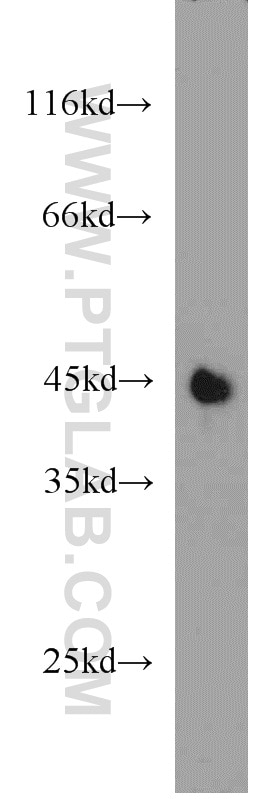
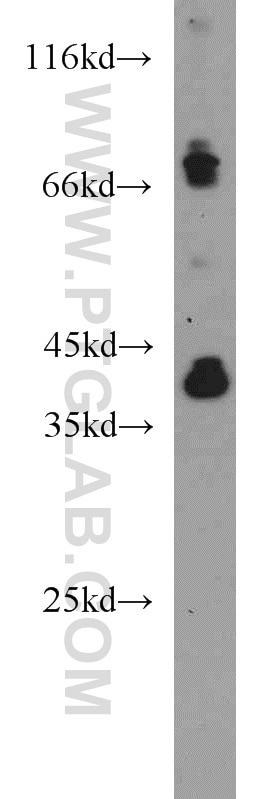
| Positive WB detected in | human plasma, mouse liver tissue |
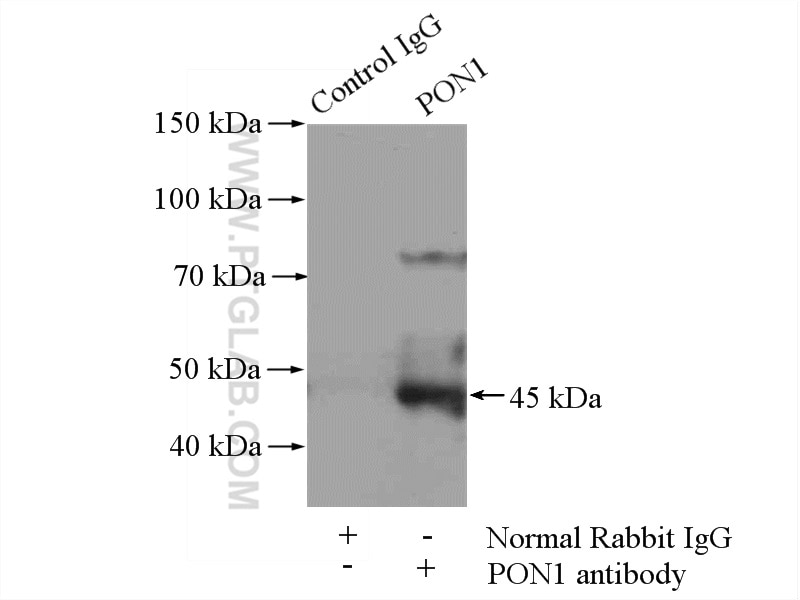
| Positive IP detected in | mouse liver tissue |
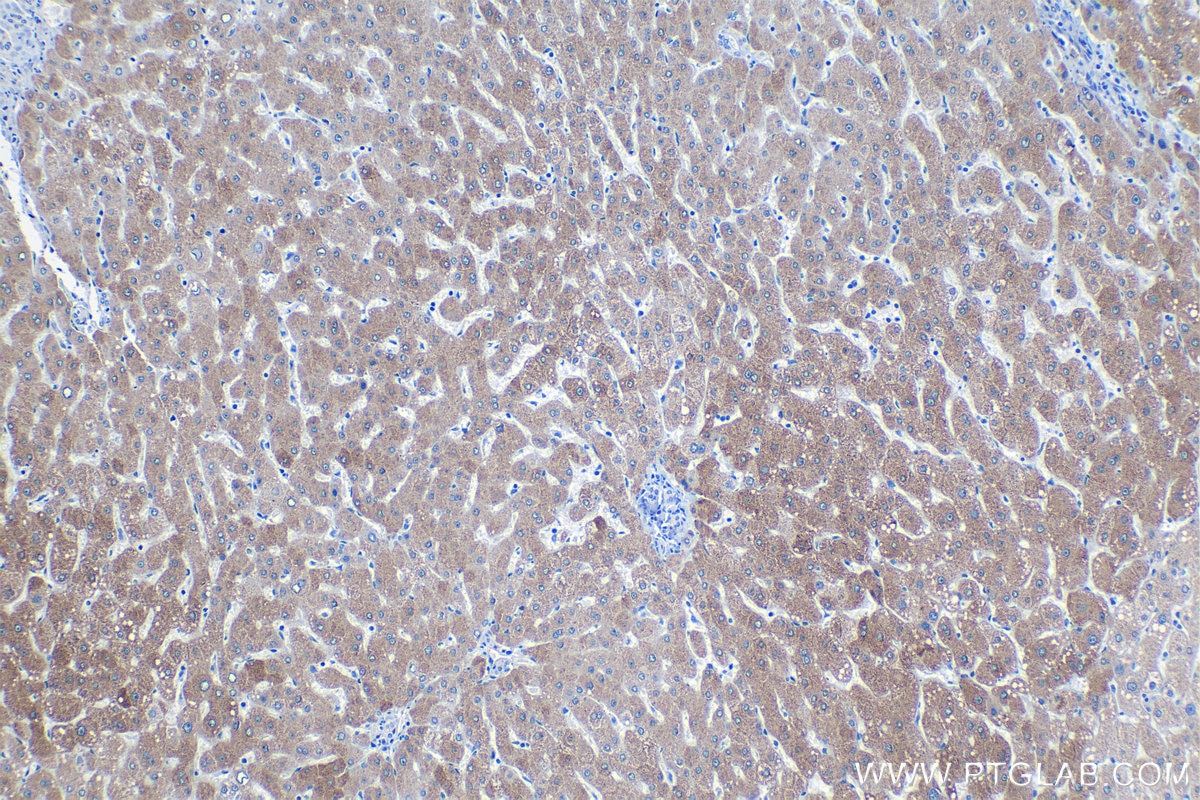
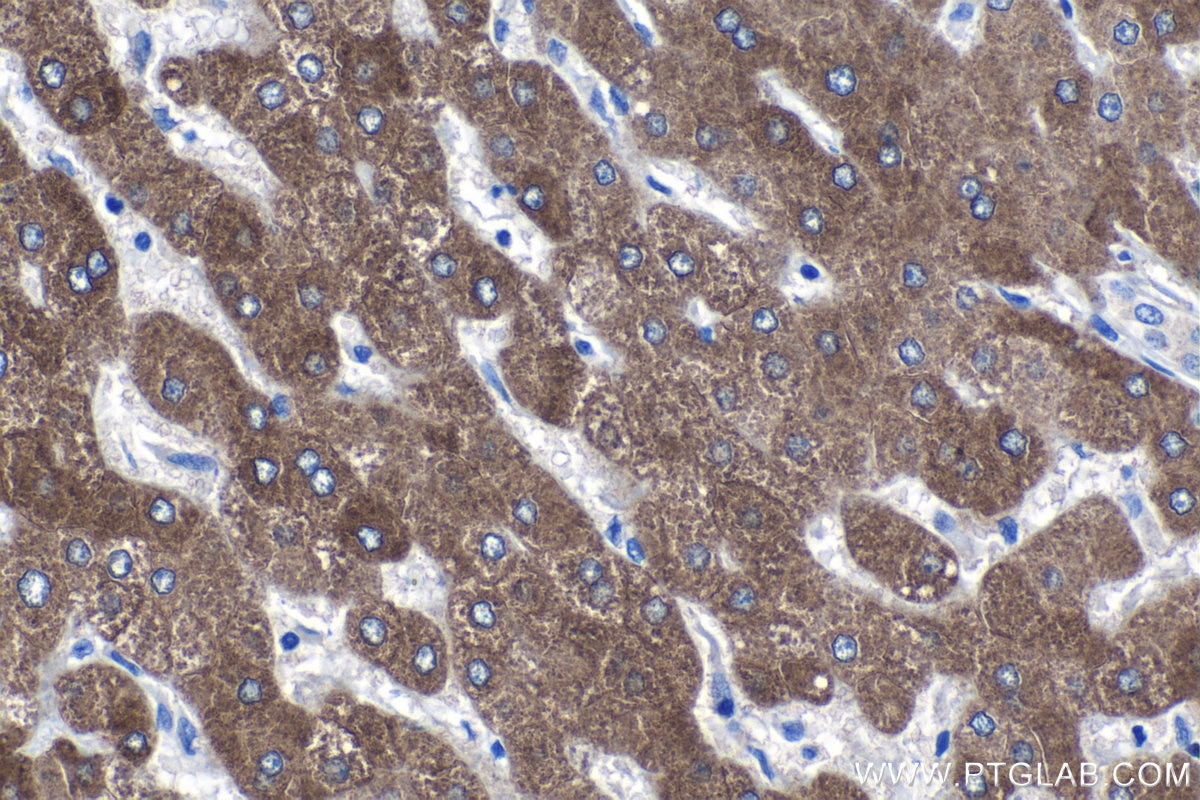
| Positive IHC detected in | human liver tissue Note: suggested antigen retrieval with TE buffer pH 9.0; (*) Alternatively, antigen retrieval may be performed with citrate buffer pH 6.0 |
Recommended dilution
| Application | Dilution |
|---|---|
| Western Blot (WB) | WB : 1:500-1:1000 |
| Immunoprecipitation (IP) | IP : 0.5-4.0 ug for 1.0-3.0 mg of total protein lysate |
| Immunohistochemistry (IHC) | IHC : 1:500-1:2000 |
| It is recommended that this reagent should be titrated in each testing system to obtain optimal results. | |
| Sample-dependent, Check data in validation data gallery. | |
Product Information
18155-1-AP targets PON1 in WB, IHC, IF, IP, ELISA applications and shows reactivity with human, mouse samples.
| Tested Reactivity | human, mouse |
| Cited Reactivity | human, mouse |
| Host / Isotype | Rabbit / IgG |
| Class | Polyclonal |
| Type | Antibody |
| Immunogen |
CatNo: Ag12934 Product name: Recombinant human PON1 protein Source: e coli.-derived, PET28a Tag: 6*His Domain: 1-355 aa of BC074719 Sequence: MAKLIALTLLGMGLALFRNHQSSYQTRLNALREVQPVELPNCNLVKGIETGSEDLEILPNGLAFISSGLKYPGIKSFNPNSPGKILLMDLNEEDPTVLELGITGSKFDVSSFNPHGISTFTDEDNAMYLLVVNHPDAKSTVELFKFQEEEKSLLHLKTIRHKLLPNLNDIVAVGPEHFYGTNDHYFLDPYLQSWEMYLGLAWSYVVYYSPSEVRVVAEGFDFANGINISPDGKYVYIAELLAHKIHVYEKHANWTLTPLKSLDFNTLVDNISVDPETGDLWVGCHPNGMKIFFYDSENPPASEVLRIQNILTEEPKVTQVYAENGTVLQGSTVASVYKGKLLIGTVFHKALYCEL Predict reactive species |
| Full Name | paraoxonase 1 |
| Calculated Molecular Weight | 355 aa, 40 kDa |
| Observed Molecular Weight | 35 kDa, 40-45 kDa |
| GenBank Accession Number | BC074719 |
| Gene Symbol | PON1 |
| Gene ID (NCBI) | 5444 |
| RRID | AB_2166315 |
| Conjugate | Unconjugated |
| Form | Liquid |
| Purification Method | Antigen affinity purification |
| UNIPROT ID | P27169 |
| Storage Buffer | PBS with 0.02% sodium azide and 50% glycerol, pH 7.3. |
| Storage Conditions | Store at -20°C. Stable for one year after shipment. Aliquoting is unnecessary for -20oC storage. 20ul sizes contain 0.1% BSA. |
Background Information
PON1, also named PON and K-45, belongs to the paraoxonase family. PON1 hydrolyzes the toxic metabolites of a variety of organophosphorus insecticides. It is capable of hydrolyzing a broad spectrum of organophosphate substrates and several aromatic carboxylic acid esters. PON1 may mediate enzymatic protection of low-density lipoproteins against oxidative modification and the consequent series of events leading to atheroma formation. PON1 was identified as a triple band in a range of approximately 35-40 kDa. For glycosylated, the MW of PON1 is migrated 42-45kd, while the 35 kDa band represents the unglycosylated form (PMID: 17906223, 32002976, 21852972). The antibody has cross-reaction to PON2 and PON3.
Protocols
| Product Specific Protocols | |
|---|---|
| IHC protocol for PON1 antibody 18155-1-AP | Download protocol |
| IP protocol for PON1 antibody 18155-1-AP | Download protocol |
| WB protocol for PON1 antibody 18155-1-AP | Download protocol |
| Standard Protocols | |
|---|---|
| Click here to view our Standard Protocols |
Publications
What published studies show
The anti-PON1 antibody (Cat# 18155-1-AP) has 12 citations across journals including Cell Death & Disease, Biomedical Pharmacotherapy, Cellular and Molecular Neurobiology, Frontiers in Immunology, Respiratory Research, Biomolecules, Frontiers in Cell and Developmental Biology, Scientific Reports, Biochimica et Biophysica Acta, Frontiers in Dentistry, Biochemical and Biophysical Research Communications, and eLife. Research fields span hepatocellular carcinoma, autophagy, kidney injury, peripheral nerve degeneration, lung fibrosis, lipid metabolism, immunology, and drug resistance.
| Species | Application | Title |
|---|---|---|
Cell Death Dis GPx1 is involved in the induction of protective autophagy in pancreatic cancer cells in response to glucose deprivation. | ||
Biomed Pharmacother GYY4137, a H2S donor, ameliorates kidney injuries in diabetic mice by modifying renal ROS-associated enzymes | ||
Cell Mol Neurobiol PGC-1α Inhibits Schwann Cell Dedifferentiation and Delays Peripheral Nerve Degeneration by Targeting PON1 | ||
Front Immunol Ex vivo expanded human regulatory T cells promote cholesterol efflux and PON1 expression in oxLDL-exposed macrophages via gap junction-mediated cAMP transfer. | ||
Respir Res Loss of interferon regulatory factor-1 prevents lung fibrosis by upregulation of pon1 expression | ||
Biomolecules Paraoxonase 1 Suppresses Hepatocellular Carcinoma Progression by Modulating the NOD-like Receptor Signaling Pathway. |


