

Tested Applications
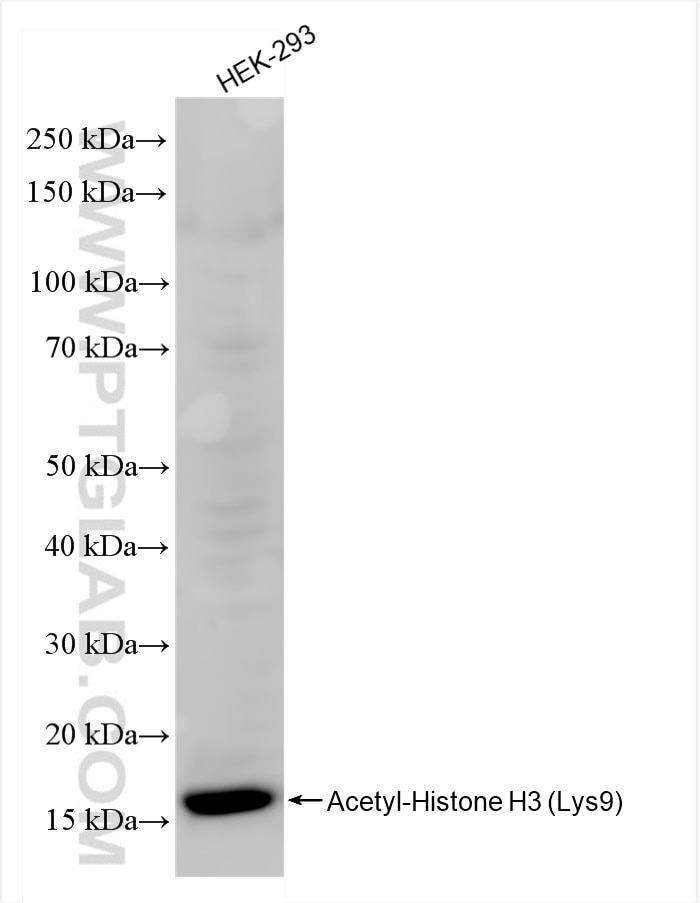
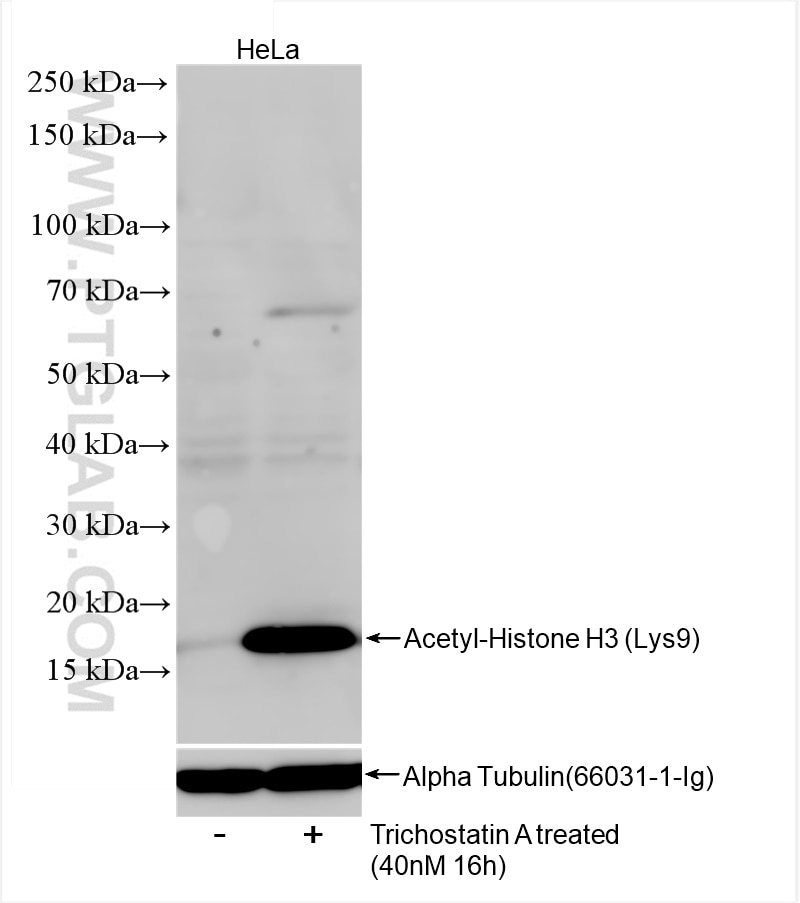
| Positive WB detected in | Trichostatin A treated HeLa cells, HEK-293 cells |
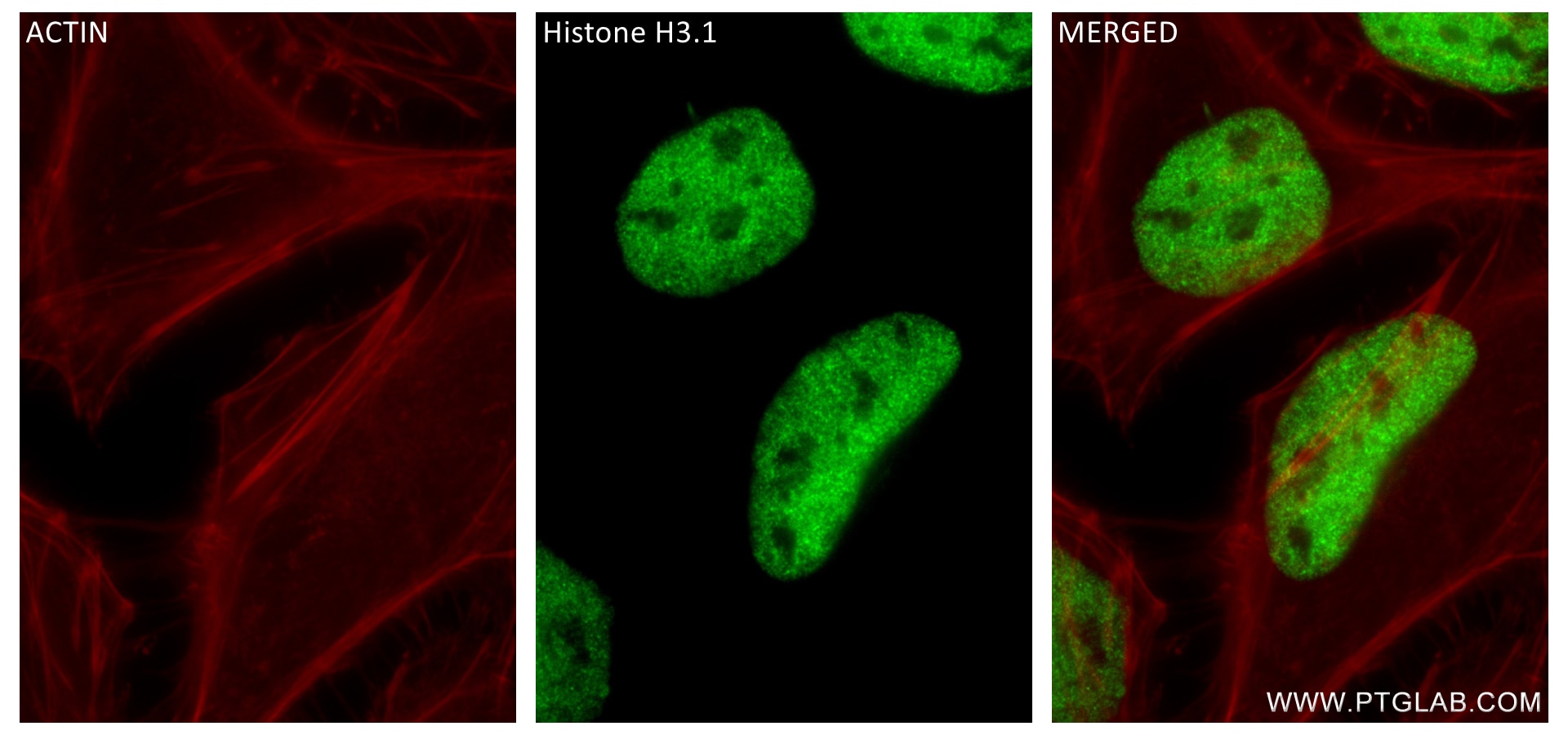
| Positive IF/ICC detected in | HeLa cells |
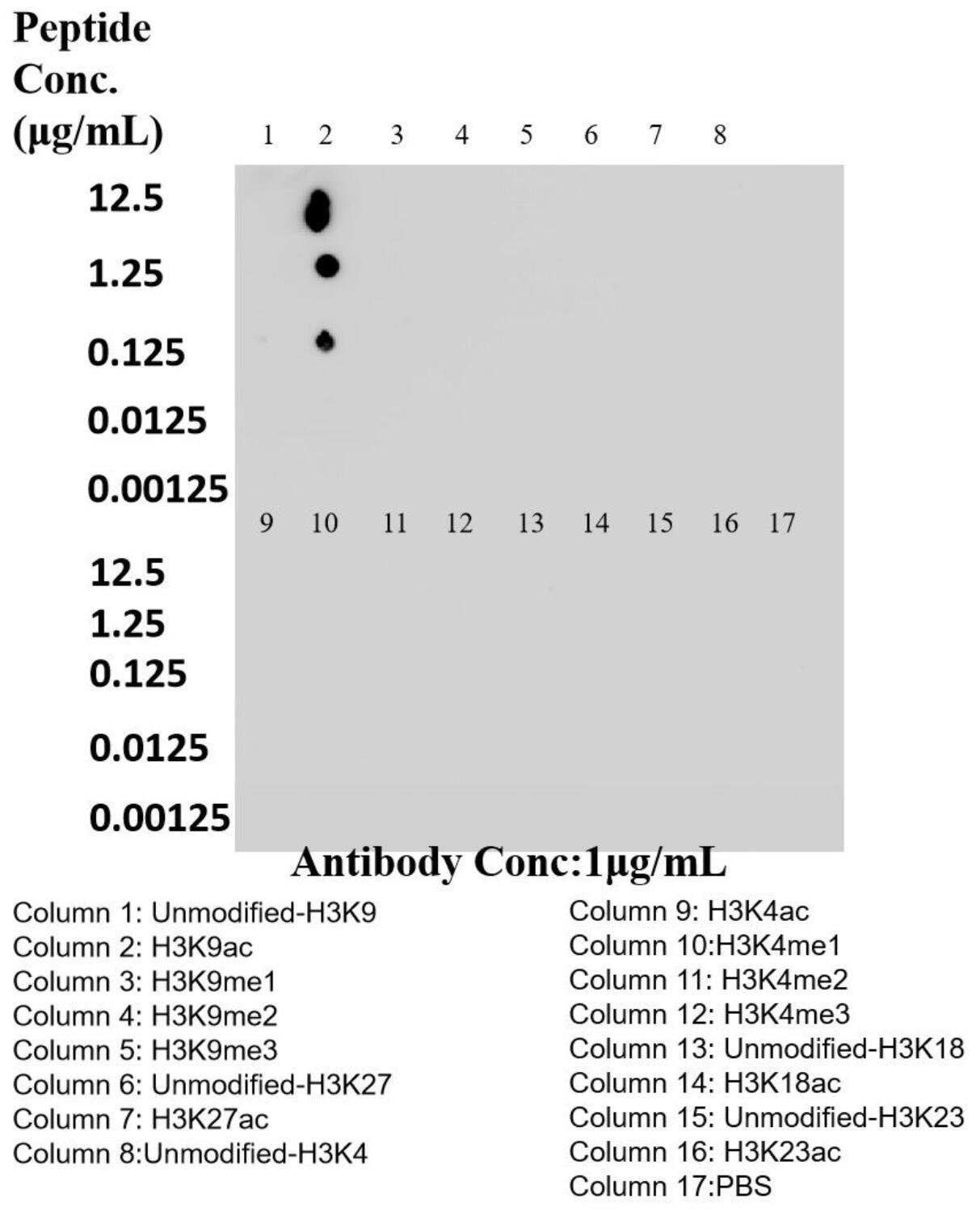
| Positive Dot Blot detected in | peptide |
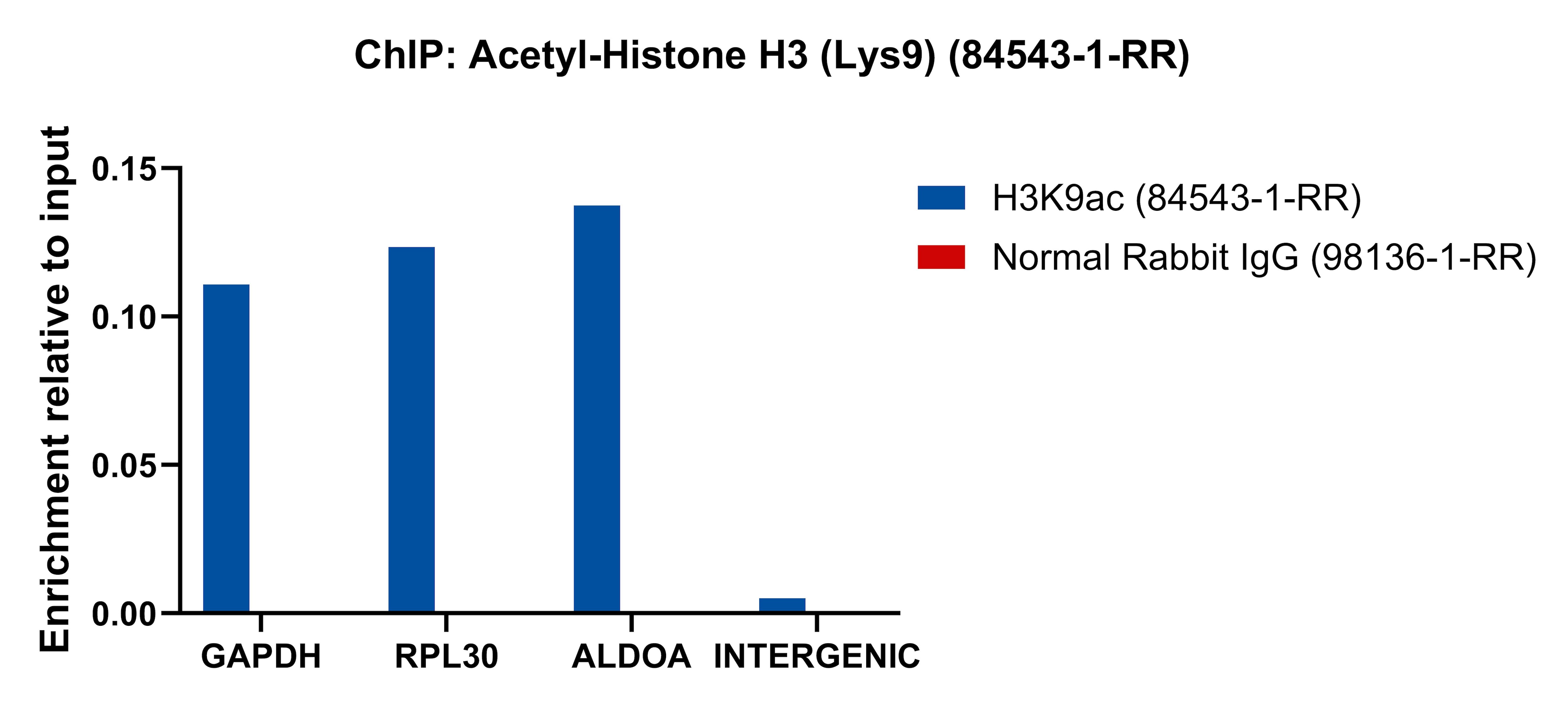
| Positive ChIP-qPCR detected in | HeLa cells |
Recommended dilution
| Application | Dilution |
|---|---|
| Western Blot (WB) | WB : 1:2000-1:10000 |
| Immunofluorescence (IF)/ICC | IF/ICC : 1:200-1:800 |
| DOT BLOT | DOT BLOT : 1:10-1:100 |
| CHIP-QPCR | CHIP-QPCR : 1:10-1:100 |
| It is recommended that this reagent should be titrated in each testing system to obtain optimal results. | |
| Sample-dependent, Check data in validation data gallery. | |
Product Information
84543-1-RR targets Acetyl-Histone H3 (Lys9) in WB, IHC, IF/ICC, Dot Blot, ELISA, ChIP-qPCR applications and shows reactivity with human samples.
| Tested Reactivity | human |
| Cited Reactivity | human, mouse |
| Host / Isotype | Rabbit / IgG |
| Class | Recombinant |
| Type | Antibody |
| Immunogen |
Peptide Predict reactive species |
| Full Name | histone cluster 1, H3a |
| Observed Molecular Weight | 17 kDa |
| GenBank Accession Number | BC066245 |
| Gene Symbol | HIST1H3A |
| Gene ID (NCBI) | 8350 |
| RRID | AB_3672048 |
| Conjugate | Unconjugated |
| Form | Liquid |
| Purification Method | Protein A purfication |
| UNIPROT ID | P68431 |
| Storage Buffer | PBS with 0.02% sodium azide and 50% glycerol, pH 7.3. |
| Storage Conditions | Store at -20°C. Stable for one year after shipment. Aliquoting is unnecessary for -20oC storage. 20ul sizes contain 0.1% BSA. |
Protocols
| Product Specific Protocols | |
|---|---|
| IF protocol for Acetyl-Histone H3 (Lys9) antibody 84543-1-RR | Download protocol |
| WB protocol for Acetyl-Histone H3 (Lys9) antibody 84543-1-RR | Download protocol |
| Standard Protocols | |
|---|---|
| Click here to view our Standard Protocols |
Publications
What published studies show
The Acetyl-Histone H3 (Lys9) recombinant monoclonal antibody (clone 241596F9), catalog number 84543-1-RR, has 12 citations. These appear in journals including Advanced Science, Journal of Translational Medicine, International Journal of Biological Macromolecules, Cell Molecular Gastroenterology and Hepatology, International Immunopharmacology, Chemical & Biological Interactions, Toxicology, Archives of Gerontology and Geriatrics, Cell Signaling, BMC Cancer, and Bone. Research fields span epigenetics, histone acetylation, kidney disease, cancer, cardiovascular pathology, osteoporosis, pulmonary fibrosis, and metabolic disorders.
| Species | Application | Title |
|---|---|---|
Adv Sci (Weinh) Miro1 Protects Against Acute Kidney Injury Through Modulating Mitochondrial Homeostasis via Interaction With Sirt6. | ||
J Transl Med USP22 suppresses trophoblast cell necroptosis in preeclampsia by stabilizing KAT2A-mediated histone acetylation at the SFRP1 promoter. | ||
Int J Biol Macromol Bone marrow tyrosine kinase on chromosome X promotes epithelial-mesenchymal transition through signal transducer and activator of transcription 3 in colorectal cancer. | ||
Cell Mol Gastroenterol Hepatol Gut Microbiota-Derived Propionate Governs Hepatic N2 Neutrophils in Wilson's Disease. | ||
Int Immunopharmacol DLX2 drives vascular calcification in chronic kidney disease through glycolytic activation: a mechanism epigenetically regulated by HDAC2. | ||
Chem Biol Interact A novel histone deacetylase inhibitor suppresses lipid accumulation and ameliorates atherosclerosis in apolipoprotein E-deficient mice. |

