

Tested Applications
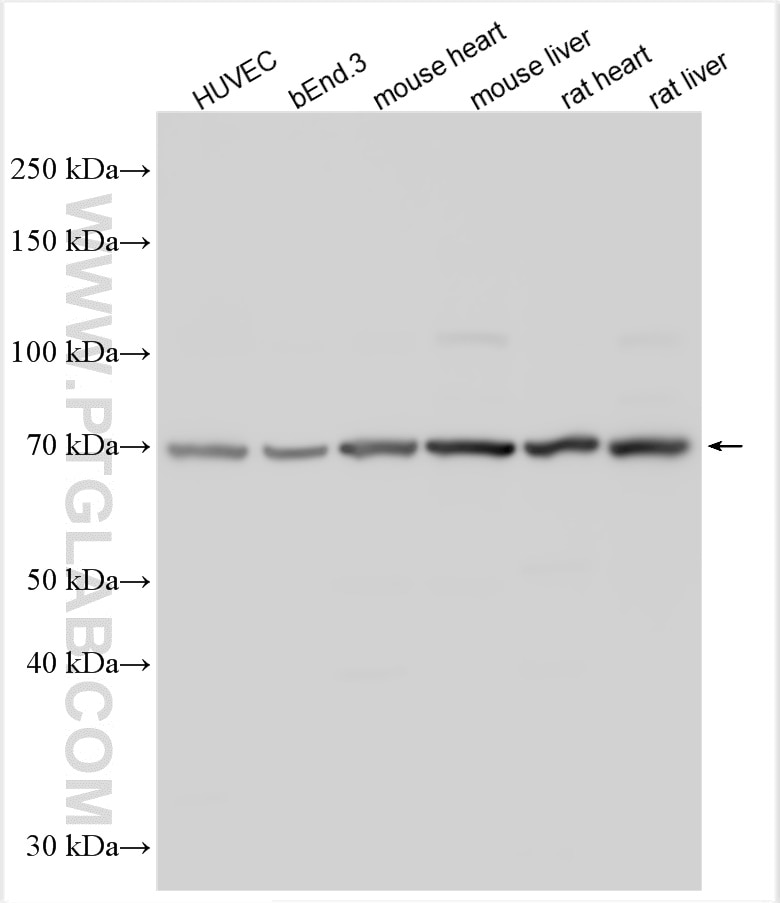
| Positive WB detected in | HUVEC cells, bEnd.3 cells, mouse heart tissue, mouse liver tissue, rat heart tissue, rat liver tissue |
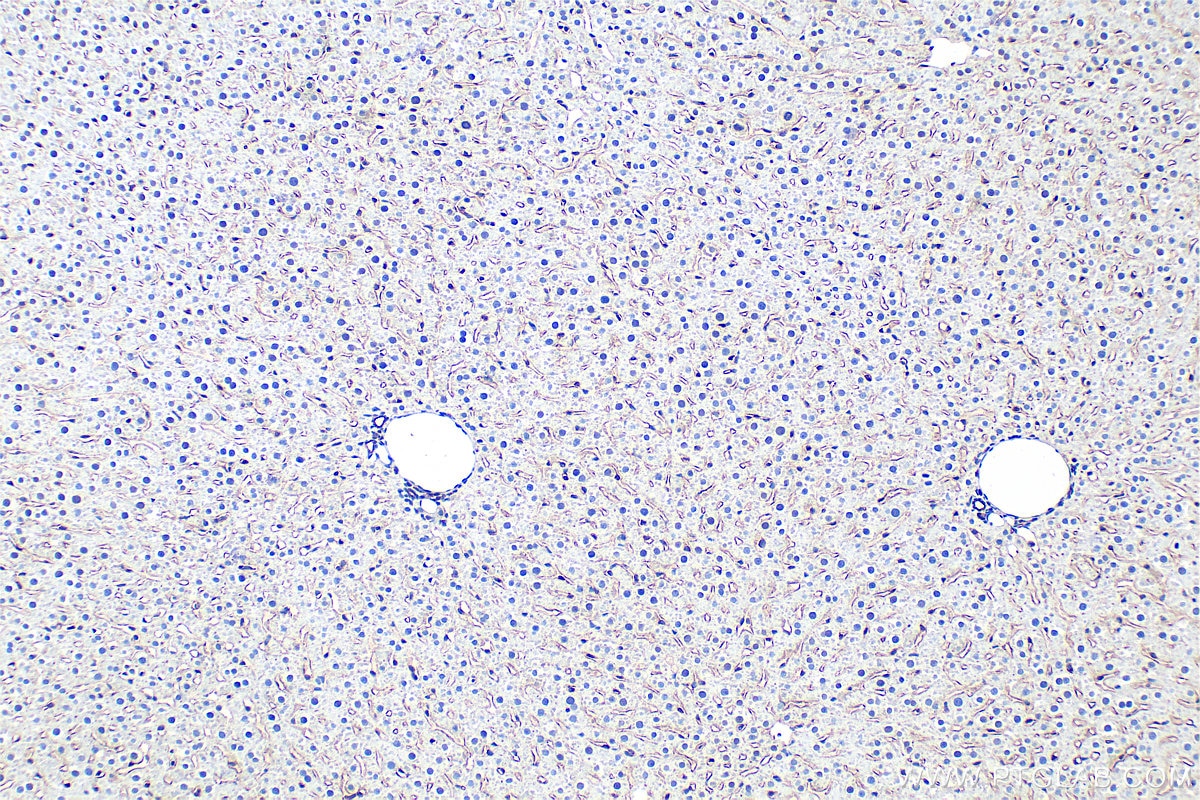
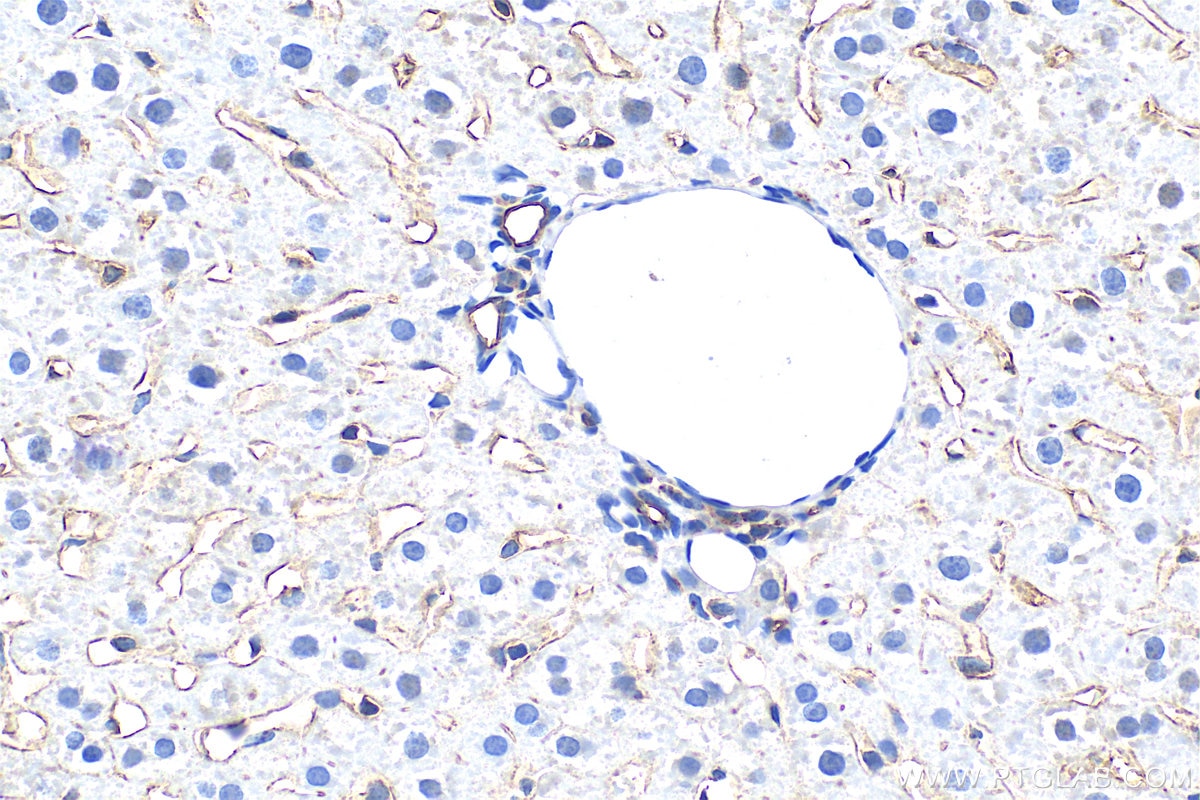
| Positive IHC detected in | rat liver tissue Note: suggested antigen retrieval with TE buffer pH 9.0; (*) Alternatively, antigen retrieval may be performed with citrate buffer pH 6.0 |
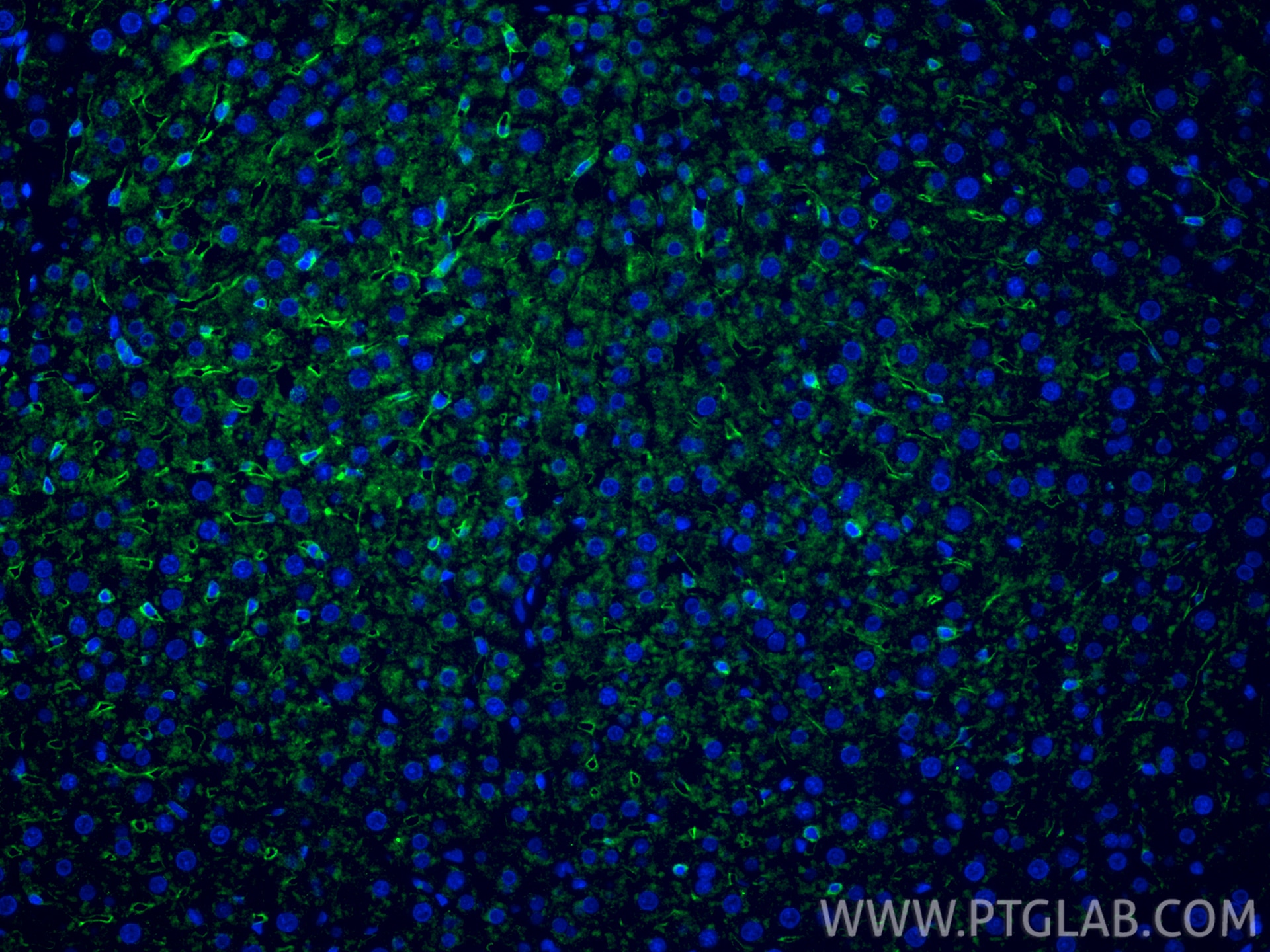
| Positive IF-P detected in | rat liver tissue |
Recommended dilution
| Application | Dilution |
|---|---|
| Western Blot (WB) | WB : 1:1000-1:4000 |
| Immunohistochemistry (IHC) | IHC : 1:400-1:1600 |
| Immunofluorescence (IF)-P | IF-P : 1:50-1:500 |
| It is recommended that this reagent should be titrated in each testing system to obtain optimal results. | |
| Sample-dependent, Check data in validation data gallery. | |
Product Information
28321-1-AP targets LYVE1 in WB, IHC, IF-P, ELISA applications and shows reactivity with human, mouse, rat samples.
| Tested Reactivity | human, mouse, rat |
| Cited Reactivity | human, mouse |
| Host / Isotype | Rabbit / IgG |
| Class | Polyclonal |
| Type | Antibody |
| Immunogen |
CatNo: Ag28131 Product name: Recombinant human LYVE1 protein Source: e coli.-derived, PGEX-4T Tag: GST Domain: 192-322 aa of BC026231 Sequence: SIPRRKKLICVTEVFMETSTMSTETEPFVENKAAFKNEAAGFGGVPTALLVLALLFFGAAAGLGFCYVKRYVKAFPFTNKNQQKEMIETKVVKEEKANDSNPNEESKKTDKNPEESKSPSKTTVRCLEAEV Predict reactive species |
| Full Name | lymphatic vessel endothelial hyaluronan receptor 1 |
| Calculated Molecular Weight | 322 aa, 35 kDa |
| Observed Molecular Weight | 70 kDa |
| GenBank Accession Number | BC026231 |
| Gene Symbol | LYVE1 |
| Gene ID (NCBI) | 10894 |
| RRID | AB_3086043 |
| Conjugate | Unconjugated |
| Form | Liquid |
| Purification Method | Antigen affinity purification |
| UNIPROT ID | Q9Y5Y7 |
| Storage Buffer | PBS with 0.02% sodium azide and 50% glycerol, pH 7.3. |
| Storage Conditions | Store at -20°C. Stable for one year after shipment. Aliquoting is unnecessary for -20oC storage. 20ul sizes contain 0.1% BSA. |
Background Information
LYVE1 is a 322-amino acid type-I integral membrane glycoprotein primarily expressed on lymphatic endothelial cells. LYVE1 is a CD44 homologue. It acts as a receptor and binds to both soluble and immobilized hyaluronan. LYVE1 may function in lymphatic hyaluronan transport and have a role in tumor metastasis.
Protocols
| Product Specific Protocols | |
|---|---|
| IF protocol for LYVE1 antibody 28321-1-AP | Download protocol |
| IHC protocol for LYVE1 antibody 28321-1-AP | Download protocol |
| WB protocol for LYVE1 antibody 28321-1-AP | Download protocol |
| Standard Protocols | |
|---|---|
| Click here to view our Standard Protocols |
Publications
What published studies show
The LYVE1 Polyclonal antibody (Cat# 28321-1-AP) has 11 citations spanning journals including Nature Communications, Journal of Advanced Research, Aging Cell, Frontiers in Immunology, International Immunopharmacology, Cell Signaling, Experimental Eye Research, Discovery Oncology, Neuroscience Letters, Surgical and Radiologic Anatomy, and Frontiers in Physiology. Research fields cover lymphatic vessel biology, ischemic stroke, macrophage senescence, meningeal lymphatic dysfunction, corneal lymphangiogenesis, lung cancer metastasis, and brain lymphatic drainage.
| Species | Application | Title |
|---|---|---|
Nat Commun Lymph nodes molecular subtypes unravel lymph nodes heterogeneity and clinical implications in colorectal cancer | ||
J Adv Res Aquaporin 4 and its isoforms regulation ameliorate AQP4 Mis-localization-induced glymphatic dysfunction in ischemic stroke | ||
Aging Cell Senescent Macrophages Promote Age-Related Revascularization Impairment by Increasing Antiangiogenic VEGF-A165B Expression | ||
Front Immunol Meningeal lymphatic vessel dysfunction exacerbates brain injury in CVST mice via endoplasmic reticulum and oxidative stress pathways. | ||
Int Immunopharmacol Targeting IL-1β to inhibit neutrophil extracellular traps improves meningeal lymphatic dysfunction in cerebral venous sinus thrombosis. | ||
Cell Signal Effect of the BMP4-Smad pathway on corneal immune double-arm and mechanism study. |