
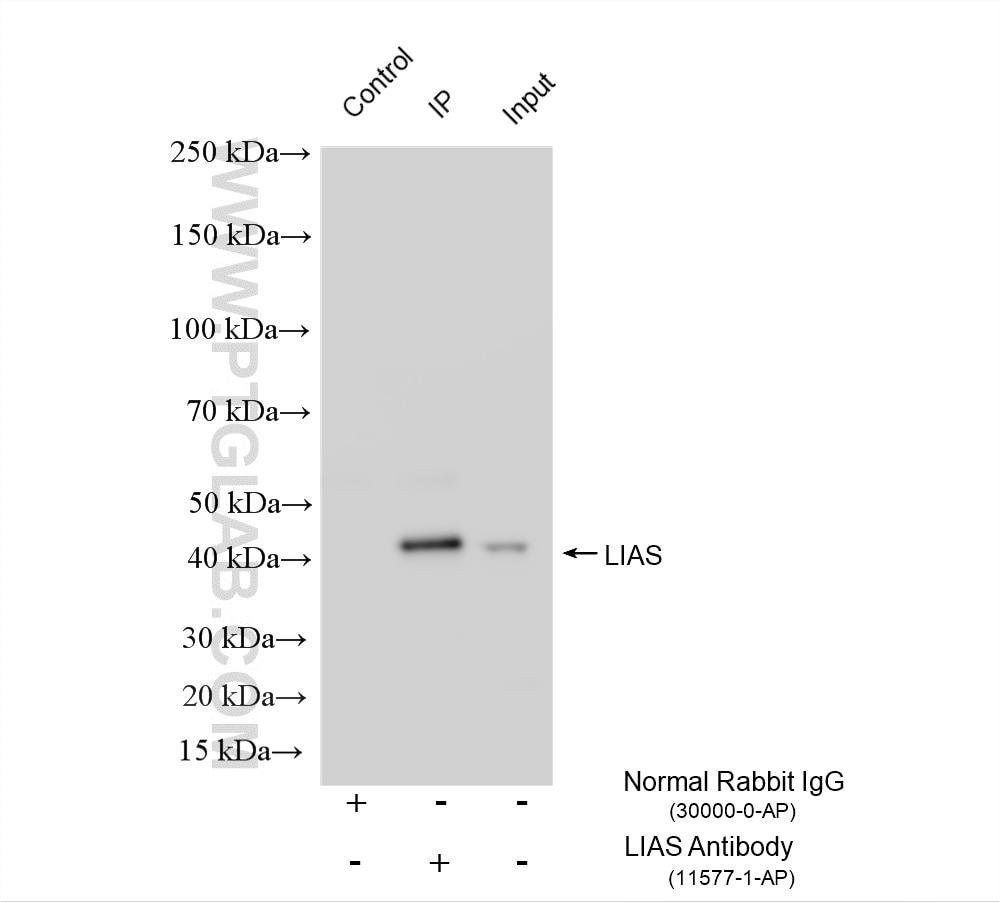
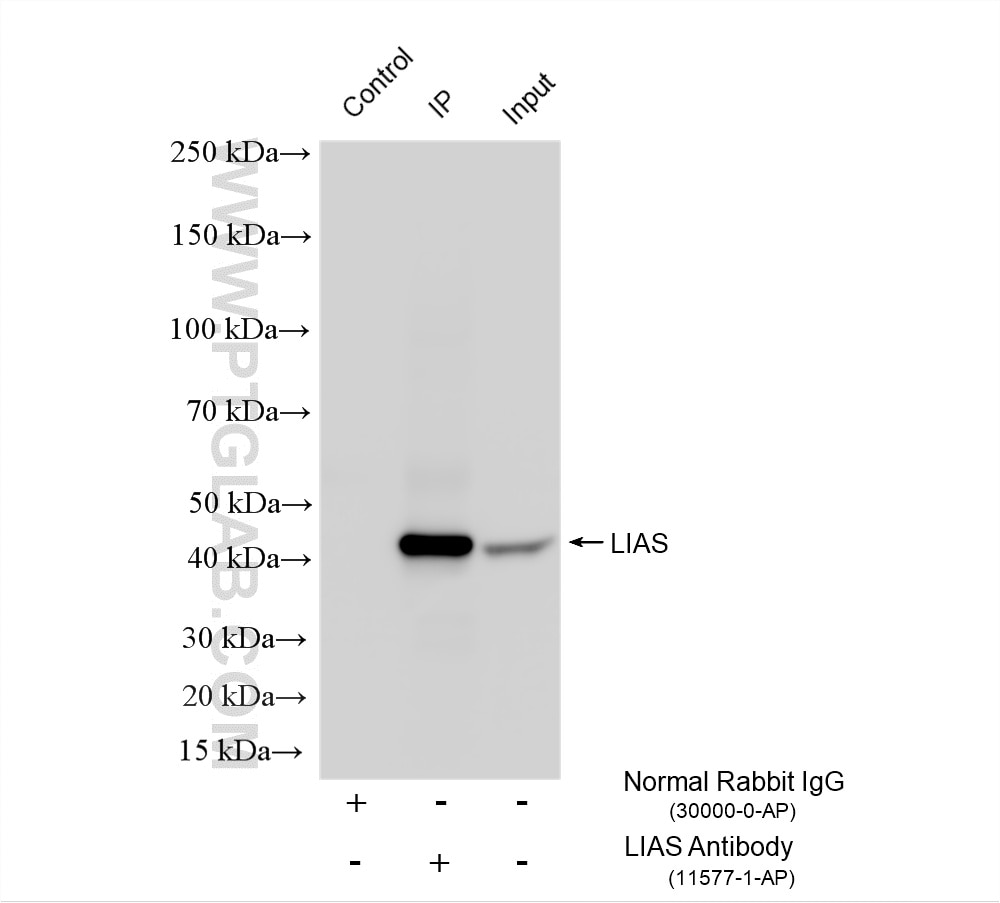
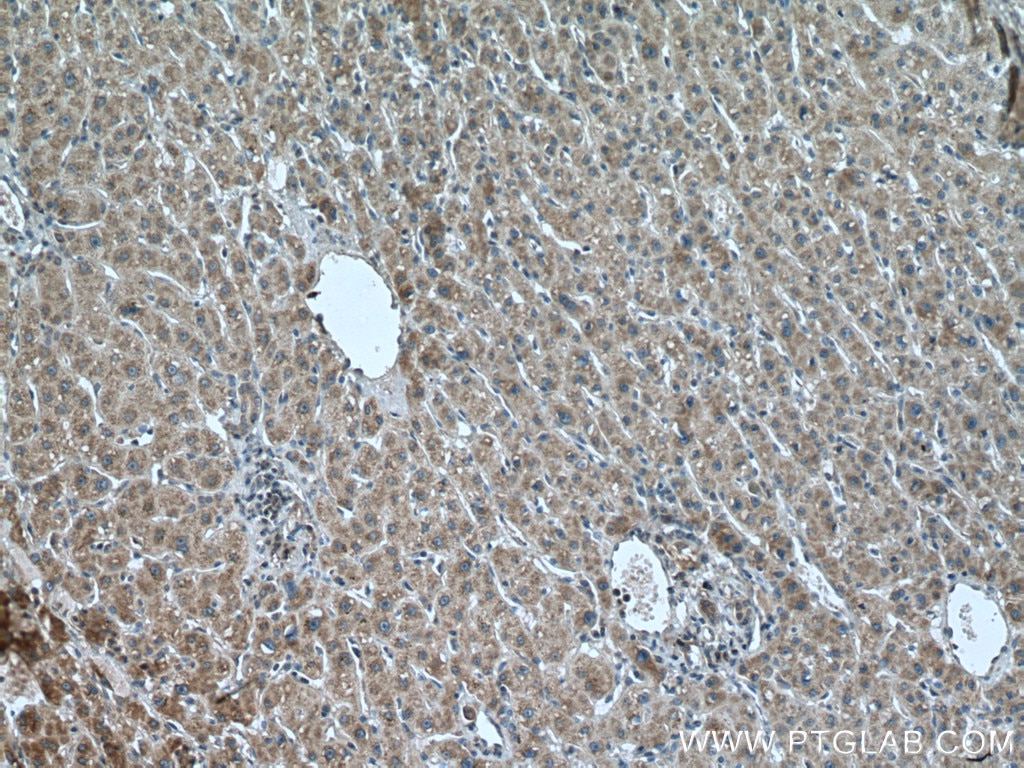
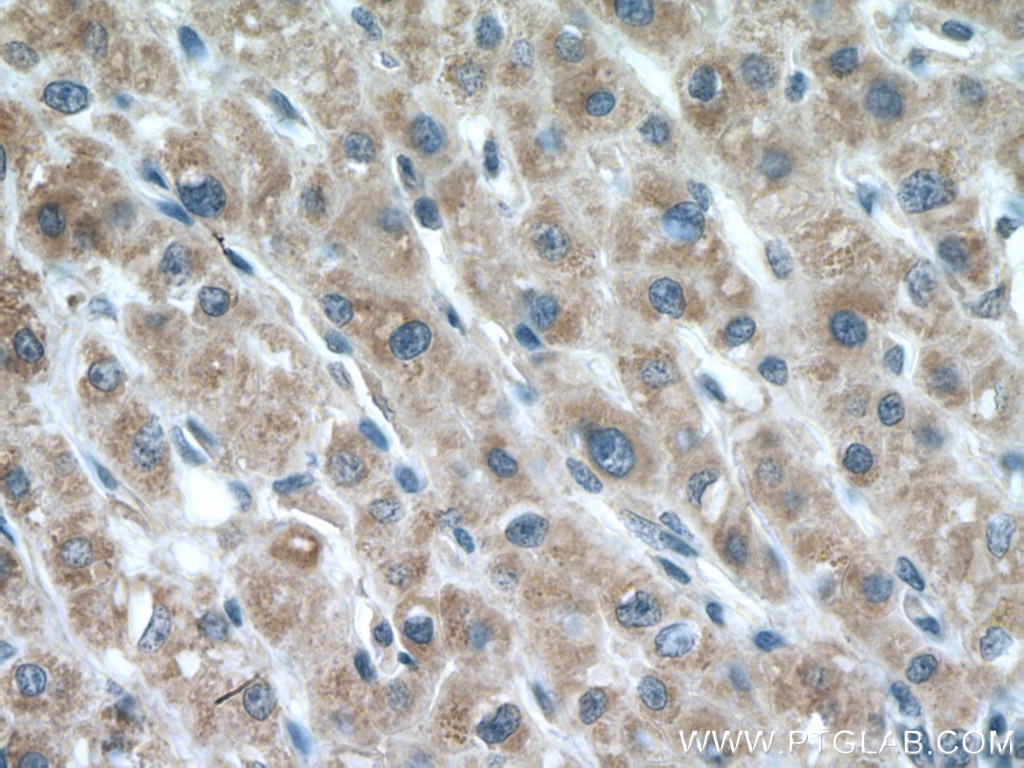
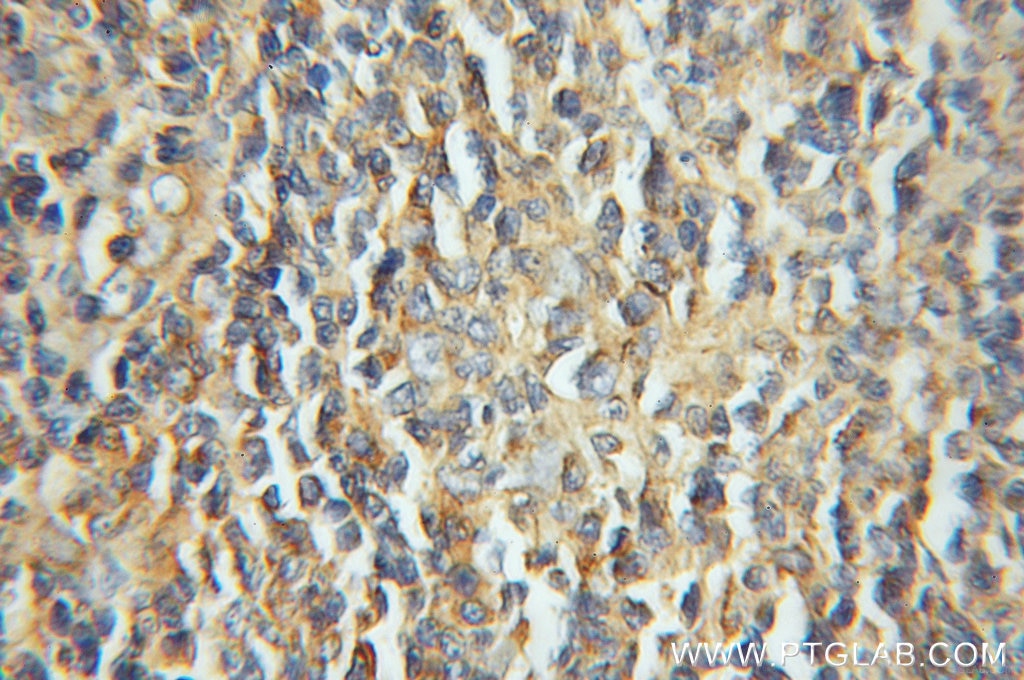

Tested Applications
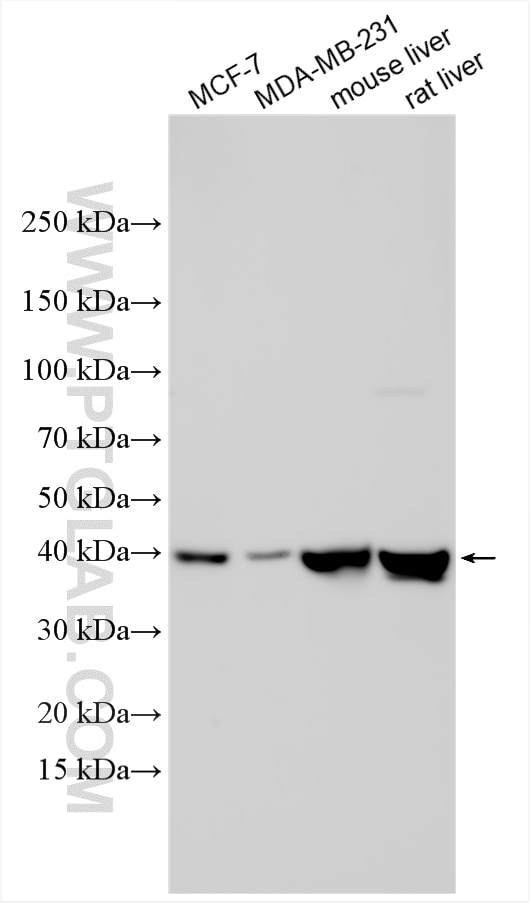
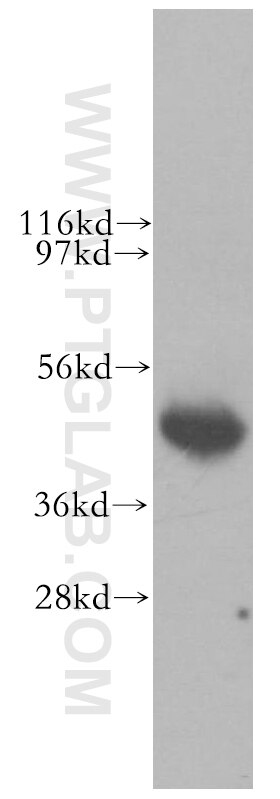
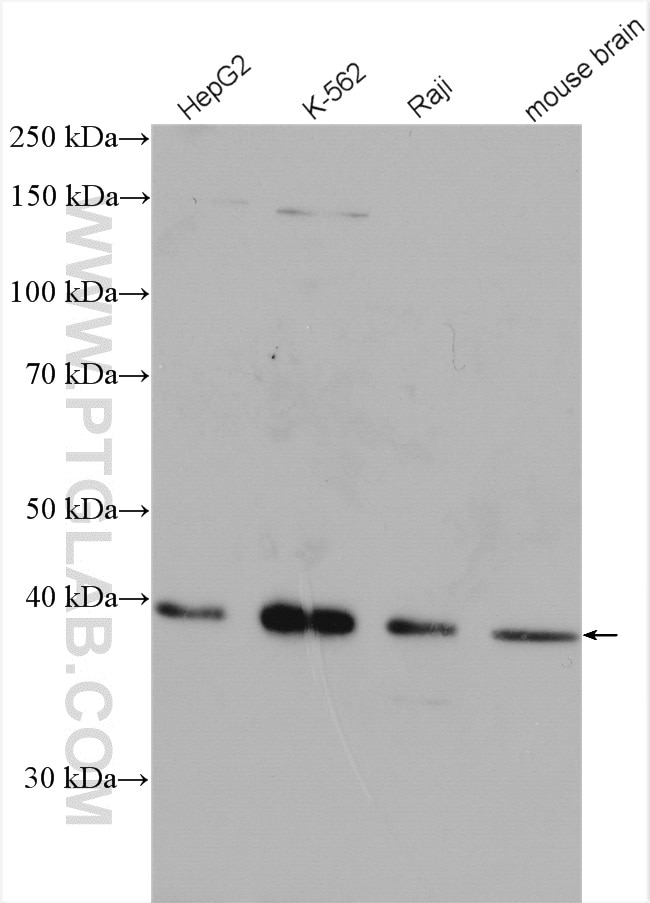
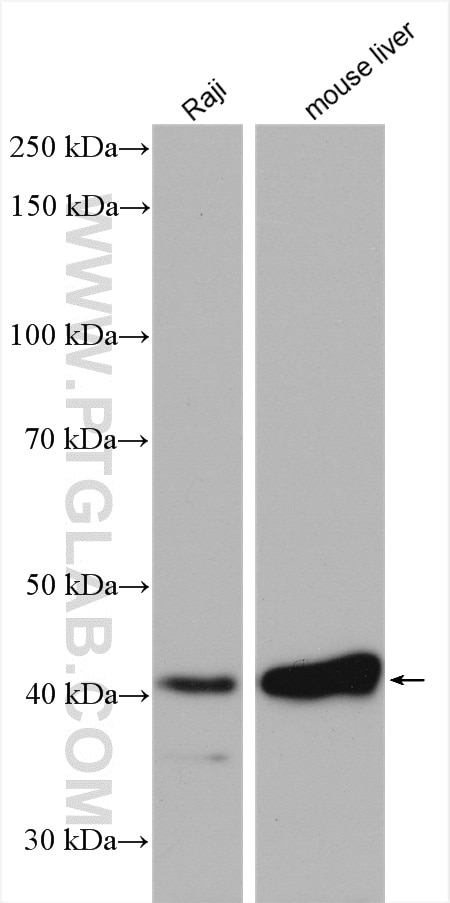
| Positive WB detected in | MCF-7 cells, human brain tissue, HepG2 cells, Raji cells, K-562 cells, mouse brain tissue, mouse liver tissue, MDA-MB-231 cells, rat liver tissue |
| Positive IP detected in | mouse liver tissue, L02 cells |
| Positive IHC detected in | human liver cancer tissue, human lymphoma tissue Note: suggested antigen retrieval with TE buffer pH 9.0; (*) Alternatively, antigen retrieval may be performed with citrate buffer pH 6.0 |
Recommended dilution
| Application | Dilution |
|---|---|
| Western Blot (WB) | WB : 1:2000-1:12000 |
| Immunoprecipitation (IP) | IP : 0.5-4.0 ug for 1.0-3.0 mg of total protein lysate |
| Immunohistochemistry (IHC) | IHC : 1:50-1:500 |
| It is recommended that this reagent should be titrated in each testing system to obtain optimal results. | |
| Sample-dependent, Check data in validation data gallery. | |
Product Information
11577-1-AP targets LIAS in WB, IHC, IF, IP, CoIP, ELISA applications and shows reactivity with human, mouse, rat samples.
| Tested Reactivity | human, mouse, rat |
| Cited Reactivity | human, mouse, rat, chicken, bovine |
| Host / Isotype | Rabbit / IgG |
| Class | Polyclonal |
| Type | Antibody |
| Immunogen |
CatNo: Ag2162 Product name: Recombinant human LIAS protein Source: e coli.-derived, PGEX-4T Tag: GST Domain: 1-372 aa of BC023635 Sequence: MSLRCGDAARTLGPRVFGRYFCSPVRPLSSLPDKKKELLQNGPDLQDFVSGDLADRSTWDEYKGNLKRQKGERLRLPPWLKTEIPMGKNYNKLKNTLRNLNLHTVCEEARCPNIGECWGGGEYATATATIMLMGDTCTRGCRFCSVKTARNPPPLDASEPYNTAKAIAEWGLDYVVLTSVDRDDMPDGGAEHIAKTVSYLKERNPKILVECLTPDFRGDLKAIEKVALSGLDVYAHNVETVPELQSKVRDPRVNFDQSLRVLKHAKKVQPDVISKTSIMLGLGENDEQVYATMKALREADVDCLTLGQYMQPTRRHLKVEEYITPEKFKYWEKVGNELGFHYTASGPLVRSSYKAGEFFLKNLVAKRKTKDL Predict reactive species |
| Full Name | lipoic acid synthetase |
| Calculated Molecular Weight | 372 aa, 42 kDa |
| Observed Molecular Weight | 34-42 kDa |
| GenBank Accession Number | BC023635 |
| Gene Symbol | LIAS |
| Gene ID (NCBI) | 11019 |
| RRID | AB_2135972 |
| Conjugate | Unconjugated |
| Form | Liquid |
| Purification Method | Antigen affinity purification |
| UNIPROT ID | O43766 |
| Storage Buffer | PBS with 0.02% sodium azide and 50% glycerol, pH 7.3. |
| Storage Conditions | Store at -20°C. Stable for one year after shipment. Aliquoting is unnecessary for -20oC storage. 20ul sizes contain 0.1% BSA. |
Background Information
LIAS(lipoyl synthase, mitochondrial) is also named as LAS and belongs to the radical SAM superfamily and lipoyl synthase family. It produces alpha-lipoic acid, an antioxidant and an essential cofactor in alpha-ketoacid dehydrogenase complexes, which participate in glucose oxidation and ATP generation(PMID:22021711). The deduced 373-amino acid protein has a calculated molecular mass of about 42 kD. The N-terminal 26 amino acids encode a potential mitochondrial targeting presequence that, upon removal, would result in a deduced mature protein of 347 amino acids with a molecular mass of about 39 kD(PMID:11389890). Defects in LIAS are a cause of pyruvate dehydrogenase lipoic acid synthetase deficiency (PDHLD).
Protocols
| Product Specific Protocols | |
|---|---|
| IHC protocol for LIAS antibody 11577-1-AP | Download protocol |
| IP protocol for LIAS antibody 11577-1-AP | Download protocol |
| WB protocol for LIAS antibody 11577-1-AP | Download protocol |
| Standard Protocols | |
|---|---|
| Click here to view our Standard Protocols |
Publications
What published studies show
Anti-LIAS antibody (Cat# 11577-1-AP) has accumulated 204 citations across high-impact journals including Nature, Science, Cell, Cancer Cell, Nature Communications, ACS Nano, Advanced Materials, Biomaterials, Small, Molecular Cell, Oncogene, and Free Radical Biology & Medicine. Research fields span cuproptosis mechanisms, cancer nanomedicine and immunotherapy, mitochondrial lipoylation metabolism, ferroptosis, neurodegeneration, cardiovascular injury, fibrosis, and inflammation.
| Species | Application | Title |
|---|---|---|
Cancer Cell Radiotherapy promotes cuproptosis and synergizes with cuproptosis inducers to overcome tumor radioresistance | ||
Cell Cuproptosis-immunity crosstalk informs strategy to overcome immunotherapy resistance. | ||
Imeta Clinical features and molecular landscape of cuproptosis signature-related molecular subtype in gastric cancer | ||
Adv Mater Multifunctional Copper-Phenolic Nanopills Achieve Comprehensive Polyamines Depletion to Provoke Enhanced Pyroptosis and Cuproptosis for Cancer Immunotherapy |
Reviews
What customers say
One reviewer rated this antibody 5/5, reporting excellent detection by chemiluminescence in Western Blot using human in vitro cancer cells at a 1:2000 dilution (also tested at 1:1000). Overall, the feedback is highly positive, highlighting strong and reliable performance.
The reviews below have been submitted by verified Proteintech customers who received an incentive for providing their feedback.
James (Verified Customer) (10-01-2025) | Excellent antibody with perfect detection by chemiluminescence. Have used at 1:1000 and 1:2000 dilutions.
|


