

Tested Applications
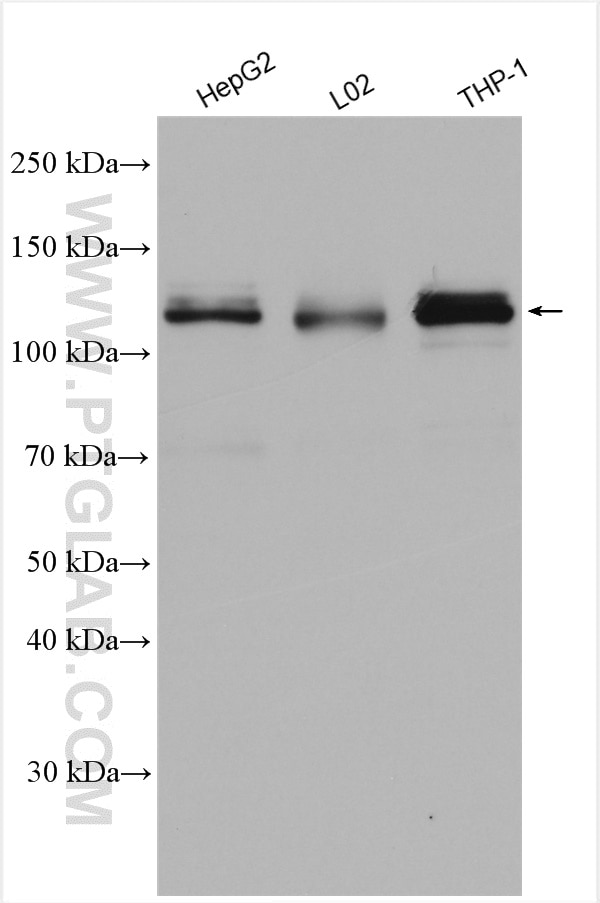
| Positive WB detected in | HepG2 cells, L02 cells, THP-1 cells |
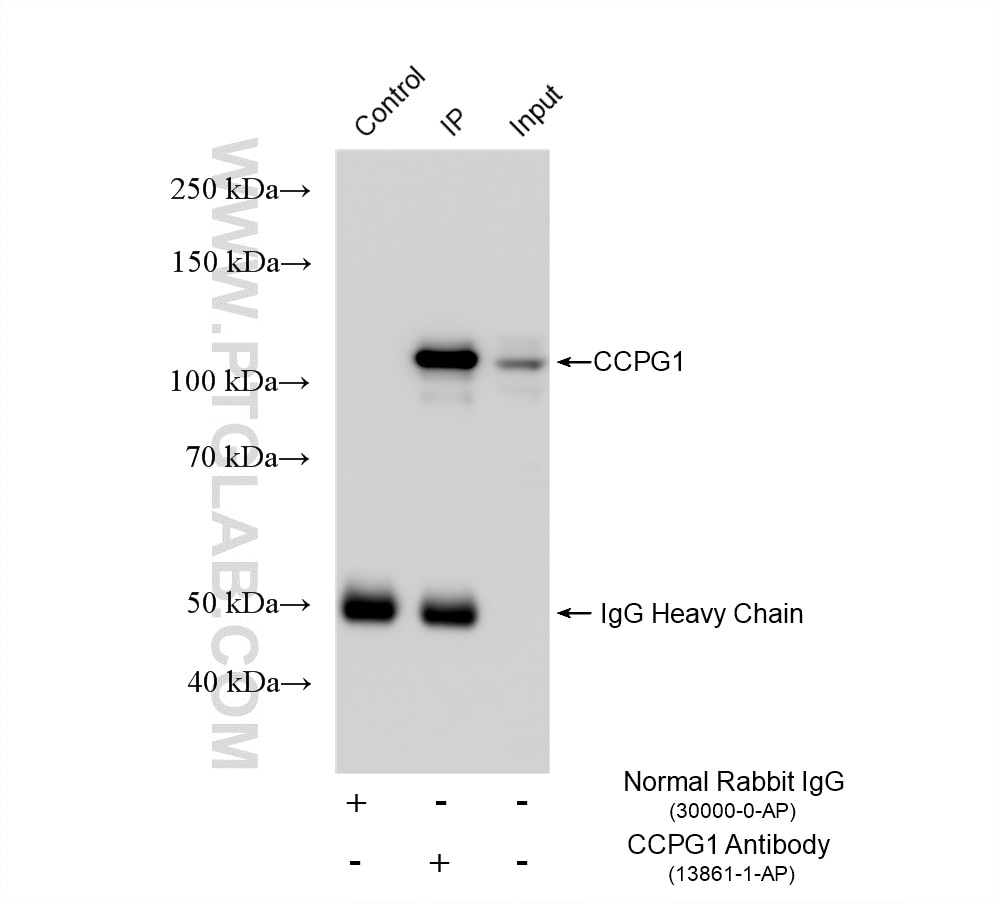
| Positive IP detected in | HepG2 cells |
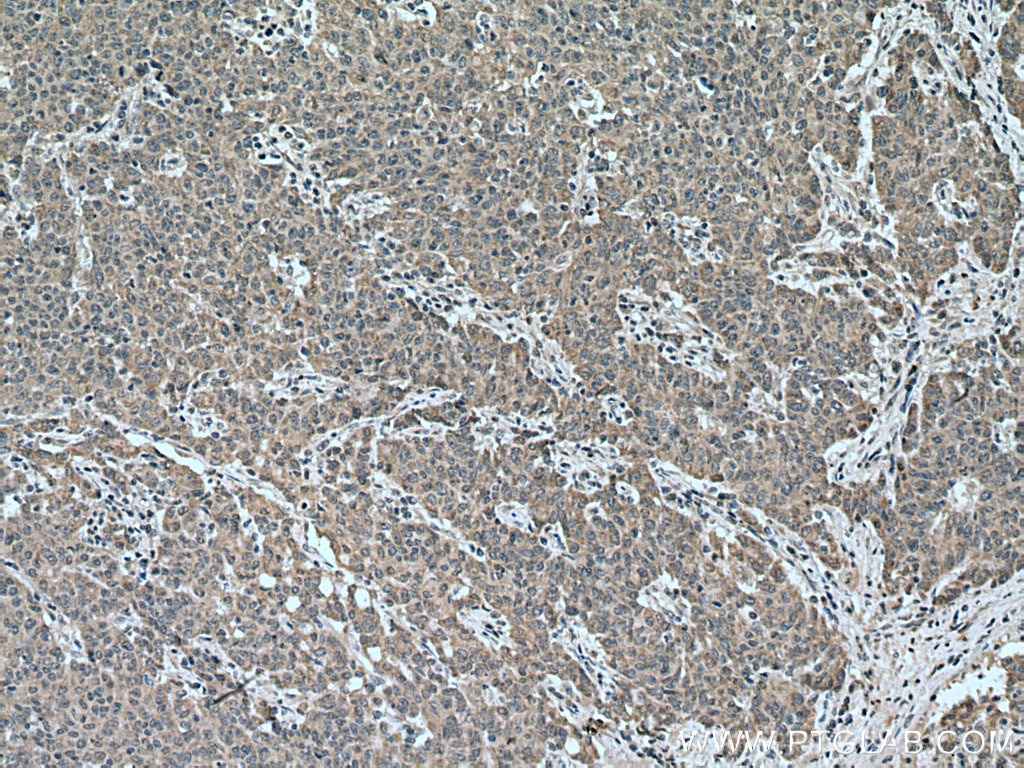
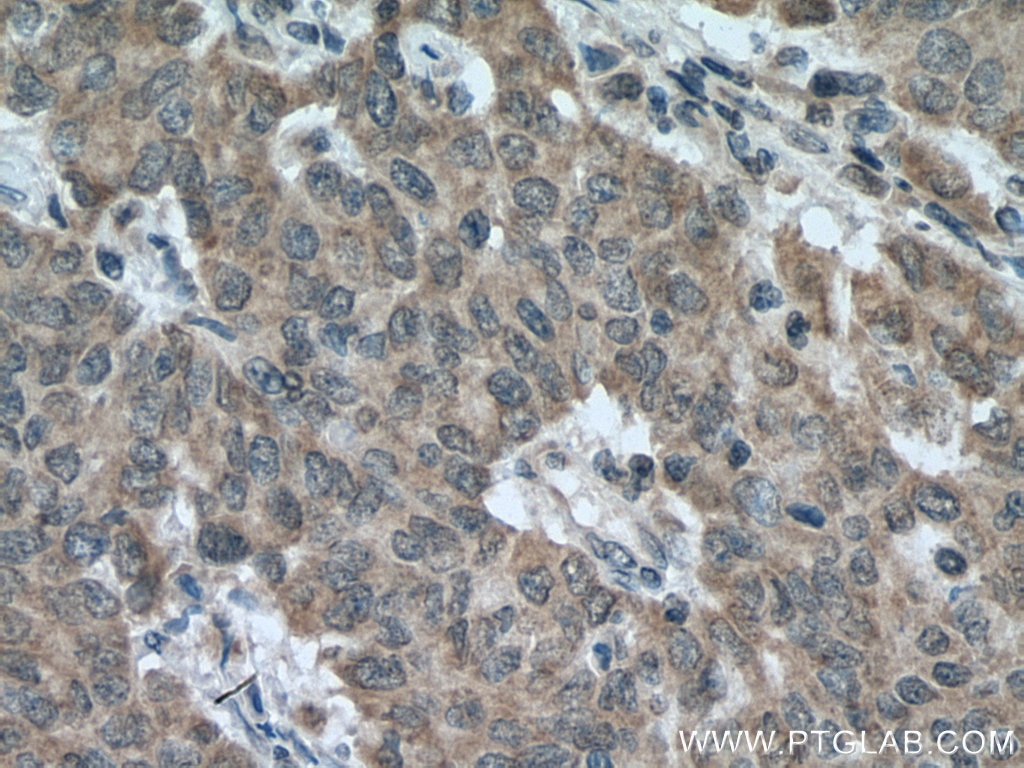
| Positive IHC detected in | human stomach cancer tissue Note: suggested antigen retrieval with TE buffer pH 9.0; (*) Alternatively, antigen retrieval may be performed with citrate buffer pH 6.0 |
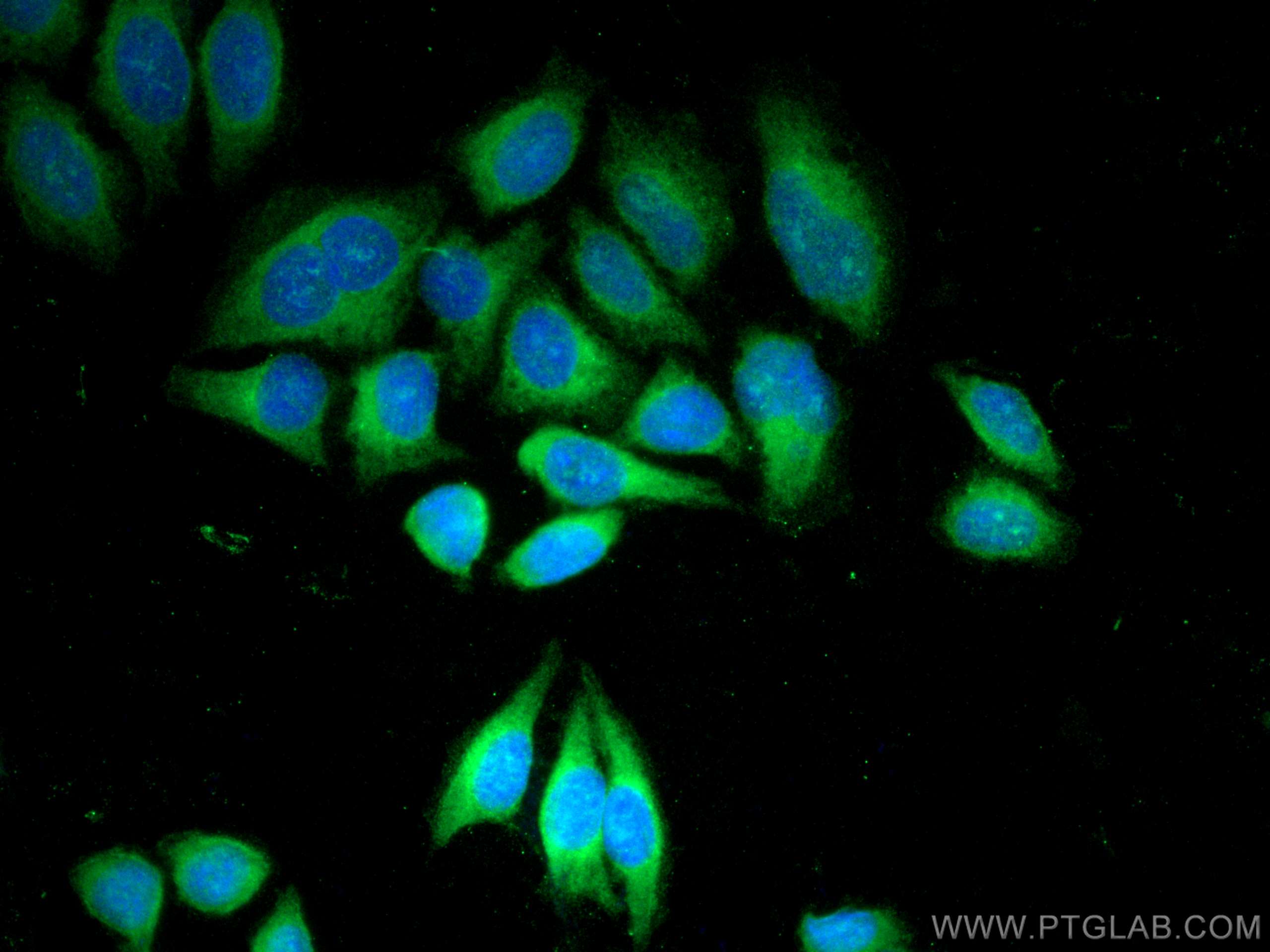
| Positive IF/ICC detected in | HepG2 cells |
Recommended dilution
| Application | Dilution |
|---|---|
| Western Blot (WB) | WB : 1:500-1:1000 |
| Immunoprecipitation (IP) | IP : 0.5-4.0 ug for 1.0-3.0 mg of total protein lysate |
| Immunohistochemistry (IHC) | IHC : 1:50-1:500 |
| Immunofluorescence (IF)/ICC | IF/ICC : 1:200-1:800 |
| It is recommended that this reagent should be titrated in each testing system to obtain optimal results. | |
| Sample-dependent, Check data in validation data gallery. | |
Product Information
13861-1-AP targets CCPG1 in WB, IHC, IF/ICC, IP, ELISA applications and shows reactivity with human samples.
| Tested Reactivity | human |
| Cited Reactivity | human, mouse, rat |
| Host / Isotype | Rabbit / IgG |
| Class | Polyclonal |
| Type | Antibody |
| Immunogen |
CatNo: Ag4841 Product name: Recombinant human CCPG1 protein Source: e coli.-derived, PGEX-4T Tag: GST Domain: 264-613 aa of BC034914 Sequence: LHGKSDSPNVYTEKKEIAILRERLTELELKLTFEQQRSDLWERLYVEAKDQNGKQGTDGKKKGGRGSHRAKNKSKETFLGSVKETFDAMKNSTKEFVRHHKEKIKQAKEAVKENLKKFSDSVKSTFRHFKDTTKNIFDEKGNKRFGATKEAAEKPRTVFSDYLHPQYKAPTENHHNRGPTMQNDGRKEKPVHFKEFRKNTNSKKCSPGHDCRENSHSFREACSGVFDCAQQESMSLFNIVVNPIRMDEFRQIIQRYMLKELDTFCHWNELDQFINKFFLNGVFIHDQKLFTDFVNDVKDYLRNMKEYEVDNDGVFEKLDEYIYRHFFGHTFSPPYGPRSVYIKPCHYSSL Predict reactive species |
| Full Name | cell cycle progression 1 |
| Calculated Molecular Weight | 87 kDa |
| Observed Molecular Weight | 110 kDa |
| GenBank Accession Number | BC034914 |
| Gene Symbol | CCPG1 |
| Gene ID (NCBI) | 9236 |
| RRID | AB_2074010 |
| Conjugate | Unconjugated |
| Form | Liquid |
| Purification Method | Antigen affinity purification |
| UNIPROT ID | Q9ULG6 |
| Storage Buffer | PBS with 0.02% sodium azide and 50% glycerol, pH 7.3. |
| Storage Conditions | Store at -20°C. Stable for one year after shipment. Aliquoting is unnecessary for -20oC storage. 20ul sizes contain 0.1% BSA. |
Background Information
Cell-cycle progression gene 1 (CCPG1) is a receptor for ER stress-induced ER-phagy. CCPG1 localizes to perinuclear ER and in small foci at the ER periphery. It contains a LIR at the N-terminal cytosolic domain engaging LC3/GABARAP. (PMID: 29802216, PMID: 29290589)
Protocols
| Product Specific Protocols | |
|---|---|
| IF protocol for CCPG1 antibody 13861-1-AP | Download protocol |
| IHC protocol for CCPG1 antibody 13861-1-AP | Download protocol |
| IP protocol for CCPG1 antibody 13861-1-AP | Download protocol |
| WB protocol for CCPG1 antibody 13861-1-AP | Download protocol |
| Standard Protocols | |
|---|---|
| Click here to view our Standard Protocols |
Publications
What published studies show
Anti-FAM134B (CCPG1) antibody, catalog number 13861-1-AP, has 32 citations published in journals including Nature Cell Biology, Autophagy, Nature Communications, Molecular Cell, Developmental Cell, EMBO Journal, Cancer Letters, Redox Biology, Phytomedicine, and others. Research fields span ER-phagy/reticulophagy, ER stress, autophagy, neurodegeneration (Parkinson's disease), cancer (bladder, lung, breast, hepatocellular, glioblastoma), viral pathogenicity, cardiotoxicity, and innate immunity.
| Species | Application | Title |
|---|---|---|
Nat Cell Biol Cholesterol sensing by the SCAP-FAM134B complex regulates ER-phagy and STING innate immunity. | ||
Autophagy CCPG1-mediated reticulophagy promotes tumorigenesis and cisplatin resistance in bladder cancer.
| ||
Autophagy RETREG1-mediated reticulophagy is activated by an ATF4-CEBPG/C/EBPγ heterodimer and confers protection against lipotoxicity | ||
Nat Commun AMFR-mediated Flavivirus NS2A ubiquitination subverts ER-phagy to augment viral pathogenicity | ||
Redox Biol Adaptive responses of neuronal cells to chronic endoplasmic reticulum (ER) stress |
Reviews
What customers say
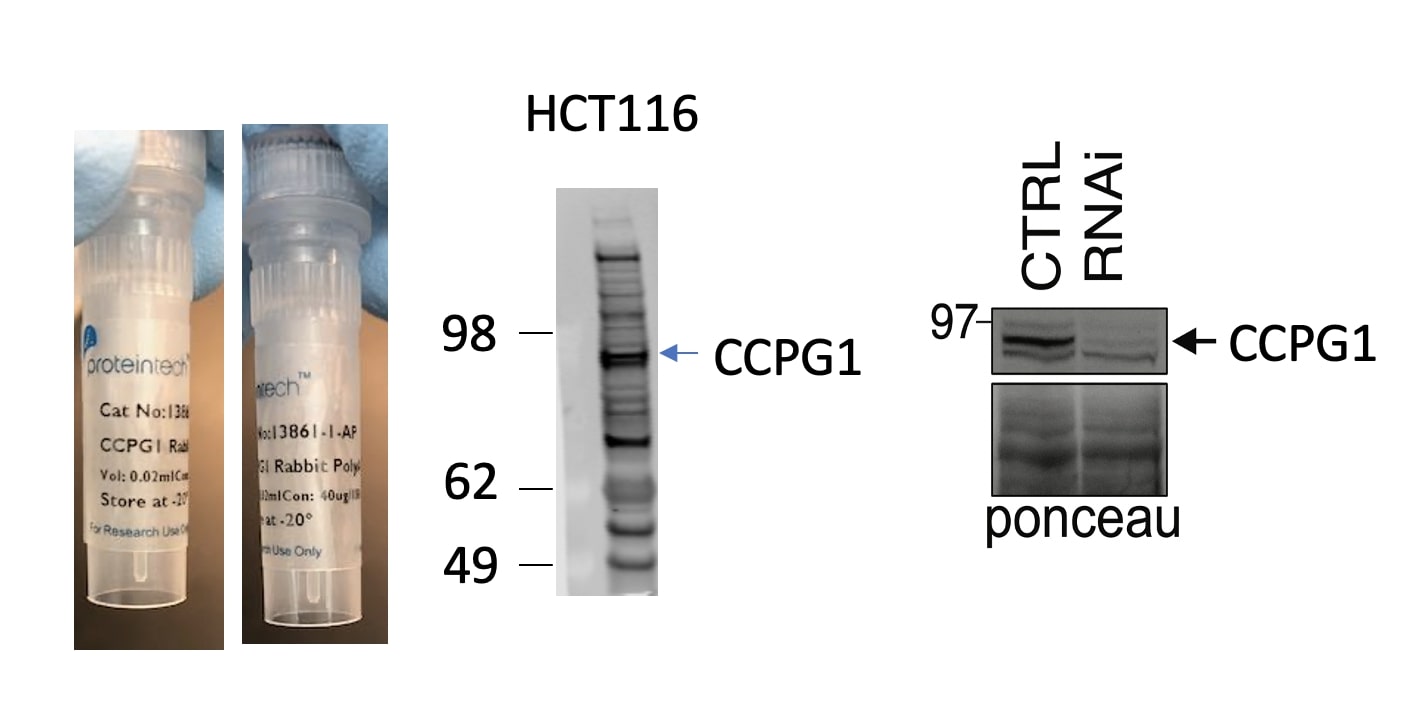
Both reviewers used this antibody for Western Blot at a 1:1000 dilution and reported significant background issues. One user observed multiple nonspecific bands between 40–70 kDa in pancreas and liver tissues (3/5 rating). The other noted heavy background in HCT116 cells and had to perform an siRNA knockdown experiment to confirm that the band near 98 kDa was the true CCPG1 signal (2/5 rating). Overall, users found the antibody produced considerable nonspecific binding, requiring additional validation to identify the correct target band.
The reviews below have been submitted by verified Proteintech customers who received an incentive for providing their feedback.
Zhe (Verified Customer) (09-12-2025) | There are several nonspecific bands showing up between 40-70kDa
|
H (Verified Customer) (04-05-2020) | This antibody has lots of background bands. In the beginning, I was not sure which band is the right band. In the end, I performed knock-down experiment using siRNA, and validated that the band close to 98 kDa is the CCPG1 band.
 |


