

Tested Applications
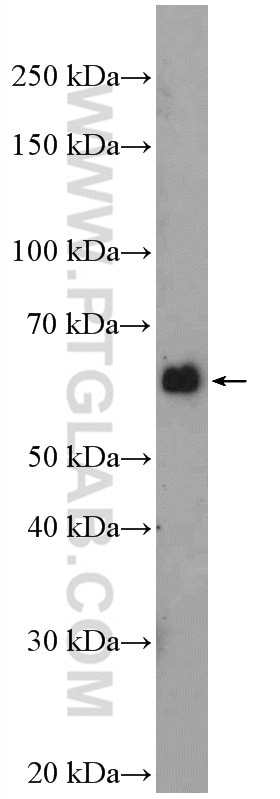
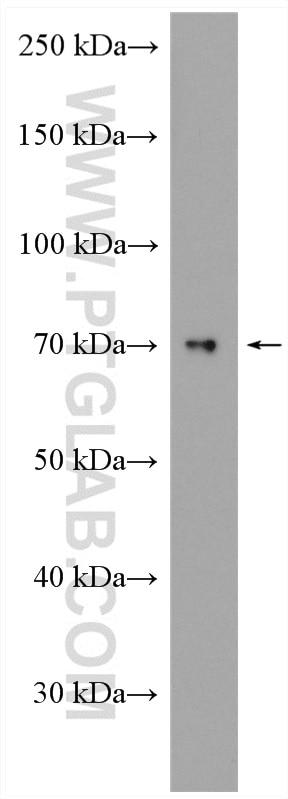
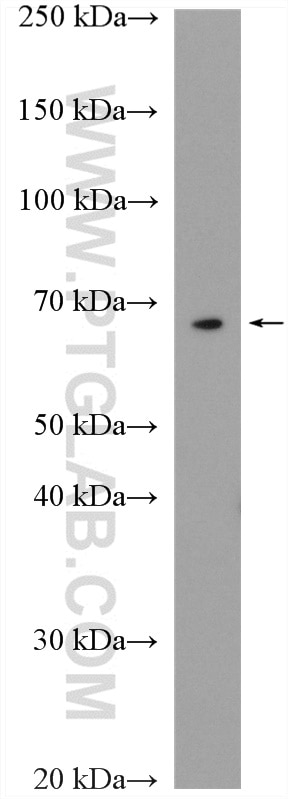
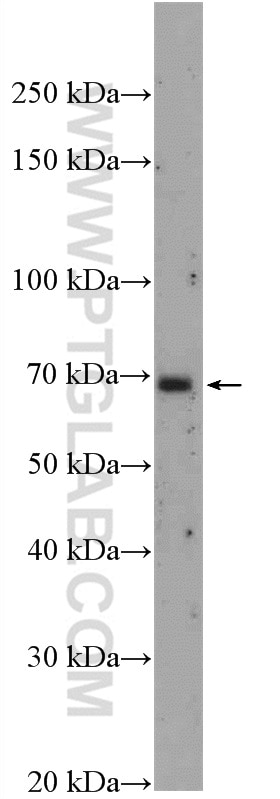
| Positive WB detected in | HEK-293 cells, A431 cells, mouse brain tissue, NIH/3T3 cells |
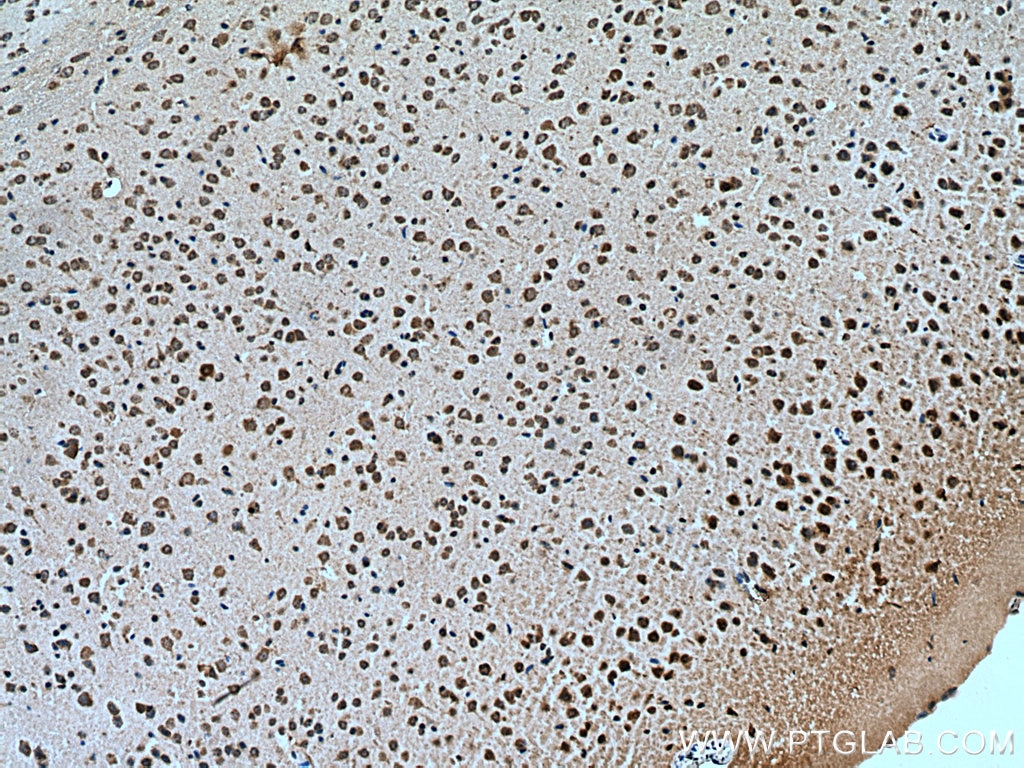
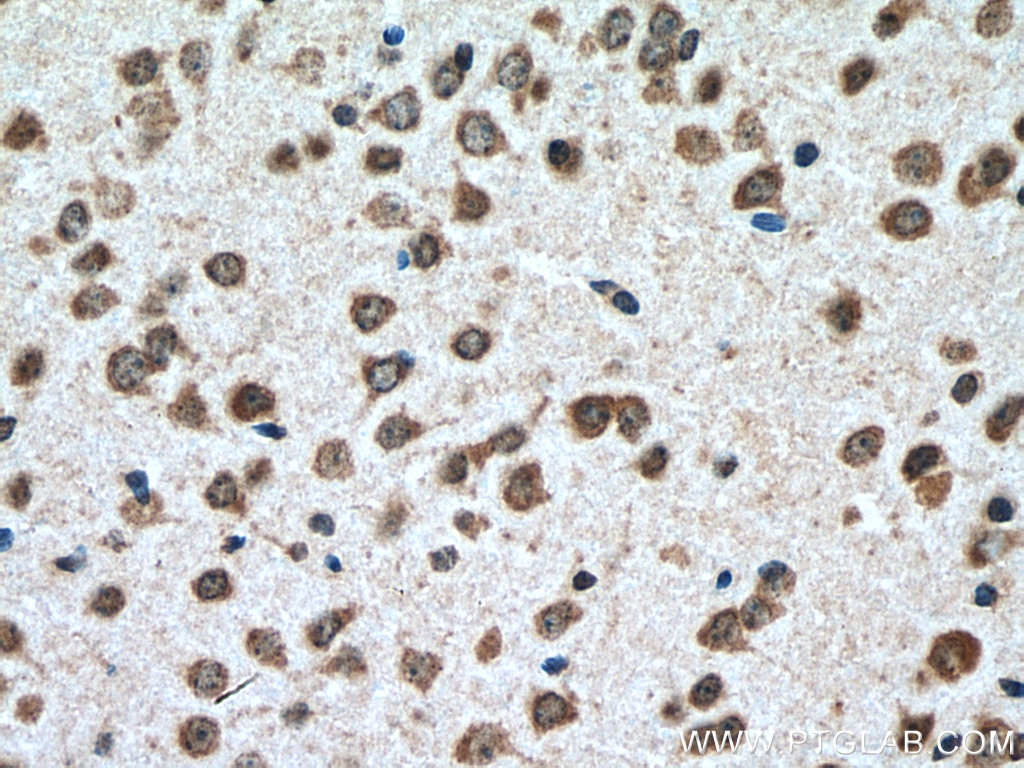
| Positive IHC detected in | mouse brain tissue Note: suggested antigen retrieval with TE buffer pH 9.0; (*) Alternatively, antigen retrieval may be performed with citrate buffer pH 6.0 |
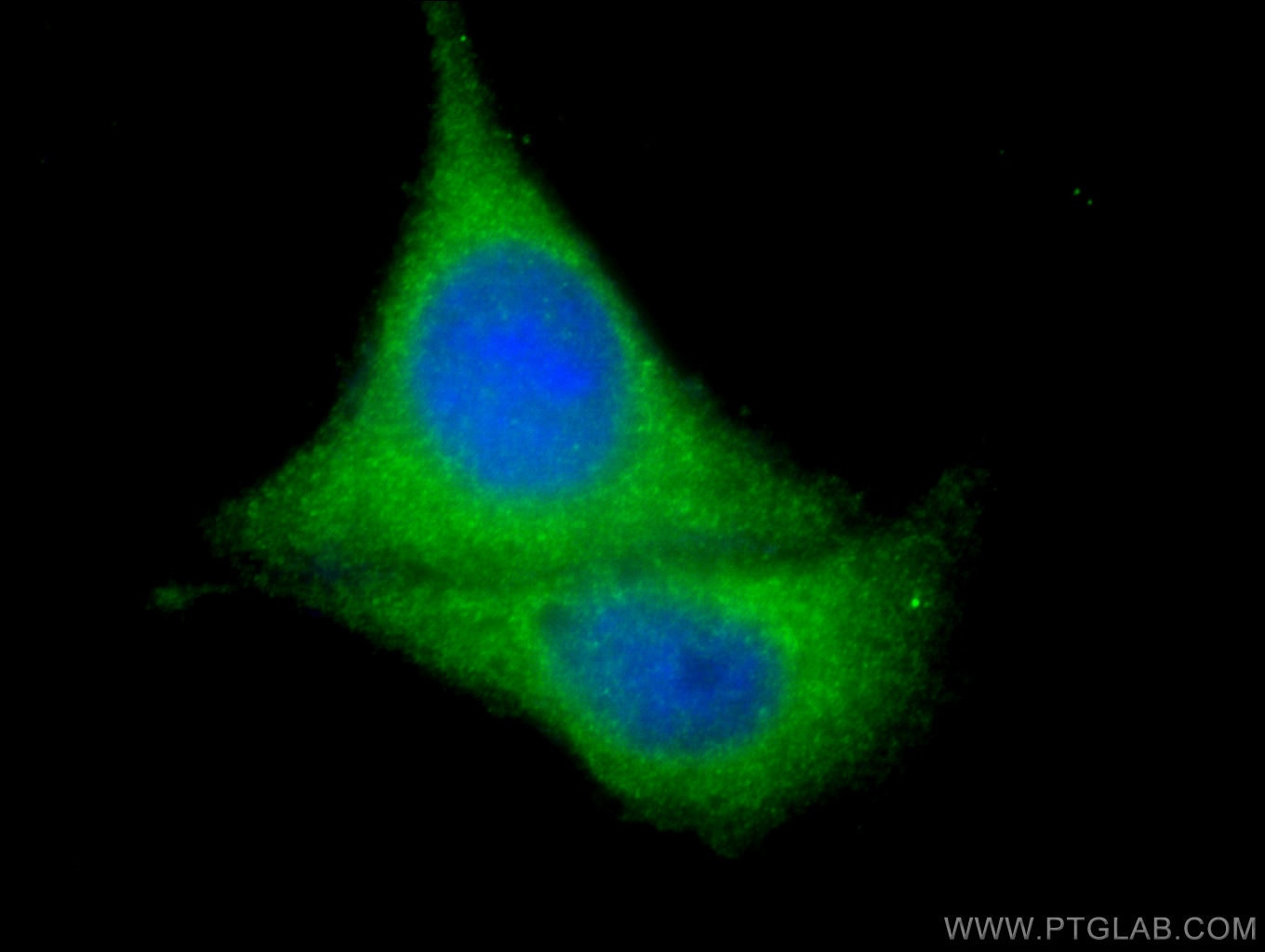
| Positive IF/ICC detected in | MCF-7 cells |
Recommended dilution
| Application | Dilution |
|---|---|
| Western Blot (WB) | WB : 1:500-1:1000 |
| Immunohistochemistry (IHC) | IHC : 1:50-1:500 |
| Immunofluorescence (IF)/ICC | IF/ICC : 1:50-1:500 |
| It is recommended that this reagent should be titrated in each testing system to obtain optimal results. | |
| Sample-dependent, Check data in validation data gallery. | |
Product Information
19491-1-AP targets ATG14/Barkor (N-terminal) in WB, IHC, IF/ICC, IP, CoIP, ELISA applications and shows reactivity with human, mouse samples.
| Tested Reactivity | human, mouse |
| Cited Reactivity | human, mouse, rat, pig, canine, bovine |
| Host / Isotype | Rabbit / IgG |
| Class | Polyclonal |
| Type | Antibody |
| Immunogen |
Peptide Predict reactive species |
| Full Name | KIAA0831 |
| Calculated Molecular Weight | 55 kDa |
| Observed Molecular Weight | 65-68 kDa |
| GenBank Accession Number | NM_014924 |
| Gene Symbol | ATG14 |
| Gene ID (NCBI) | 22863 |
| RRID | AB_10642701 |
| Conjugate | Unconjugated |
| Form | Liquid |
| Purification Method | Antigen affinity purification |
| UNIPROT ID | Q6ZNE5 |
| Storage Buffer | PBS with 0.02% sodium azide and 50% glycerol, pH 7.3. |
| Storage Conditions | Store at -20°C. Stable for one year after shipment. Aliquoting is unnecessary for -20oC storage. 20ul sizes contain 0.1% BSA. |
Background Information
Barkor, also named as KIAA0831, Atg14 and Atg14L, is required for both basal and inducible autophagy. It plays a role in autophagosome formation and MAP1LC3/LC3 conjugation to phosphatidylethanolamine. Barkor promotes BECN1 translocation from the trans-Golgi network to autophagosomes. This antibody is specific to KIAA0831(Barkor).
Protocols
| Product Specific Protocols | |
|---|---|
| IF protocol for ATG14/Barkor (N-terminal) antibody 19491-1-AP | Download protocol |
| IHC protocol for ATG14/Barkor (N-terminal) antibody 19491-1-AP | Download protocol |
| WB protocol for ATG14/Barkor (N-terminal) antibody 19491-1-AP | Download protocol |
| Standard Protocols | |
|---|---|
| Click here to view our Standard Protocols |
Publications
What published studies show
Anti-ATG14 (Cat# 19491-1-AP) has accumulated 41 citations across journals including Autophagy, Nature Cell Biology, Nature Communications, Molecular Cancer, Molecular Cell, Cell Death & Disease, Developmental Cell, Journal of Biological Chemistry, and Signal Transduction and Targeted Therapy. Research fields span autophagy mechanisms, oncology (ovarian, pancreatic, breast, lung cancers), neurodegeneration (Alzheimer's, stroke), virology, metabolic disorders, reproductive biology, and ferroptosis/necroptosis.
| Species | Application | Title |
|---|---|---|
Signal Transduct Target Ther Targeting CRL4 suppresses chemoresistant ovarian cancer growth by inducing mitophagy | ||
Sci Bull (Beijing) A germline-specific vesicular structure licenses mRNA activation during spermiogenesis and is hijacked in gastric cancer. | ||
Autophagy Kit-mediated autophagy suppression driven by a viral oncoprotein emerges as a crucial survival mechanism in Merkel cell carcinoma | ||
Reviews
What customers say
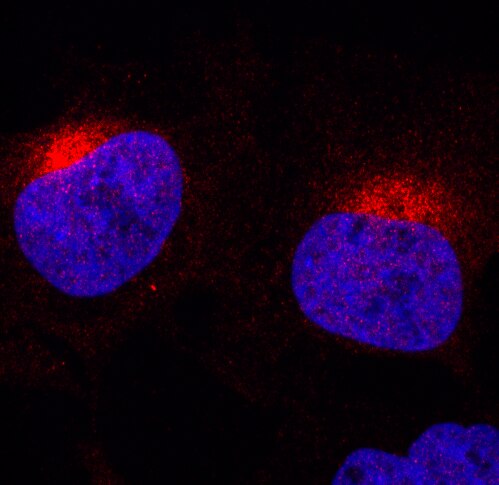
Most reviewers report positive experiences. Two users rated it 5 stars, highlighting its ease of use and strong performance in Western Blot, IHC, and IF at dilutions of 1:400–1:1000. One user gave 1 star, noting that in U2OS cells the IF staining showed an unexpected perinuclear accumulation rather than the expected diffuse or punctate ATG14 pattern. Overall, the antibody is well-received for general applications, though one case suggests potential specificity concerns in certain cell lines for immunofluorescence.
The reviews below have been submitted by verified Proteintech customers who received an incentive for providing their feedback.
Mounika (Verified Customer) (03-24-2026) | Very good antibody, happy to have it our projects!
|
Mounika (Verified Customer) (01-08-2026) | Very wonderful antibodies, easy to work with! good for western blots
|
Charlotte (Verified Customer) (01-25-2018) | I do not think that this antibody works properly in U2OS cells. According to the litterature ATG14 is supposed to have a diffuse or punctae pattern and not this huge accumulation near the nucleus.
 |


