
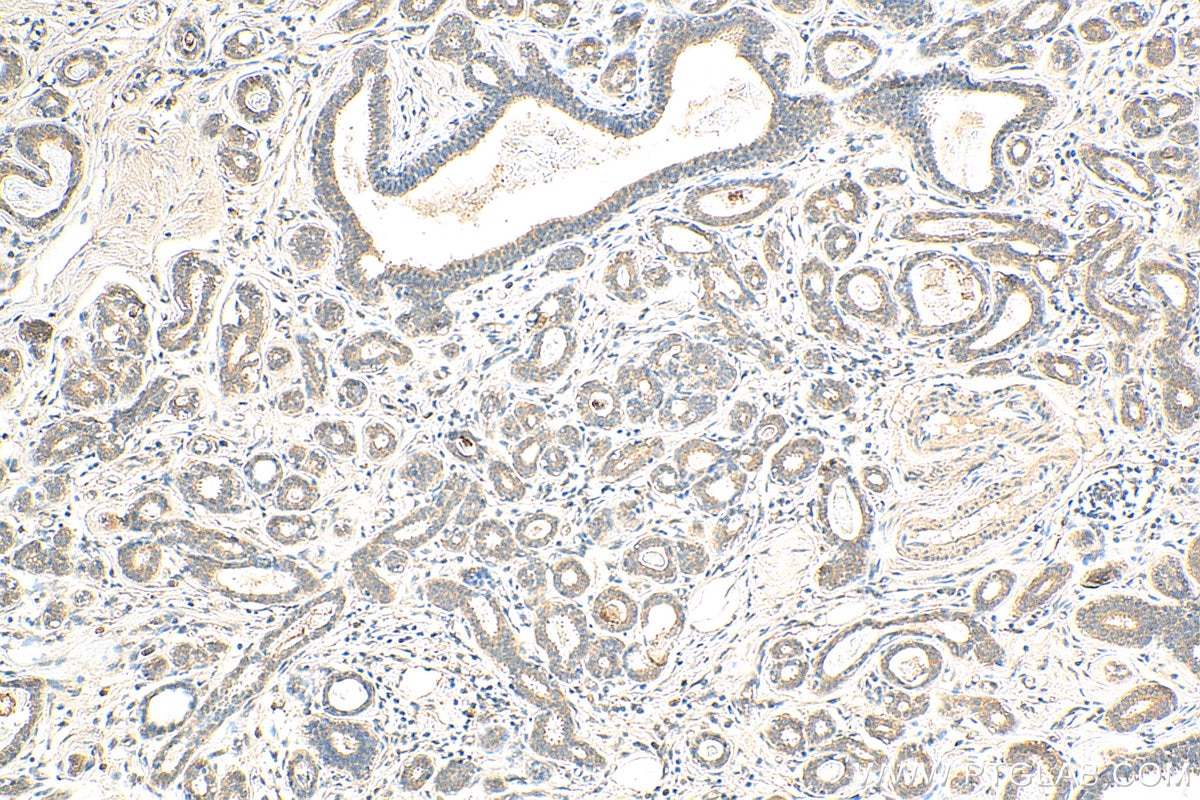

Tested Applications
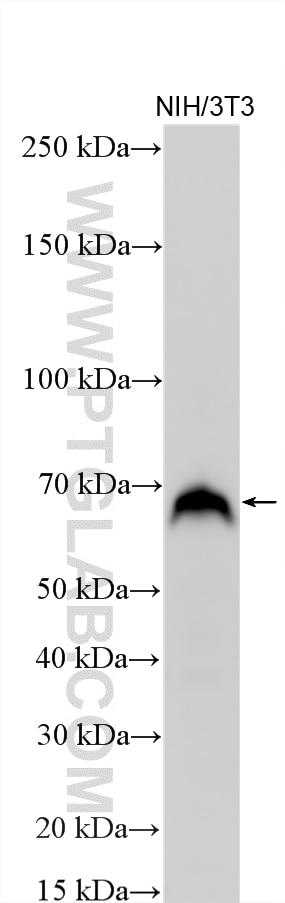
| Positive WB detected in | NIH/3T3 cells |
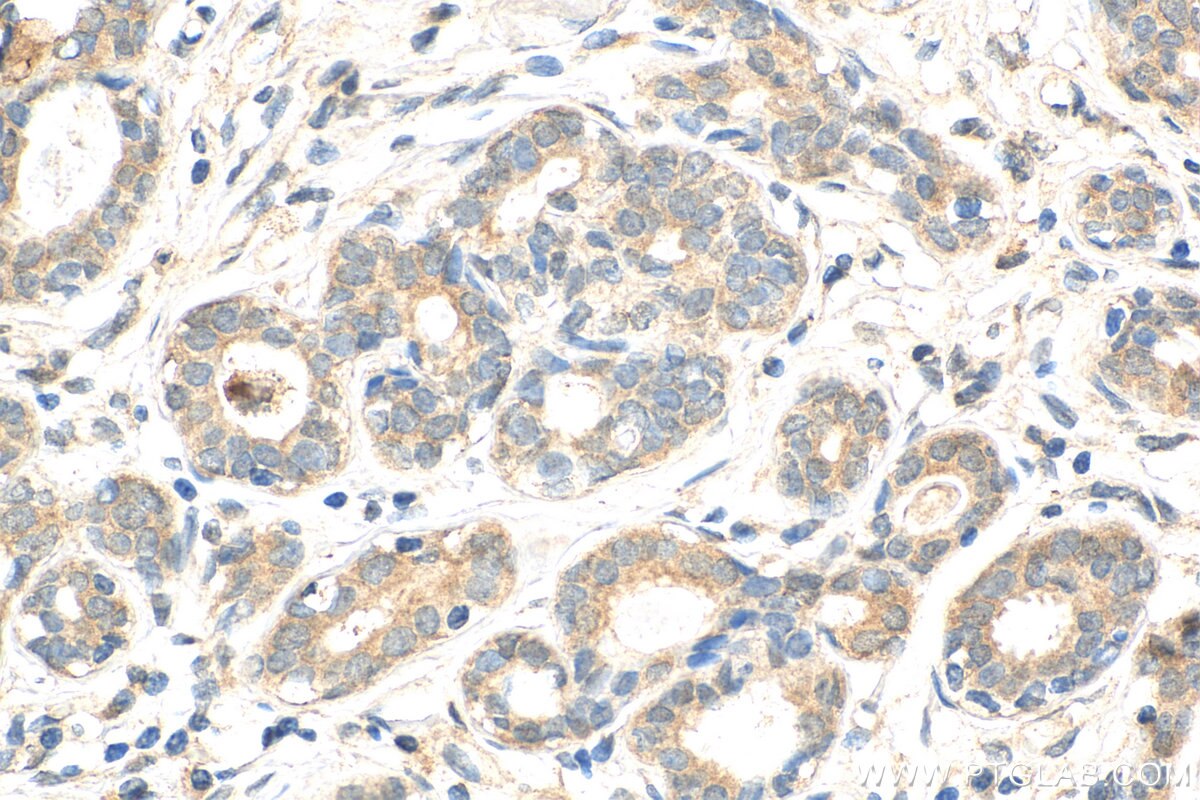
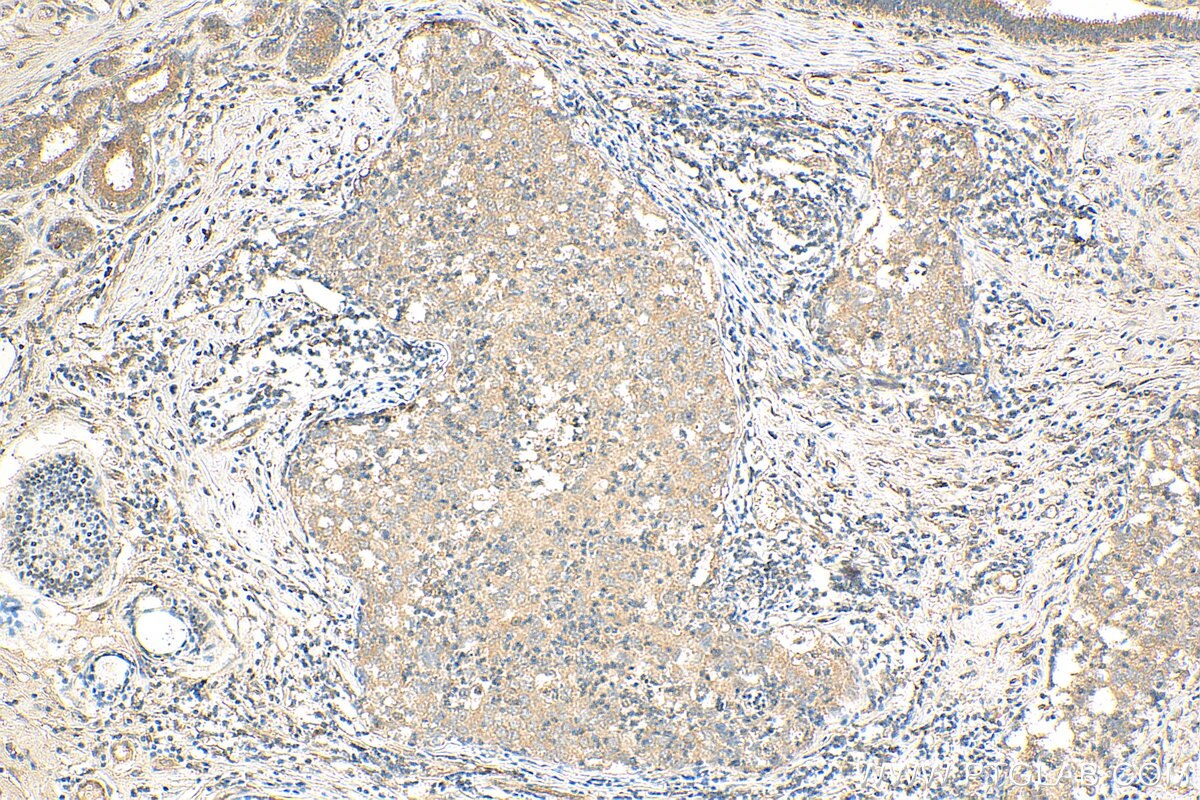
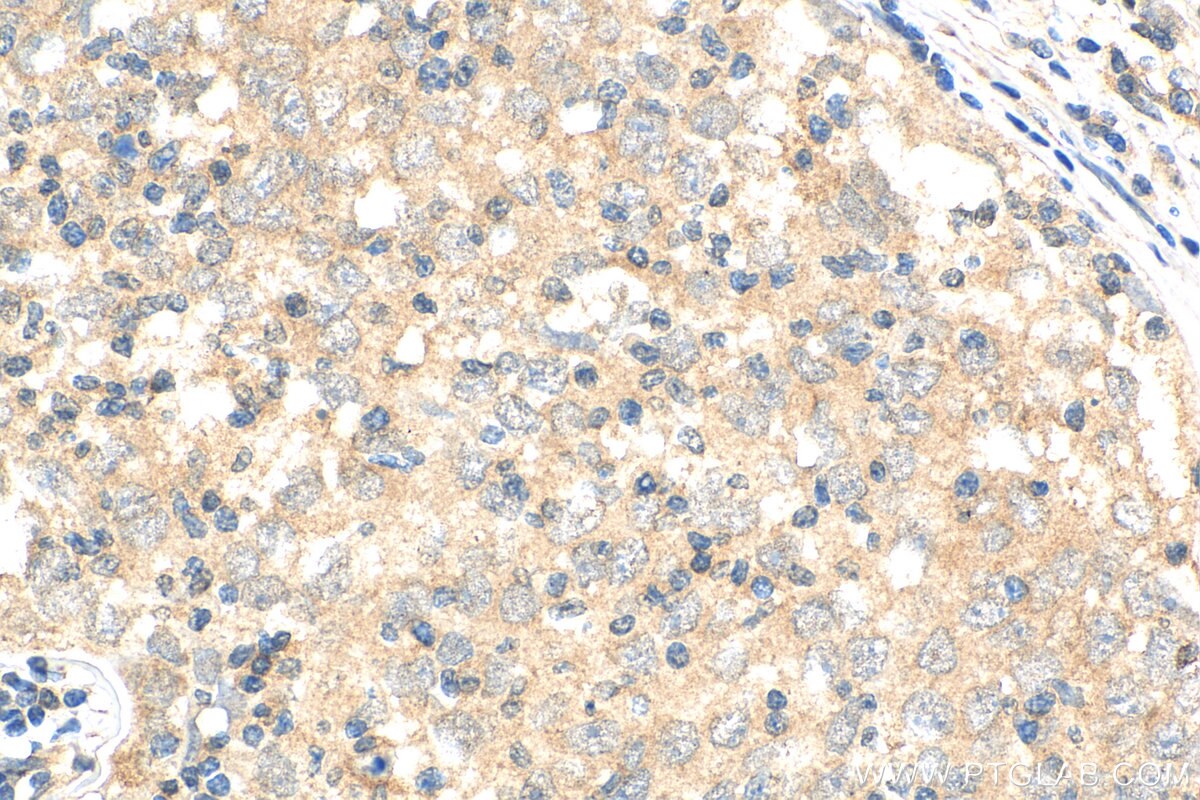
| Positive IHC detected in | human breast cancer tissue Note: suggested antigen retrieval with TE buffer pH 9.0; (*) Alternatively, antigen retrieval may be performed with citrate buffer pH 6.0 |
Recommended dilution
| Application | Dilution |
|---|---|
| Western Blot (WB) | WB : 1:1000-1:4000 |
| Immunohistochemistry (IHC) | IHC : 1:200-1:800 |
| It is recommended that this reagent should be titrated in each testing system to obtain optimal results. | |
| Sample-dependent, Check data in validation data gallery. | |
Product Information
14834-1-AP targets ATF2-Specific in WB, IHC, IF, ELISA applications and shows reactivity with human, mouse samples.
| Tested Reactivity | human, mouse |
| Cited Reactivity | human, mouse, rat |
| Host / Isotype | Rabbit / IgG |
| Class | Polyclonal |
| Type | Antibody |
| Immunogen |
Peptide Predict reactive species |
| Full Name | activating transcription factor 2 |
| Calculated Molecular Weight | 55 kDa |
| Observed Molecular Weight | 70 kDa |
| GenBank Accession Number | BC026175 |
| Gene Symbol | ATF2 |
| Gene ID (NCBI) | 1386 |
| RRID | AB_10694139 |
| Conjugate | Unconjugated |
| Form | Liquid |
| Purification Method | Antigen affinity purification |
| UNIPROT ID | P15336 |
| Storage Buffer | PBS with 0.02% sodium azide and 50% glycerol, pH 7.3. |
| Storage Conditions | Store at -20°C. Stable for one year after shipment. Aliquoting is unnecessary for -20oC storage. 20ul sizes contain 0.1% BSA. |
Background Information
ATF2, also named as CREB2 and CREBP1, contains one bZIP domain and one C2H2-type zinc finger. It belongs to the bZIP family. ATF2 binds to the cAMP-responsive element(CRE), an octameric palindrome. It forms a homodimer or a heterodimer with c-Jun and stimulates CRE-dependent transcription. It is also a histone acetyltransferase (HAT) that specifically acetylates histones H2B and H4 in vitro; thus it may represent a class of sequence-specific factors that activate transcription by direct effects on chromatin components. ATF2 binds DNA as a dimer and can form a homodimer in the absence of DNA. It binds through its N-terminal region to UTF1 which acts as a coactivator of ATF2 transcriptional activity. This antibody is a rabbit polyclonal antibody raised against a peptide mapping within human ATF2. The calculated molecular weight of ATF2 is 55 kDa, but the modified ATF2 protein is about 70 kDa (PMID: 18269766 ).
Protocols
| Product Specific Protocols | |
|---|---|
| IHC protocol for ATF2-Specific antibody 14834-1-AP | Download protocol |
| WB protocol for ATF2-Specific antibody 14834-1-AP | Download protocol |
| Standard Protocols | |
|---|---|
| Click here to view our Standard Protocols |
Publications
What published studies show
ATF2-Specific Polyclonal antibody (14834-1-AP) has 14 citations published in journals including Nature, Hepatology, Cell Reports, Journal of Experimental & Clinical Cancer Research, BMC Medicine, FASEB Journal, Journal of Biological Chemistry, and others. Research fields span inflammation, liver fibrosis, oncology (renal, colorectal, cervical cancer), metabolic regulation, neurology, muscle biology, gestational diabetes, viral infection, and immune cell signaling.
| Species | Application | Title |
|---|---|---|
Hepatology Hepatocyte-derived MASP1-enriched small extracellular vesicles activate HSCs to promote liver fibrosis | ||
J Exp Clin Cancer Res ATF2 predicts poor prognosis and promotes malignant phenotypes in renal cell carcinoma. | ||
BMC Med Downregulation of AC092894.1 promotes oxaliplatin resistance in colorectal cancer via the USP3/AR/RASGRP3 axis | ||


