
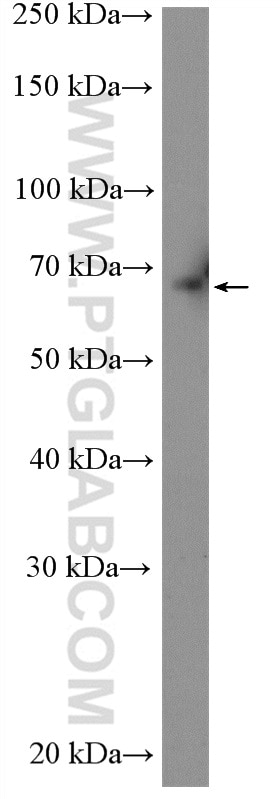
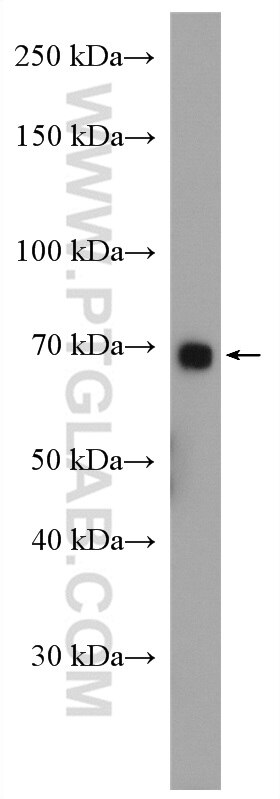

Tested Applications
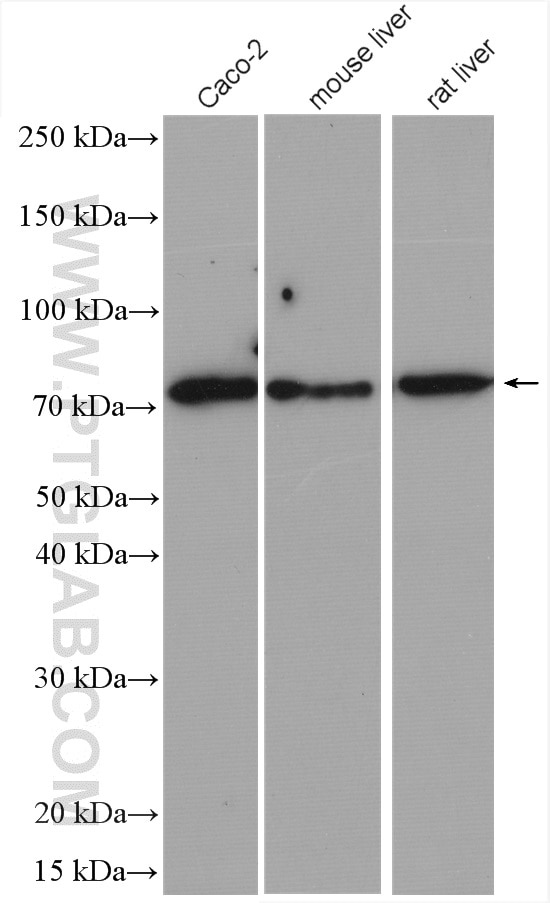
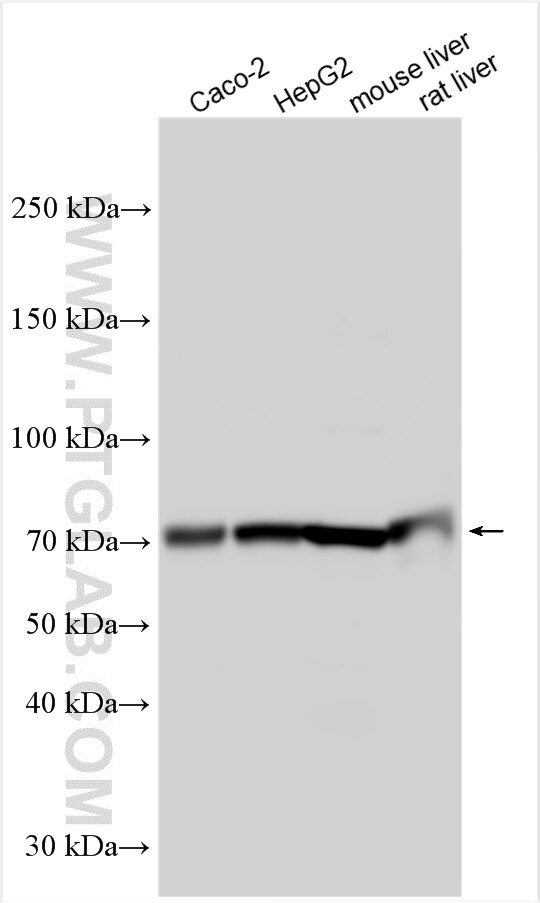
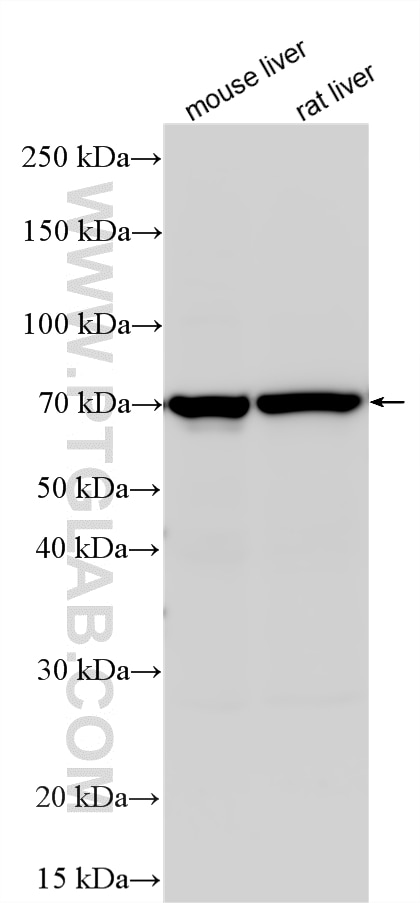
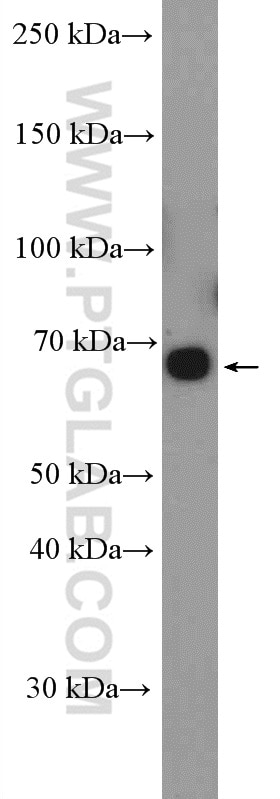
| Positive WB detected in | Caco-2 cells, HepG2 cells, mouse colon tissue, mouse liver tissue, rat liver tissue |
Recommended dilution
| Application | Dilution |
|---|---|
| Western Blot (WB) | WB : 1:500-1:1000 |
| It is recommended that this reagent should be titrated in each testing system to obtain optimal results. | |
| Sample-dependent, Check data in validation data gallery. | |
Product Information
27722-1-AP targets ABCG5 in WB, IHC, IF, ELISA applications and shows reactivity with human, mouse, rat samples.
| Tested Reactivity | human, mouse, rat |
| Cited Reactivity | human, mouse, rat |
| Host / Isotype | Rabbit / IgG |
| Class | Polyclonal |
| Type | Antibody |
| Immunogen |
CatNo: Ag26844 Product name: Recombinant human ABCG5 protein Source: e coli.-derived, PGEX-4T Tag: GST Domain: 1-85 aa of NM_022436 Sequence: MGDLSSLTPGGSMGLQVNRGSQSSLEGAPATAPEPHSLGILHASYSVSHRVRPWWDITSCRQQWTRQILKDVSLYVESGQIMCIL Predict reactive species |
| Full Name | ATP-binding cassette, sub-family G (WHITE), member 5 |
| Calculated Molecular Weight | 72 kDa |
| Observed Molecular Weight | 68 kDa~72 kDa |
| GenBank Accession Number | NM_022436 |
| Gene Symbol | ABCG5 |
| Gene ID (NCBI) | 64240 |
| RRID | AB_2880952 |
| Conjugate | Unconjugated |
| Form | Liquid |
| Purification Method | Antigen affinity purification |
| UNIPROT ID | Q9H222 |
| Storage Buffer | PBS with 0.02% sodium azide and 50% glycerol, pH 7.3. |
| Storage Conditions | Store at -20°C. Stable for one year after shipment. Aliquoting is unnecessary for -20oC storage. 20ul sizes contain 0.1% BSA. |
Background Information
ABCG5 belongs to the ABC transporter subfamily, whose members are "half-transporters" that require the formation of homodimers or heterodimers to function(PMID: 14504269). ABCG5 and ABCG8 form an obligate heterodimer that limits intestinal absorption and facilitates biliary secretion of cholesterol and phytosterols(PMID: 24252657). Mutations in ABCG5e may contribute to sterol accumulation and atherosclerosis(PMID: 15054092).
Protocols
| Product Specific Protocols | |
|---|---|
| WB protocol for ABCG5 antibody 27722-1-AP | Download protocol |
| Standard Protocols | |
|---|---|
| Click here to view our Standard Protocols |
Publications
What published studies show
ABCG5 Polyclonal antibody (Cat# 27722-1-AP) has 57 citations published in journals including Nature, Cell Reports, Molecular Therapy, Phytomedicine, Journal of Agricultural and Food Chemistry, Nutrients, Diabetes, Acta Pharmaceutica Sinica B, and others. Associated research fields encompass cholesterol and lipid metabolism, gallstone formation, atherosclerosis, bile acid metabolism, reverse cholesterol transport, hypercholesterolemia, hepatic fibrosis, steatohepatitis, and metabolic syndrome.
| Species | Application | Title |
|---|---|---|
Clin Mol Hepatol GOLM1 promotes cholesterol gallstone formation via ABCG5-mediated cholesterol efflux in MASH livers | ||
Acta Pharm Sin B Intestinal epithelial cell NCoR deficiency ameliorates obesity and metabolic syndrome | ||
Cell Death Dis Apolipoprotein O modulates cholesterol metabolism via NRF2/CYB5R3 independent of LDL receptor | ||
Int J Biol Sci miRNA-223 Suppresses Mouse Gallstone Formation by Targeting Key Transporters in Hepatobiliary Cholesterol Secretion Pathway. | ||
Mol Ther Precise hepatic base editing of ASGR1 enables robust and durable LDLR-independent lipid lowering in vivo. |


