
Scientist Stories: Dr Rebecca Saleeb on Multiplex Imaging Possibilities with Secondary Nanobody Technology
How Dr Saleeb is using Proteintech antibodies and nanobodies to unlock new flexibility in multiplexed immunofluorescence for ALS
This story is part of a series, #InTheLabWithProteintech highlighting how Proteintech reagents have supported researchers in advancing their work.
Dr Rebecca Saleeb, MND Association Lady Edith Wolfson Non-Clinical Junior Research Fellow at the University of Edinburgh, shares how Proteintech antibodies and secondary nanobody technology helped her overcome challenges in multiplexed imaging of human brain tissue.
How did you first come across Proteintech reagents? What made you try them?
"I find that identifying the right antibody for a new target and application can be a minefield. I usually navigate this based on searching for well-cited antibodies of my preferred characteristics such as species, clonality, and buffer composition. I came across Proteintech reagents in this way, but as an antibody vendor they quickly stood out by offering low-cost trial-size volumes for most of their antibodies, making it financially viable to test multiple antibodies in our own hands."
Which Proteintech products have you used in your work?
“I mainly use Proteintech primary antibodies and secondary nanobodies.”
Find out more about Proteintech antibodies for Frontotemporal lobar degeneration (FTD) and amyotrophic lateral sclerosis (ALS) here.
Can you share a specific story or milestone that was made possible with Proteintech products?
"My current research uses multiplexed immunofluorescence staining of human post-mortem brain tissue. One of the greatest challenges for multiplexed imaging is experimental design. It relies on either the primary antibodies being of distinct species for indirect detection with secondary antibodies or directly labelled primary antibodies. In both cases, the cost is experimental design flexibility. To overcome this, I’ve been validating the suitability of secondary nanobodies, including those supplied by Proteintech, for pre-labelling small volumes of primary antibody prior to sample application. We were able to confirm by single-molecule quantification that by pre-labelling in this way, primary antibodies of the same species can be combined for one-step immunofluorescence without cross-over staining artefacts, retaining total experimental design flexibility in terms of both choice of primary antibody and choice of associated fluorophore."
What impact did this have on your wider research goals or on your lab’s progress?
"My wider research is centred around biomarker discovery and detection for neurodegenerative diseases, particularly amyotrophic lateral sclerosis. I’m interested in features that differentiate the healthy versions of disease-associated proteins from their pathological forms, such as buried epitopes, truncations or phosphorylation.
These goals require multiplexed imaging with antibodies against very particular targets. By using secondary nanobodies, we have the freedom to prioritise antibody epitope, affinity and specificity over its host species. In addition, it allows us to re-purpose the same primary antibody for different techniques by simply switching the secondary nanobody as needed."
Have you been able to publish any research using Proteintech reagents?
Our validation work is published in pre-print (https://doi.org/10.1101/2025.02.28.640765). The application of this is still a work in progress!
If you were to recommend Proteintech products to another researcher, what would you tell them?
"I do recommend Proteintech to colleagues because they seem to have an ethos of improved transparency and scientific support.
Beyond producing good antibodies against a large range of targets, they are increasingly listing knock-out validation, 3D mapped epitopes and BLI kinetics data, which are a huge asset for antibody selection. In addition, their customer service is top-tier -- our local account manager, Jess, is impressively quick to respond and their UK delivery times are generally within 1-2 days. This really makes a difference to speed of progress."
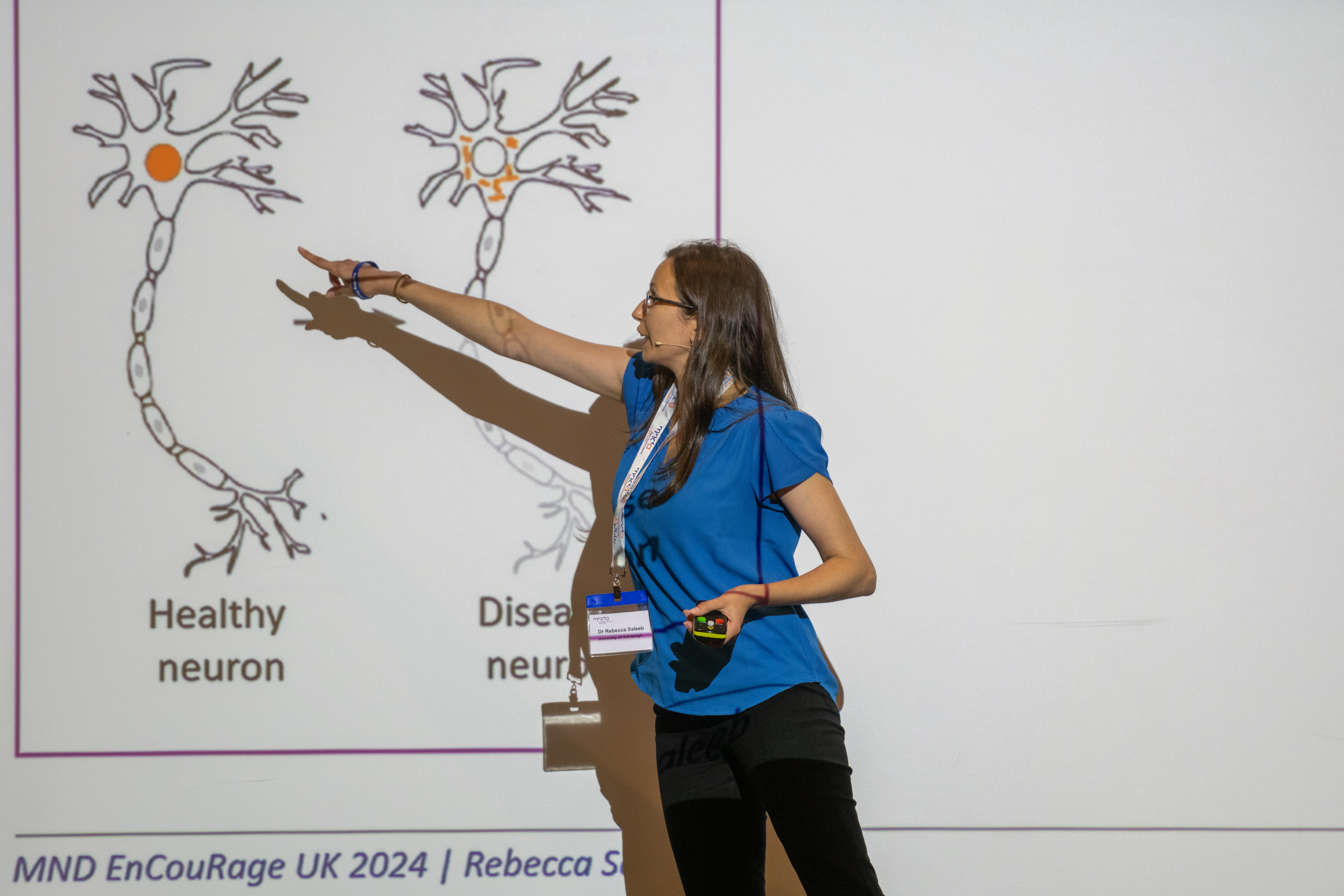
Dr Rebecca Saleeb
Dr Rebecca Saleeb