

Tested Applications
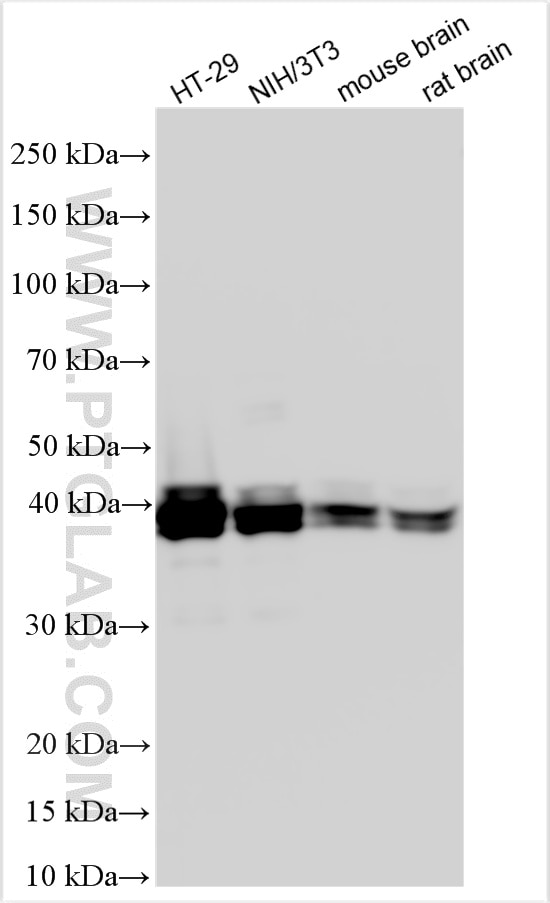
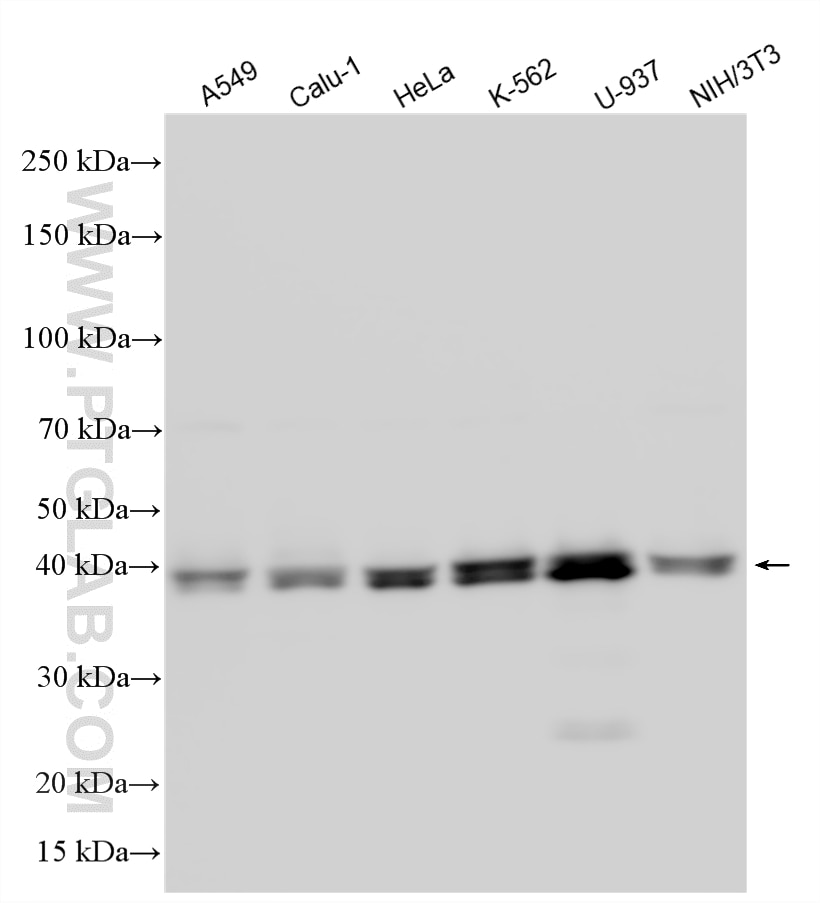
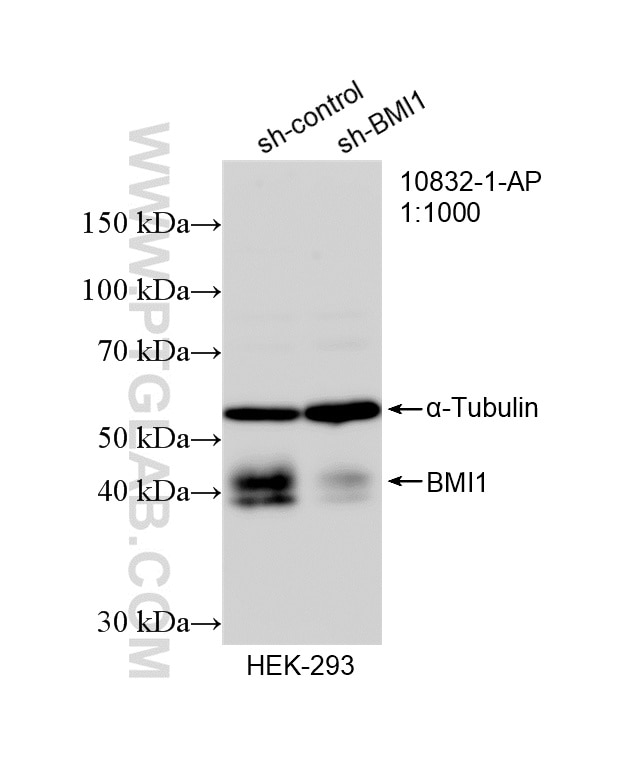
| Positive WB detected in | HT-29 cells, A549 cells, HEK-293 cells, NIH/3T3 cells, mouse brain tissue, rat brain tissue, Calu-1 cells, HeLa cells, K-562 cells, U-937 cells |
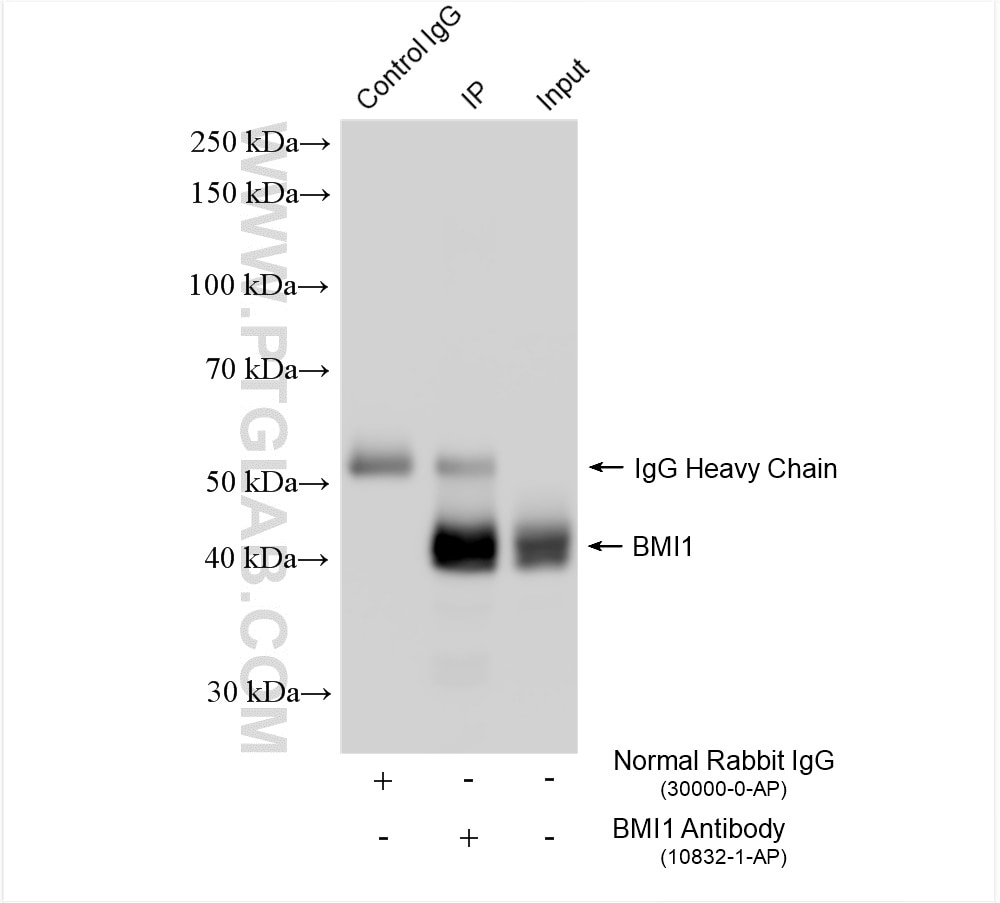
| Positive IP detected in | HT-29 cells |
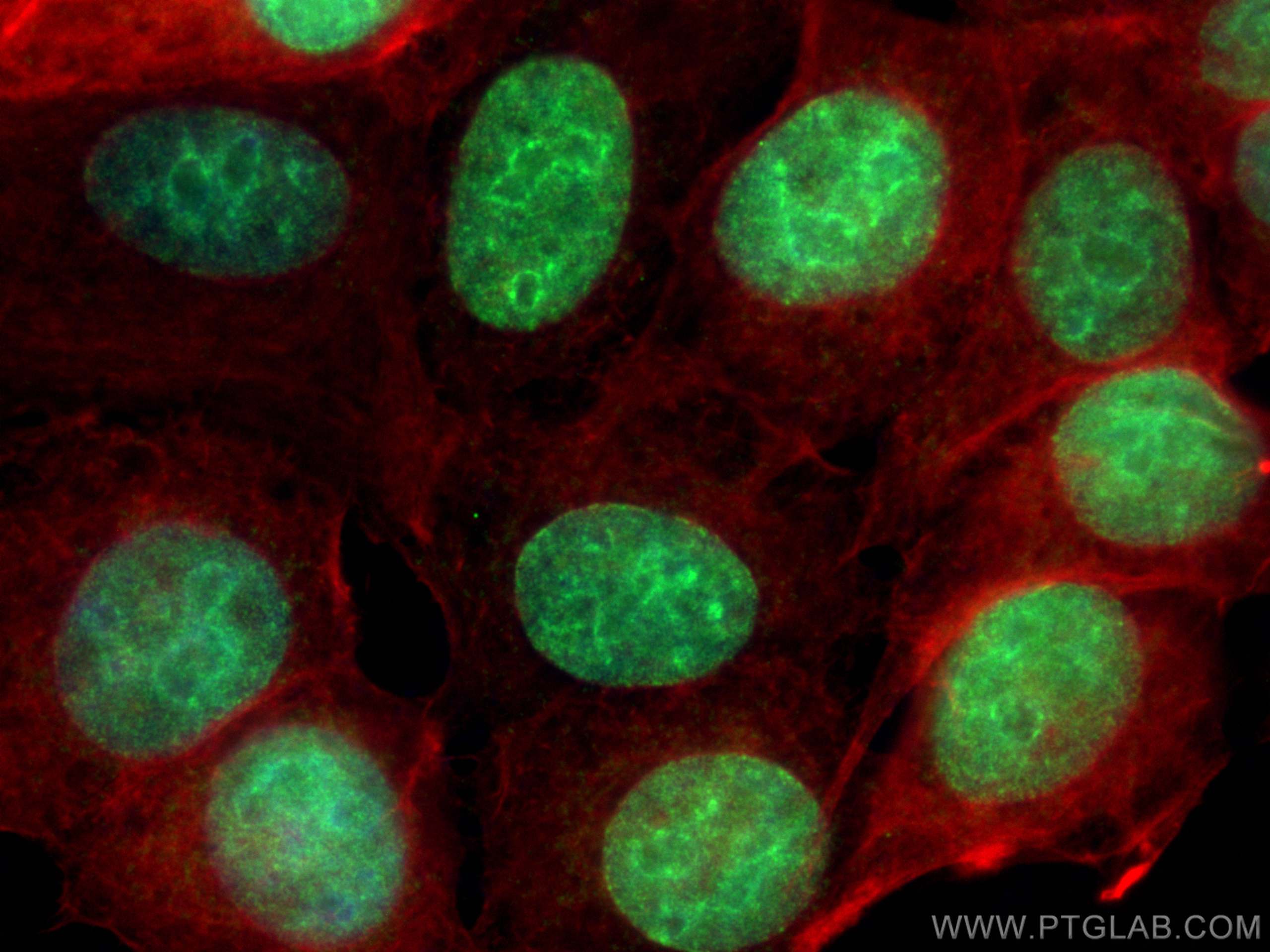
| Positive IF/ICC detected in | MCF-7 cells |
Recommended dilution
| Application | Dilution |
|---|---|
| Western Blot (WB) | WB : 1:5000-1:50000 |
| Immunoprecipitation (IP) | IP : 0.5-4.0 ug for 1.0-3.0 mg of total protein lysate |
| Immunofluorescence (IF)/ICC | IF/ICC : 1:300-1:1200 |
| It is recommended that this reagent should be titrated in each testing system to obtain optimal results. | |
| Sample-dependent, Check data in validation data gallery. | |
Product Information
10832-1-AP targets BMI1 in WB, IHC, IF/ICC, IP, CoIP, ChIP, ELISA, CUT&RUN applications and shows reactivity with human, mouse samples.
| Tested Reactivity | human, mouse |
| Cited Reactivity | human, mouse |
| Host / Isotype | Rabbit / IgG |
| Class | Polyclonal |
| Type | Antibody |
| Immunogen |
CatNo: Ag1286 Product name: Recombinant human BMI1 protein Source: e coli.-derived, PGEX-4T Tag: GST Domain: 1-326 aa of BC011652 Sequence: MHRTTRIKITELNPHLMCVLCGGYFIDATTIIECLHSFCKTCIVRYLETSKYCPICDVQVHKTRPLLNIRSDKTLQDIVYKLVPGLFKNEMKRRRDFYAAHPSADAANGSNEDRGEVADEDKRIITDDEIISLSIEFFDQNRLDRKVNKDKEKSKEEVNDKRYLRCPAAMTVMHLRKFLRSKMDIPNTFQIDVMYEEEPLKDYYTLMDIAYIYTWRRNGPLPLKYRVRPTCKRMKISHQRDGLTNAGELESDSGSDKANSPAGGIPSTSSCLPSPSTPVQSPHPQFPHISSTMNGTSNSPSGNHQSSFANRPRKSSVNGSSATSSG Predict reactive species |
| Full Name | BMI1 polycomb ring finger oncogene |
| Calculated Molecular Weight | 37 kDa |
| Observed Molecular Weight | 37-43 kDa |
| GenBank Accession Number | BC011652 |
| Gene Symbol | BMI1 |
| Gene ID (NCBI) | 648 |
| RRID | AB_2065392 |
| Conjugate | Unconjugated |
| Form | Liquid |
| Purification Method | Antigen affinity purification |
| UNIPROT ID | P35226 |
| Storage Buffer | PBS with 0.02% sodium azide and 50% glycerol, pH 7.3. |
| Storage Conditions | Store at -20°C. Stable for one year after shipment. Aliquoting is unnecessary for -20oC storage. 20ul sizes contain 0.1% BSA. |
Background Information
BMI- 1 is one of polycomb group genes, which together with Ring1 strongly enhances the E3 ubiquitin ligase activity of the Ring2 catalytic subunit. Bmi1 plays an important role in the regulation of cell proliferation and senescence through repression of the p16Ink4a and p19Arf genes and is required for maintenance of adult hematopoietic and neural stem cells. The antibody 10832-1-AP detected proteins of 45-48kda, which may include phosphorylated isoforms of the protein.
Protocols
| Product Specific Protocols | |
|---|---|
| IF protocol for BMI1 antibody 10832-1-AP | Download protocol |
| IP protocol for BMI1 antibody 10832-1-AP | Download protocol |
| WB protocol for BMI1 antibody 10832-1-AP | Download protocol |
| Standard Protocols | |
|---|---|
| Click here to view our Standard Protocols |
Publications
What published studies show
The BMI1 Polyclonal antibody (Cat# 10832-1-AP) has 51 citations published in journals including Nature Communications, Advanced Science, Science Advances, EMBO Journal, Developmental Cell, Oncogene, Cell Reports, Biomaterials, and BMC Cancer. Research fields encompass cancer stem cell biology, epigenetic regulation, head and neck squamous cell carcinoma, glioma, hepatocellular carcinoma, bone biology, neurodegeneration, epithelial-mesenchymal transition, renal fibrosis, and immunotherapy.
| Species | Application | Title |
|---|---|---|
Cancer Commun (Lond) PLEK2 promotes cancer stemness and tumorigenesis of head and neck squamous cell carcinoma via the c-Myc-mediated positive feedback loop | ||
Bone Res KDM6B safeguards mineralized tissue homeostasis from mechanical stress through epigenetic control of PIEZO1-mediated mechanotransduction in the mouse incisor. | ||
Nat Commun CAV2-expressing nerves induce metabolic switch toward mitochondrial oxidative phosphorylation to promote cancer stemness. | ||
Int J Oral Sci FAM64A promotes HNSCC tumorigenesis by mediating transcriptional autoregulation of FOXM1. | ||
J Adv Res OTUD7B attenuates renal fibrosis by regulating PRDX1 protein stability.
| ||
J Nanobiotechnology Apoptotic tumor cell-derived microparticles loading Napabucasin inhibit CSCs and synergistic immune therapy |

